
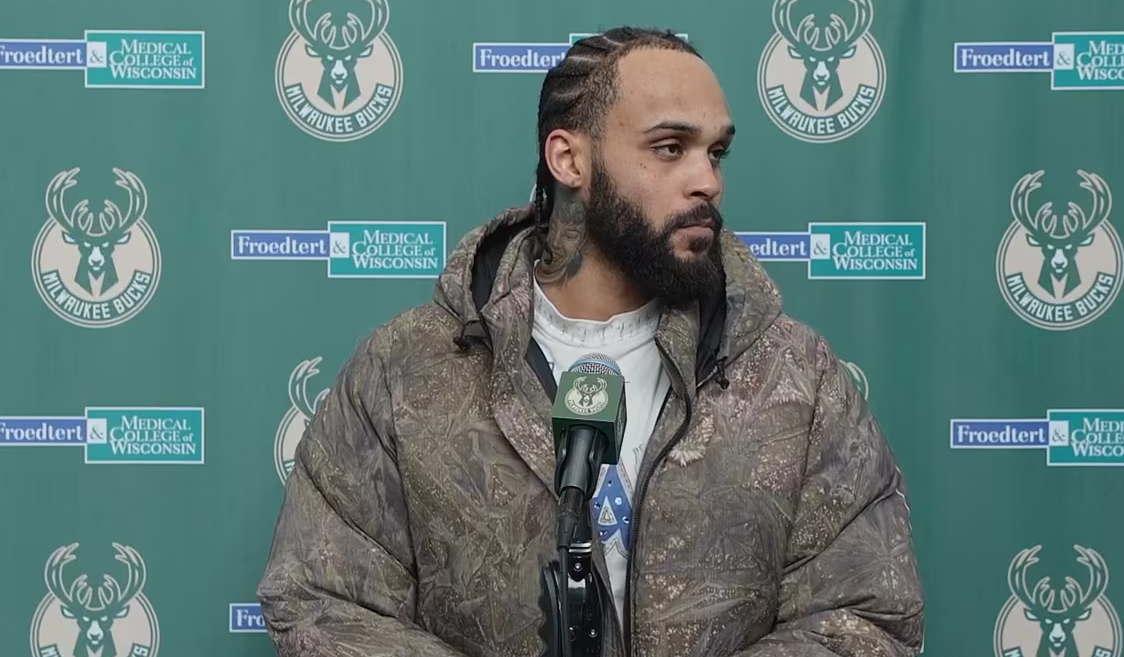
Gary Trent Jr. just turned two heavily discounted seasons in Milwaukee into a four-year, $64 million contract.
To NBA analyst Nate Duncan, that jump looks a little too convenient.
“Gary Trent getting 4/$64 after the year he just had is obvious circumvention and should be punished by the league,” Duncan wrote. “This would fall under the provision that there is no possible explanation other than circumvention.”
Gary Trent getting 4/$64 after the year he just had is obvious circumvention and should be punished by the league. This would fall under the provision that there is no possible explanation other than circumvention.
— Nate Duncan (@NateDuncanNBA) July 11, 2026
That is an explosive accusation. The timeline, however, explains why questions are being asked.
Trent joined Milwaukee on a veteran-minimum contract in 2024 after reportedly finding a weaker market than expected. He then returned in 2025 on a two-year, $7.5 million contract with a player option, not a second minimum deal, but still a significant discount compared with the salary he had previously earned. After spending two consecutive seasons with the Bucks, Milwaukee obtained Early Bird rights, giving the franchise a legal mechanism to exceed the salary cap and offer him a much larger multiyear contract. Trent declined his option this summer and reportedly agreed to four years and $64 million, with approximately $15.2 million coming in the first season.
From a cap-management perspective, the sequence is perfectly possible under the rules. A player can knowingly accept less money, establish Bird rights with a team and later receive a raise. That alone is not circumvention.
The issue would be whether Milwaukee secretly promised that future payday in advance.
NBA rules prohibit teams and players from making undisclosed side agreements designed to evade the salary cap. The league does not need every arrangement to be written in a signed contract to investigate it, but there must still be evidence that an illegal understanding existed. A surprising salary, even one that looks disconnected from recent production, is not automatically proof of wrongdoing.
Duncan’s skepticism is driven largely by the size of the raise and Trent’s latest season. The 27-year-old averaged 8.1 points, 1.0 rebound and 1.2 assists in 21.2 minutes across 65 games, while shooting 38.7 percent from the field and 36.0 percent from three. Those were disappointing numbers for a player now receiving an average of $16 million per season.
Milwaukee can still offer a basketball explanation. Trent is a proven volume shooter, had drawn outside interest, remains in his prime and previously showed he could become dangerous in playoff games. The contract could also be structured with future trades in mind. Paying a player above his immediate on-court value is not illegal; NBA teams do that every July.
But the phrase “circumvention” carries enormous historical weight because of what happened with Joe Smith and the Minnesota Timberwolves.
In the late 1990s, Minnesota signed Smith to a series of below-market contracts with a hidden agreement that he would later receive a lucrative long-term deal once the team had accumulated the necessary Bird rights. Unlike the current Trent speculation, the Smith case involved an actual secret arrangement that was uncovered and established. The league voided Smith’s contracts, fined the Timberwolves $3.5 million and initially stripped them of five first-round picks, although two were eventually restored. Owner Glen Taylor and executive Kevin McHale were also suspended.
That scandal remains the NBA’s clearest warning against trying to convert cheap short-term contracts into a prearranged future payday.
The similarities Duncan sees are obvious: a player accepts unusually low salaries, stays long enough for his team to obtain Bird rights and then receives a dramatically larger contract. The crucial difference is evidence. Minnesota’s secret promise to Smith was not merely inferred from an odd contract. It was discovered.
For the Bucks to face comparable scrutiny, the league would need reason to believe Trent’s $64 million deal was promised before he became eligible to sign it. Without texts, documents, testimony or another convincing trail, this may remain nothing more than an aggressive contract that one analyst considers impossible to justify.
Still, Milwaukee has created one of the summer’s strangest cap debates.
Perhaps the Bucks patiently used the Early Bird rules exactly as intended and rewarded a player who sacrificed salary to remain with them.
Or perhaps, as Duncan suspects, the reward was always part of the plan.
The difference between clever cap management and a Joe Smith-level scandal is not the size of the contract.
It is whether somebody made a promise they were never allowed to make.
