
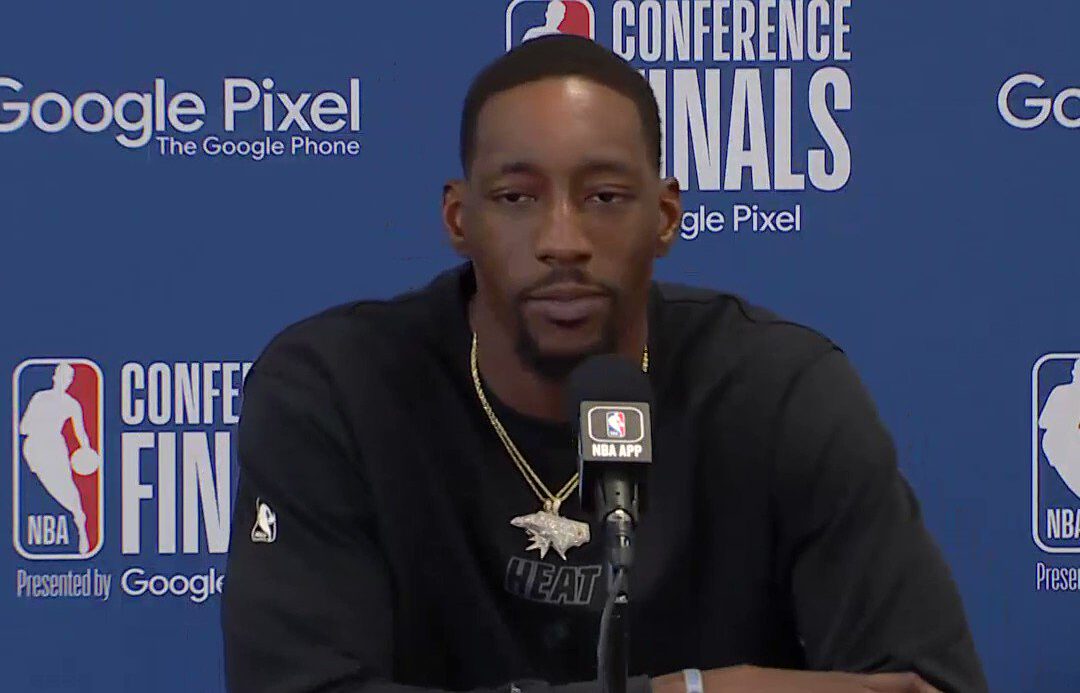
The Miami Heat have spent years selling a culture built on sacrifice, accountability and equality. According to Barry Jackson of the Miami Herald, however, not everyone inside the building believed the organization treated its core players equally.
Jackson reported that there has been “some level of resentment” from multiple former Heat players over Bam Adebayo becoming Miami’s chosen cornerstone. The frustration reportedly centered on Adebayo receiving a lucrative extension and largely avoiding the constant trade speculation that followed several of his teammates.
“What we can tell you is there has been some level of resentment from multiple former Heat players that Bam was the chosen one here and was given a big $$ extension by the Heat and was never subjected to trade rumors,” Jackson wrote.
What we can tell you is there has been some level of resentment from multiple former Heat players that Bam was the chosen one here and was given a big $$ extension by the Heat and was never subjected to trade rumors.
— Barry Jackson (@flasportsbuzz) July 10, 2026
Miami drafted Adebayo, developed him and watched him become an All-Star, an elite defender and a central figure in two trips to the NBA Finals. The organization had every basketball reason to value him highly.
But locker rooms do not always operate on front-office logic.
While Adebayo was treated as a permanent building block, other prominent Heat players repeatedly saw their names circulate in trade conversations. Tyler Herro spent years appearing in proposed packages for available stars before Miami eventually sent him to Milwaukee in the blockbuster deal for Giannis Antetokounmpo. Jimmy Butler’s relationship with the franchise also deteriorated before his departure, while several younger players were routinely discussed as movable assets whenever Miami chased another superstar.
From the team’s perspective, that is business. From a player’s perspective, it can feel personal.
The issue was apparently not simply that Adebayo got paid. It was that he seemed protected while others were asked to live with uncertainty. One player was presented as the future captain and organizational centerpiece; others could wake up at any moment to find themselves included in the latest trade machine screenshot.
That kind of imbalance can create tension even when teammates remain professional publicly.
Jackson’s report also adds important context to the recent turbulence surrounding Adebayo and Herro. The former teammates were reportedly involved in a physical confrontation in Las Vegas after Herro’s exit from Miami, although neither player has publicly provided a full account of what caused the situation. It would be irresponsible to claim that organizational resentment directly caused that incident, but the report suggests the relationship dynamics may have been more complicated than outsiders realized.
The irony is that Miami’s loyalty to Adebayo is understandable. He has represented almost everything the Heat publicly value: conditioning, defensive versatility, consistency, durability, leadership and a willingness to handle difficult assignments. When the organization decided to identify its next long-term standard-bearer, he was the obvious candidate.
Still, being the chosen one comes with consequences.
The Heat may have viewed Adebayo’s special status as earned security. Some former teammates apparently viewed it as preferential treatment. Both interpretations can exist at once.
Miami has always insisted that nobody is above Heat Culture. Jackson’s reporting suggests that, inside the locker room, some players believed one man came closer than everyone else.
