
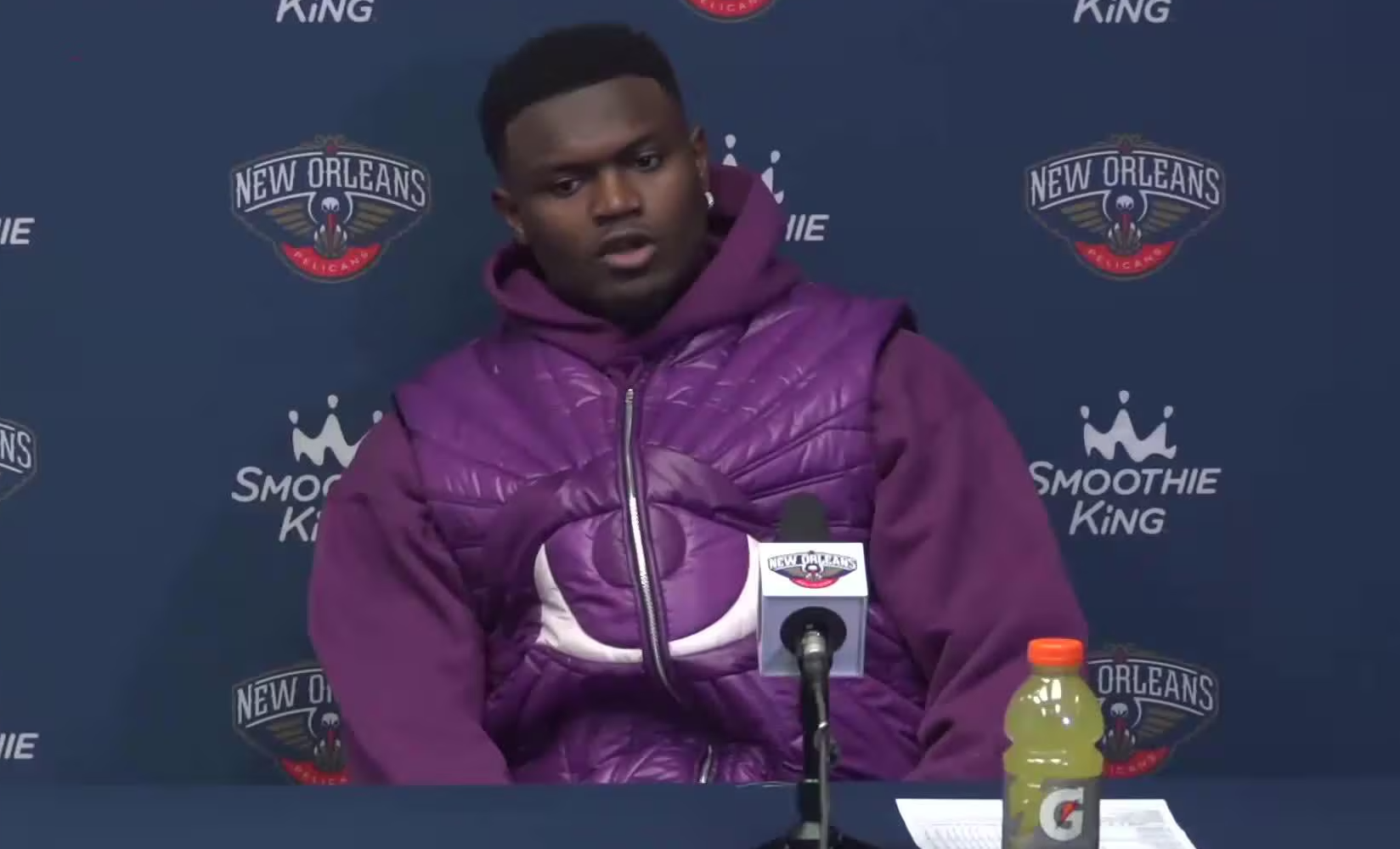
Bill Simmons has reignited a familiar debate about the future of professional basketball in New Orleans, openly questioning whether the city has ever demonstrated that it can consistently support an NBA franchise.
Speaking on The Bill Simmons Podcast, Simmons argued that the New Orleans experiment has never truly worked and said he is no longer certain the city should have an NBA team. His comments reflected long-running concerns surrounding attendance, limited postseason success and the Pelicans’ unresolved arena future.
“We still don’t have evidence that the NBA works in New Orleans… it’s just never worked, and I’m not sure they should have an NBA team.”
“We still don’t have evidence that the NBA works in New Orleans… it’s just never worked, and I’m not sure they should have an NBA team.”
– Bill Simmons
(h/t @TheNBABase ) pic.twitter.com/pok61uNsen
— NBACentral (@TheDunkCentral) August 3, 2026
There is evidence supporting part of his criticism. The Pelicans finished the 2025-26 season with a reported home attendance of 675,507, ranking 26th among the NBA’s 30 teams. They also ended the campaign at 26-56 and missed the playoffs for a second consecutive season.
The franchise has struggled to establish sustained success since beginning play in New Orleans in 2002. It has produced memorable periods around Chris Paul, Anthony Davis and Zion Williamson, but it has never reached the Western Conference Finals. Inconsistency, injuries and repeated roster resets have made it difficult to build the type of enduring connection that usually strengthens a smaller market.
The arena situation adds another source of uncertainty. The Pelicans’ current lease at the Smoothie King Center expires in 2029, and the organization has been working with Louisiana officials toward a longer agreement connected to major renovations. Recent reporting indicated that a new lease could be completed as early as the fall of 2026, potentially keeping the team in a renovated arena for another decade or longer.
New Orleans also presents unusual challenges. It is one of the NBA’s smaller markets, competes heavily with the NFL’s Saints and has endured circumstances, including Hurricane Katrina, that make its franchise history difficult to compare directly with more stable organizations.
Simmons is therefore raising a legitimate business question, but answering it requires more than pointing to empty seats or poor records. The Pelicans’ instability has often been caused as much by basketball decisions and unavailable stars as by a lack of local interest.
