
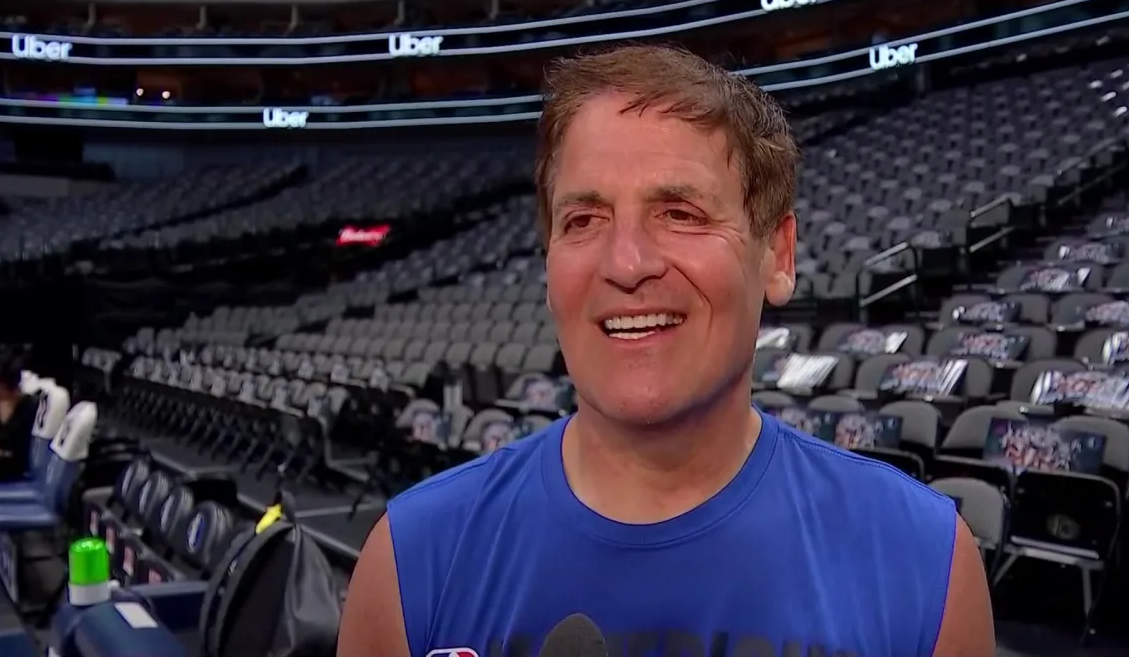
Mark Cuban sold control of the Dallas Mavericks, but apparently he did not sell his interest in how the franchise is being run.
That tension has now spilled into court.
According to reporting from Mike Fisher, Cuban’s companies have filed a Rule 202 petition in Dallas County seeking records and testimony connected to the Mavericks’ proposed new arena development. The filing takes aim at the direction of the franchise under Mavericks governor Patrick Dumont, accusing Dumont and related parties of freezing Cuban out of business opportunities tied to a potential move from downtown Dallas to the former Valley View Center site in north Dallas.
In plain English, this is not yet a full-blown lawsuit. A Rule 202 petition is a pre-suit tool in Texas that can be used to investigate potential claims before deciding whether to sue. But even if this is technically a step before a lawsuit, the message is not subtle. Cuban believes he had rights connected to the team’s future arena development, and he believes those rights are being ignored.
The dispute cuts straight into the awkward reality of Cuban’s post-sale role. When he sold the Mavericks’ controlling stake in 2023 to the families of Miriam Adelson and Patrick Dumont, the understanding publicly presented around the deal was that Cuban would remain heavily involved in basketball operations. He was no longer the controlling owner, but he was not supposed to disappear from the basketball side either. That was always the strange promise of the transaction: Cuban cashing out, but still staying close enough to the team to matter.
That arrangement has clearly not worked the way Cuban expected.
The filing, according to reports, describes a “handshake deal” that allegedly gave Cuban continued influence over basketball operations while Dumont oversaw the business side, including real estate and arena development. Cuban’s side now argues that Dumont did not honor that understanding and instead pushed him away from both the basketball operation and the arena opportunity.
That is where this gets spicy for Mavericks fans. Because this is not just about concrete, land and financing documents. The basketball scars are still fresh. Cuban has reportedly claimed he did not know about the plan to trade Luka Dončić to the Los Angeles Lakers in February 2025 until it was too late to stop it. That trade became one of the most explosive decisions in modern NBA history, reshaped the franchise overnight, triggered months of fan backlash and helped define the Dumont era before it had even really begun.
The move also put Cuban in a deeply uncomfortable position. For more than two decades, he was the face of the Mavericks. He was courtside, loud, emotional, accessible and impossible to separate from the team’s identity. Then, after selling control, the franchise made the kind of basketball decision he never would have wanted attached to his legacy, and he apparently did not have the power to stop it.
Now comes the arena fight.
The Mavericks recently signed an option agreement tied to approximately 104 acres in north Dallas, with the long-term vision of a new arena that could open around 2031, the same year the team’s current lease at American Airlines Center expires. For Dumont and the Adelson family, whose business background is deeply tied to resort and real estate development, the arena project is not just a basketball building. It is the future business engine of the franchise.
Cuban’s side appears to believe it should have a seat at that table.
That is why the phrase “adversarial business practices” lands so loudly. This is no longer just an awkward ownership transition. It is the former face of the franchise accusing the new power structure of pushing him out of opportunities he believes he was contractually entitled to pursue.
