
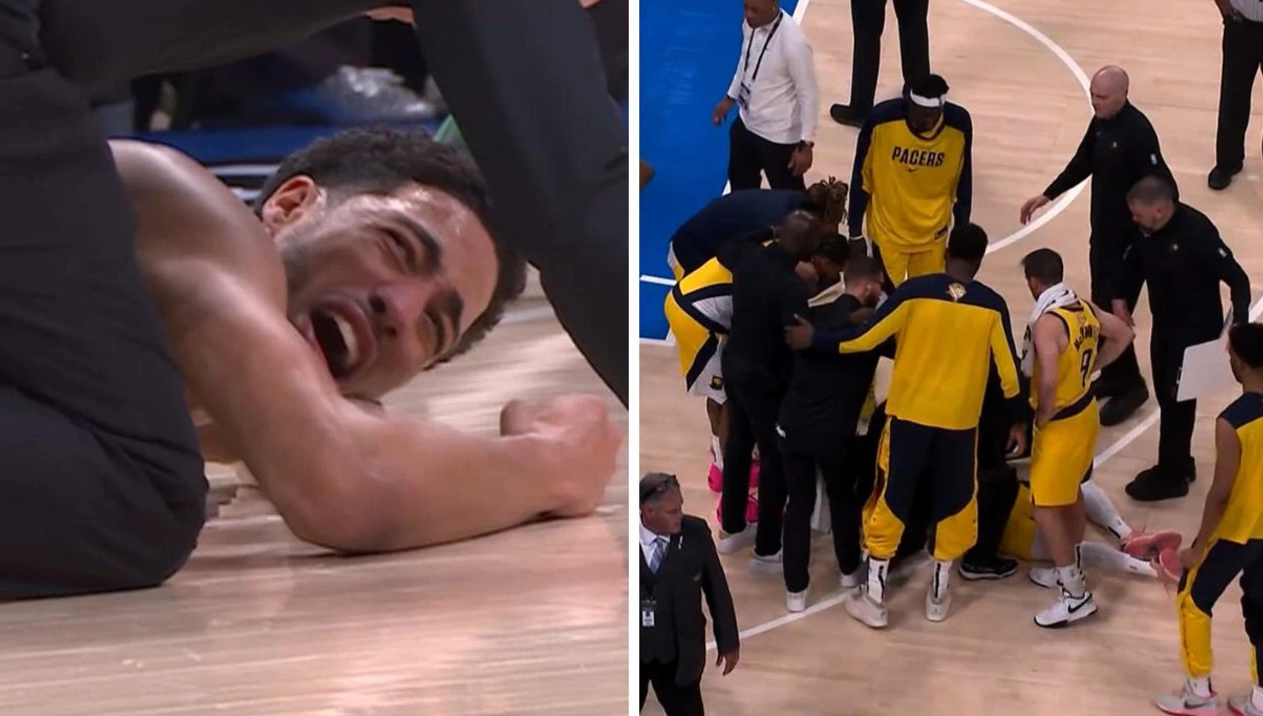
A new study has identified a potentially important pattern behind one of the NBA’s most devastating injuries: players who suffered Achilles tendon ruptures generally experienced a measurable increase in playing time during the weeks immediately preceding the injury.
The research, co-authored by sports-medicine specialist Dr. Nirav Pandya, reviewed basketball-related Achilles ruptures involving NBA players from the 2014-15 season through 2024-25. Nineteen players met the study’s inclusion criteria, with researchers examining minutes, distance covered, recent scheduling demands and other workload measures before each rupture.
The most notable finding appeared in the final 10 to 15 games before injury. The players averaged 29.0 minutes over the previous 10 games, compared with a season average of 27.4. Across the previous 15 games, the figure was 28.6 minutes. Both increases were statistically significant within the study, even though the players’ overall workload during the injury season looked almost identical to their previous career levels.
That distinction may be the study’s most valuable contribution. A player’s full-season workload can appear normal while concealing a recent increase in responsibility. In other words, the danger signal may not be an unusually heavy season in total, but a sudden change from the workload to which the player had recently adapted.
The research also found different workload profiles among players at different career stages. Veterans generally carried more cumulative minutes, while less-experienced players suffered ruptures under comparatively lighter usage. That suggests Achilles injuries cannot be explained by one universal threshold and may instead involve a combination of recent workload changes, career-long exposure, conditioning, biomechanics and individual tendon health.
The findings arrive after an alarming 2024-25 season in which seven NBA Achilles ruptures were recorded, the highest total identified by the researchers for a single season. Several occurred during the playoffs, when rotations tighten, minutes increase and the physical intensity of games becomes more difficult to quantify.
However, the study does not prove that increased minutes directly caused the injuries. It was a retrospective, exploratory analysis of only 19 injured players and did not include a matched control group of healthy NBA players. The researchers also lacked access to private team data involving practice workloads, explosive movements, pre-existing tendon problems, medical history and internal load-management decisions. The authors therefore described their results as hypothesis-generating rather than definitive evidence of causation.
The observed increases were also relatively modest, making careful interpretation essential. The study does not establish that playing approximately one or two additional minutes automatically creates an Achilles risk. It suggests that even small short-term workload changes may deserve greater attention when combined with fatigue, accumulated career demands and an individual player’s physical condition.
The conclusion is not that teams can eliminate Achilles ruptures simply by resting players. These injuries are complex and multifactorial. Still, the research provides the NBA with a warning that season averages may not reveal the full picture.
More detailed workload monitoring, targeted prevention programs and greater attention to sudden increases in playing time could help teams identify vulnerable periods before catastrophe strikes. With Achilles injuries threatening careers and repeatedly affecting the league’s biggest stages, the pattern is significant enough to demand further study.
