
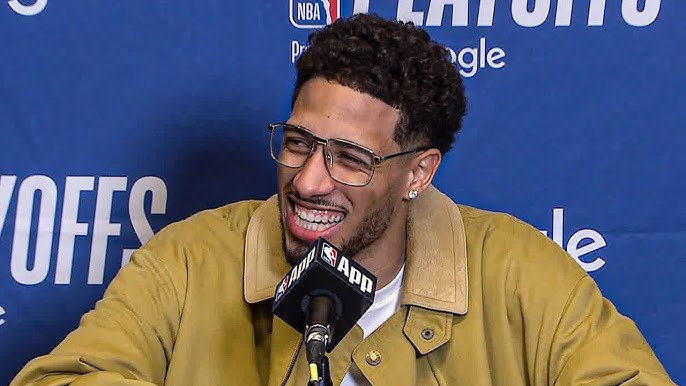
Tyrese Haliburton did not dress it up as a moral crisis. He did not pretend the NBA’s foul-drawing problem belongs to one player, one team or one postseason controversy. He simply said what almost everyone inside the sport already understands: selling contact is no longer just something players do. It is something they learn.
Asked about flopping and exaggerating contact, Haliburton said it is “for sure” being taught, though not necessarily by head coaches. His point was more subtle and more damning. This is player-development culture now. It starts before the NBA, in workouts, pickup games and the small tactical habits young players build while learning how to survive against better athletes. Drawing fouls, selling contact, showing referees impact – all of it has become part of the modern offensive education.
Tyrese Haliburton says players are being taught how to flop:
“It’s for sure being taught. I don’t think head coaches are, but it’s a part of player development before you get to the NBA. It’s something you naturally work on. It’s now a part of the game.” (via @PatMcafeeShow,… pic.twitter.com/2WZF7OCQQX
— Legion Hoops (@LegionHoops) May 27, 2026
Haliburton was not accusing coaches of running “Flopping 101” on the practice schedule. He was describing the ecosystem. Players grow up understanding that the whistle is a weapon. The best scorers are not merely shot-makers; they are pressure artists. They put defenders in jail, lean into angles, punish bad hands, snap heads back, fall loudly, land dramatically and make every official decide whether contact was illegal, exaggerated or both.
The conversation has exploded around Shai Gilgeous-Alexander, whose foul-drawing brilliance has become one of the defining arguments of these playoffs. But Haliburton’s point widens the frame. This is not just about SGA. It is about a league where advantage is everything and where the difference between a missed shot and two free throws can decide a series.
Adam Silver has already acknowledged the gray area. He said players may fall, react or sell calls, but if they are not fooling officials, the league can live with it. That is the modern compromise: acting is tolerated until it becomes deception. The problem, of course, is that the line is invisible in real time.
Haliburton’s honesty cuts through the outrage. Fans may hate flopping, but players see it as craft. Not noble craft, maybe not beautiful craft, but useful craft. In a league obsessed with efficiency, getting to the line is not an accident. It is a skill, a strategy and increasingly a developmental checkpoint.
The uncomfortable truth is that flopping will not disappear because people complain about it. It will disappear only if it stops working. Until then, young players will keep learning how to sell contact because the game keeps rewarding those who can turn contact into points.
