
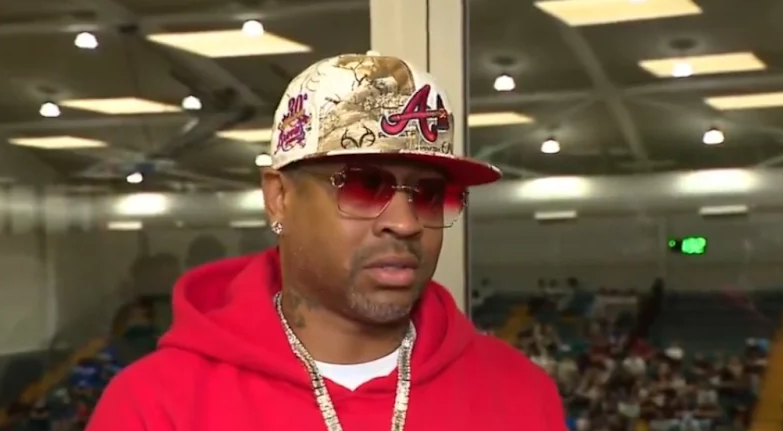
Allen Iverson has always been open about the lessons he learned the hard way. This time, he looked at LeBron James and admitted he wished he had been given the same blueprint.
Iverson praised James not simply for what he accomplished on the basketball court, but for how he used his success to create opportunities for the people closest to him.
“I love LeBron James,” Iverson said. “The things that he’s done for his family and his friends are remarkable. I didn’t have that.”
That admiration speaks to one of the most important parts of LeBron’s legacy away from basketball. Long before his friends became major figures in sports and entertainment, Maverick Carter, Rich Paul and Randy Mims were members of his inner circle. Instead of treating them only as companions who traveled alongside his career, James helped create an environment in which they could develop their own expertise, influence and businesses.
Paul became one of basketball’s most powerful agents. Carter developed into a prominent media and business executive. Mims took on major responsibilities inside James’ operation. Their success was not simply the result of receiving money from a famous friend. LeBron gave them access, responsibility and room to become valuable independently.
Iverson understood the difference.
“The way I felt about my friends… he gave a lot to them off the basketball court,” Iverson said, “and how he was able to make sure his friends were successful—as businessmen. Big business. I wish I had that blueprint then.”
Allen Iverson says LeBron turned his friends into businessmen. On his own friends: “I wish I had that blueprint”
“I love LeBron James. The things that he’s done for his family and his friends are remarkable. I didn’t have that”
“The way I felt about my friends… he gave a lot… pic.twitter.com/Gn7v2zFA1t
— katsu (@katsuxbt) July 14, 2026
Iverson was one of the most influential athletes of his generation. His style, attitude and authenticity changed the image of the NBA and helped reshape the relationship between basketball and hip-hop culture. His influence remains enormous years after his final game.
But influence and infrastructure are not the same thing.
Iverson came into the league in 1996, before modern athletes were routinely encouraged to think of themselves as media companies, investment groups and global brands. Players had agents, advisers and friends, but there was no established model showing a young superstar how to transform an entire inner circle into a functioning business team.
LeBron arrived later and approached that challenge differently. He kept trusted childhood friends close, but he also expected them to grow. Their relationships evolved from friendship into a network capable of negotiating contracts, producing entertainment, building brands and managing one of the most valuable careers in sports.
That is what Iverson appears to envy – not LeBron’s money or celebrity, but the organization behind it.
There is also something powerful about Iverson being the one to say it. LeBron has repeatedly spoken about Iverson’s impact on him and once described him as one of the players he admired most growing up. Now Iverson is looking back at the younger superstar and recognizing something he wishes he could have copied.
That is how influence works across generations. Iverson showed players they could remain authentic and still become global icons. LeBron expanded that idea by showing that a superstar’s success could become a platform for everyone around him.
