
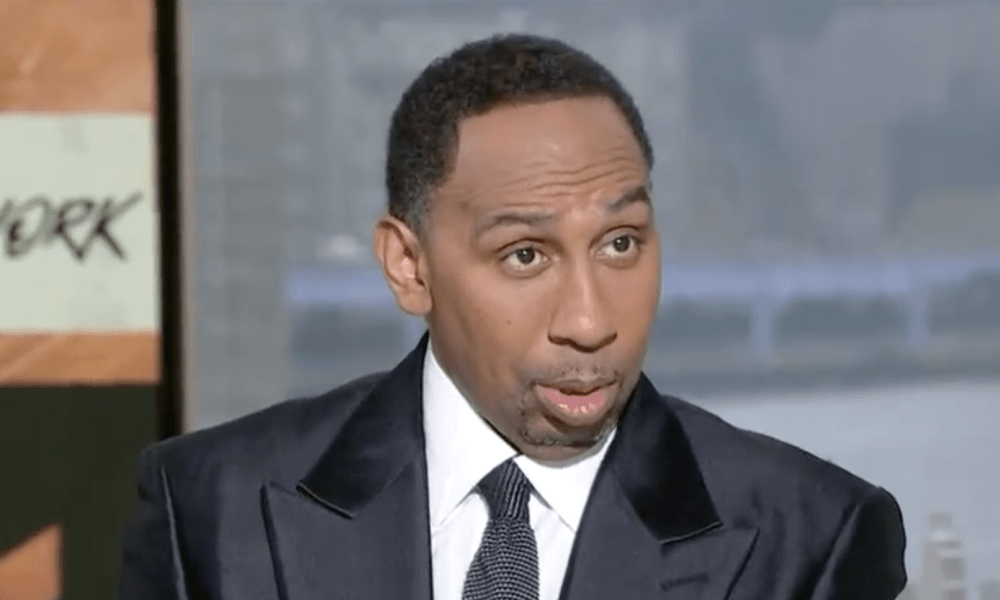
The Los Angeles Lakers have opened the 2026-27 NBA season looking like legitimate championship contenders. But despite their spectacular start, ESPN analyst Stephen A. Smith remains convinced that something about their roster makes winning the title highly unlikely.
And his reasoning has sparked considerable controversy. Speaking on The Stephen A. Smith Show, Smith doubled down on his belief that a team led by three white players cannot win an NBA championship in the modern era.
“I’ve never seen an NBA team with its top three players being white deliver a championship,” Smith declared, insisting that Los Angeles would not change that historical pattern.
Stephen A. Smith says the Lakers won’t win a championship because their top three players are white
“I’ve never seen an NBA team with its top three players being white deliver a championship. It’s never happened, and I’m here to tell you, I don’t think it’s gonna happen this year.”
— NBABase (@TheNBABase) November 11, 2026
His comments specifically concerned Luka Dončić, Austin Reaves and Walker Kessler, the three players around whom the Lakers rebuilt following LeBron James’ departure to Philadelphia.
Los Angeles has been one of the NBA’s most impressive teams through the opening weeks of the season, winning six consecutive games to improve to 10-2 and climb to the top of the Western Conference.
Dončić has been virtually unstoppable, averaging an extraordinary 39.3 points, 7.8 rebounds and 7.9 assists while establishing himself as an early MVP favorite.
Reaves has developed into a legitimate second scoring option, contributing 25.3 points per game, while Kessler has provided the interior presence the Lakers desperately needed, averaging 14.9 points, 10.8 rebounds and 2.3 blocks.
Yet Smith remains skeptical. The outspoken commentator initially made similar remarks during the offseason, questioning the organization’s decision to build around three white players.
Now, despite acknowledging Dončić’s individual brilliance and praising head coach JJ Redick, Smith believes the Lakers will struggle to advance beyond the Western Conference semifinals.
He pointed to previous championship teams, including Larry Bird’s Boston Celtics, Michael Jordan’s Chicago Bulls and Kobe Bryant’s Lakers, arguing that successful franchises in the modern NBA have consistently featured Black superstars among their most important players.
Smith later clarified that his historical argument concerned championship teams during his lifetime, rather than the entirety of NBA history.
The Minneapolis Lakers, for example, won multiple championships in the 1950s behind George Mikan, Jim Pollard and Vern Mikkelsen. More fundamentally, historical precedent does not establish that the racial composition of a team’s leading players determines its championship potential.
The NBA has evolved considerably across generations, and championships are ultimately decided by basketball-related factors: talent, health, defense, depth, coaching and postseason execution. There are certainly legitimate reasons to question whether the Lakers can sustain their remarkable start.
Dončić’s enormous offensive workload, the team’s perimeter defense and its ability to withstand the physical demands of a lengthy playoff run all deserve scrutiny. And the Western Conference remains exceptionally competitive, with Oklahoma City, Denver, San Antonio, Houston and Minnesota presenting significant challenges.
But none of those questions requires examining the skin color of Los Angeles’ three most prominent players. Smith’s comments have understandably generated considerable criticism, with fans questioning why race should feature so prominently in an assessment of a basketball team’s championship chances.
For now, the Lakers are doing the only thing that can meaningfully answer their critics: winning basketball games.
