
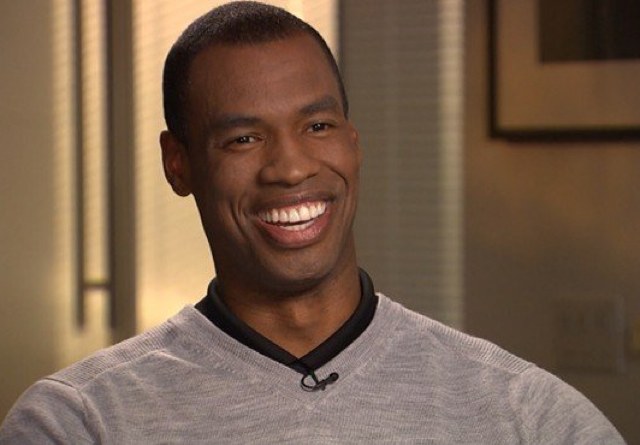
Jason Collins was never the loudest man in the room. That was never his way. He built his NBA career in the trenches, setting screens, absorbing contact, defending stars, doing the unglamorous work that winning teams require and box scores rarely celebrate. But when history called, Collins answered with a voice that carried far beyond any arena.
Collins, the 13-year NBA veteran and the league’s first openly gay active player, has died at the age of 47 after what his family called a “valiant fight with glioblastoma.” His death leaves basketball mourning not only a former player, but a pioneer, an advocate and a man remembered as much for his humanity as for his courage.
On the court, Collins was a pro’s pro. Drafted in 2001, he played for six NBA teams and spent his most prominent years with the New Jersey Nets, helping them reach back-to-back NBA Finals in 2002 and 2003. He was never defined by scoring totals or highlight reels. He was defined by trust. Coaches played him because he knew where to be. Teammates valued him because he made their jobs easier. Opponents felt him because he made every possession heavier.
But Collins’ true place in history came in 2013, when he publicly came out as gay while still an active NBA player. In doing so, he became the first openly gay active player in league history and one of the most important figures in the long fight for LGBTQ+ visibility in major American professional sports. He did not make that step as a slogan or spectacle. He made it as himself: thoughtful, calm, honest and brave.
That courage mattered. It mattered to athletes who had never seen someone like themselves standing openly inside a major men’s locker room. It mattered to fans who understood what it meant to carry a private truth in a public world. It mattered because Collins did not ask basketball to look away from who he was. He asked it to grow large enough to include him fully.
His activism became a continuation of his character. Collins worked as an NBA Cares Ambassador and used his platform to push for a more inclusive, more welcoming sports culture. NBA Commissioner Adam Silver said Collins’ influence extended far beyond basketball and remembered him for “the kindness and humanity that defined his life.”
That is the legacy. Not only the announcement. Not only the barrier broken. The legacy is the way he carried it afterward: with dignity, warmth and grace. Jason Collins changed the league not by trying to be larger than life, but by insisting that life itself should have room for truth.
Basketball lost a veteran. Sports lost a trailblazer. The world lost a good man. And somewhere beyond the noise, beyond the banners and box scores, Jason Collins’ courage remains: quiet, steady, and impossible to erase.
