
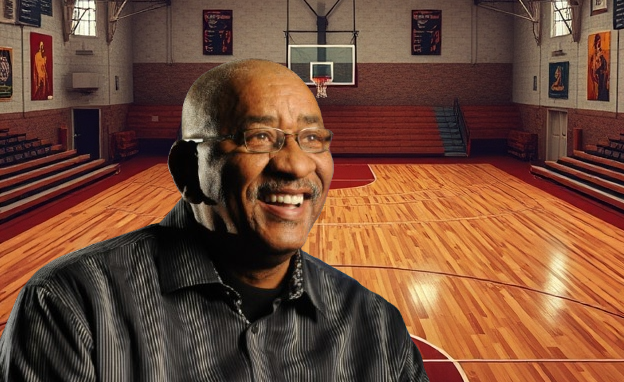
Basketball Hall of Famer, George Gervin, whose “Iceman” nickname has been attached to him for decades, is now moving to protect that identity legally after Chicago Bears quarterback Caleb Williams filed trademark applications tied to the same moniker.
According to the Chicago Sun-Times’ Patrick Finley, Williams’ company submitted four trademark applications related to “Iceman” on March 16, covering the name, a logo and silhouettes connected to the quarterback’s branding plans. Four days later, Gervin Interests LLC filed applications for both “Iceman” and “Iceman 44,” referencing the Spurs legend’s long-standing nickname and jersey number.
That is what gives the dispute its edge. This is not really about whether Williams can be called “Iceman” in casual conversation. It is about who gets to control and commercialize the name. Williams’ filings cover a wide range of merchandise and related products, while Gervin’s applications seek protection for apparel as well as entertainment services such as appearances and basketball camps.
However, Gervin has not framed it as a personal attack on the young quarterback, even expressing admiration for Williams while also making clear that, in his mind, this particular name already belongs to someone.
“I’ve got nothing but respect for [Williams],” Gervin told Finley. “He’s already proved greatness and his potential upside is great. Like an ‘Iceman.’ But that name is taken. . . . All I’m saying is: Young fella, we’ve already got one ‘Iceman.’”
And from Gervin’s perspective, that argument is easy to understand. “Iceman” is not a recent invention or a passing social-media nickname. It is one of the most recognizable monikers in basketball history, a name tied to his effortless scoring style and cemented by decades of public association, including the famous late-1970s Nike poster that helped turn it into part of his identity.
Still the coldest poster ever! ❄️ pic.twitter.com/11mzPl1TPT
— OpenCourt-Basketball (@OpenCourtFB) March 27, 2026
Gervin’s application states he first used the nickname in commerce in 1980, though his connection to it dates back to the 1970s.
For Williams, the timing reflects the other side of modern sports branding. After becoming associated with “Iceman” during the 2025 NFL season, he moved quickly to secure the nickname for business use. His March 16 filings covered products ranging from apparel and water bottles to bags, posters and digital trading-card software.
Now the question shifts from sports talk to trademark procedure. The U.S. Patent and Trademark Office still has to review the competing applications, and that process is expected to take months. If one side’s filings advance, the other can oppose them. In other words, the dispute is real, but it is still in its early stages.
In a way, the entire episode fits Gervin perfectly. He built one of the NBA’s most enduring identities with his game, his style and his nickname, and now he is treating that nickname like the asset it has long been. The respectful tone toward Williams matters, but so does the underlying message: there may be room in sports for many stars, but as far as George Gervin is concerned, there is still only one true Iceman.
