
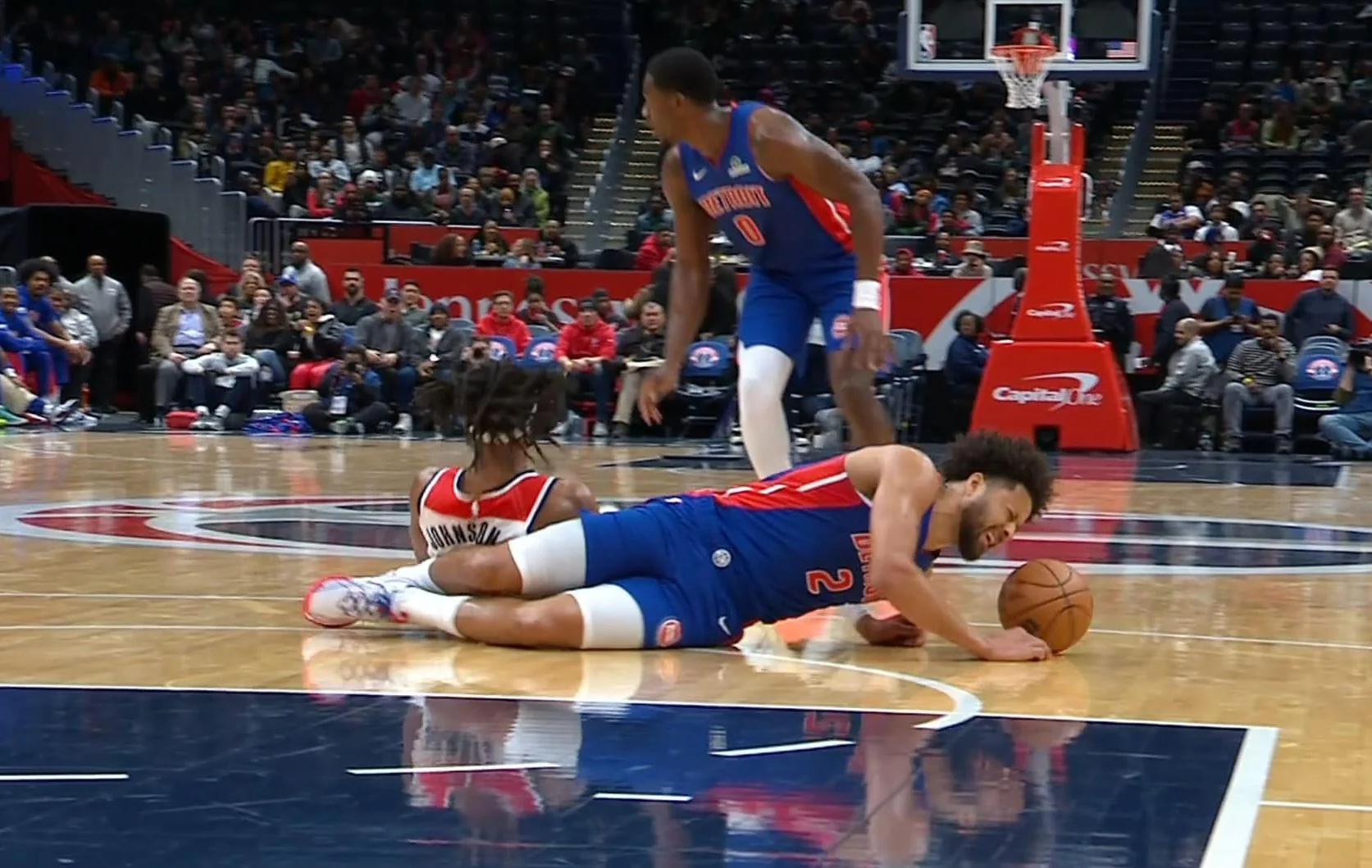
The Pistons may be facing a far more serious setback than a routine in-season injury. Reports on Wednesday said Cade Cunningham has been diagnosed with a collapsed lung and is expected to miss an extended period of time, a development that would abruptly halt one of the strongest stretches of his career and remove the engine from Detroit’s offense for the time being.
Just in: Detroit Pistons star Cade Cunningham has been diagnosed with a collapsed lung and is expected to miss an extended period of time, sources tell ESPN. pic.twitter.com/JIHABIIOY5
— Shams Charania (@ShamsCharania) March 19, 2026
Just one night earlier, Cunningham had exited the Pistons’ win over Washington after the team initially announced back spasms following a loose-ball collision in the first quarter.
A collapsed lung is medically known as a pneumothorax. It happens when air gets into the space between the lung and the chest wall, creating pressure that prevents the lung from fully expanding. The most common symptoms are sudden chest pain and shortness of breath, though severity can vary depending on how much of the lung is affected. A pneumothorax can happen after chest trauma, certain medical procedures, underlying lung disease, or sometimes without an obvious cause.
In practical terms, treatment depends on the size of the collapse and how symptomatic the patient is. Smaller pneumothoraces can sometimes heal on their own with observation and oxygen, while larger or more serious cases may require a needle aspiration or a chest tube to remove the trapped air and allow the lung to re-expand.
Recovery timelines can vary, which is why “extended period of time” can mean very different things from one case to another. A small pneumothorax may resolve in roughly one to two weeks, while other cases can take several weeks, especially if a drain or surgery is required. That uncertainty is part of what makes the injury so disruptive for an NBA player: even once the lung re-expands, the body still has to heal, conditioning has to return, and medical staff have to be confident there is no ongoing risk before an athlete resumes high-intensity activity.
For Detroit, the basketball implications are obvious. Cunningham had been playing at an All-NBA level and left Tuesday’s game after scoring six points in just over five minutes. He had appeared in 61 games this season and was averaging around 25 points, 10 assists and 5.5 rebounds entering that night. Losing that level of production, shot creation, and control is not something a team simply absorbs without a major adjustment.
The larger concern, though, is not awards or standings. It is health. A collapsed lung is not the kind of injury teams measure only by missed games; it is the kind they handle with caution, because breathing, lung expansion, and recurrence risk matter more than any short-term basketball timetable.
