
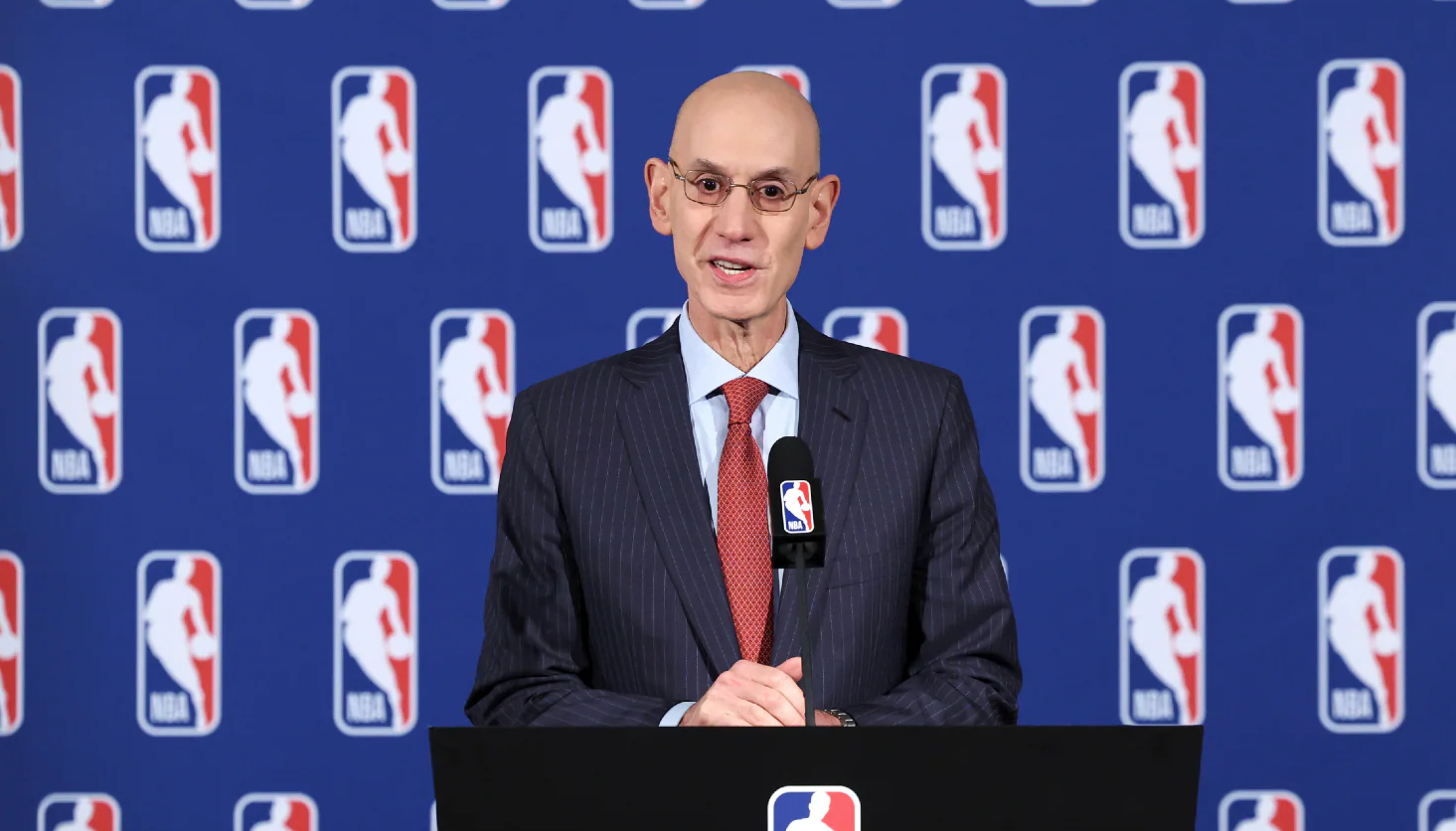
The NBA has spent years insisting that protecting the integrity of basketball is its highest priority. On Monday, the league announced another major step into the rapidly expanding world of sports gambling, raising serious questions about whether commercial interests are beginning to overshadow the responsibility to protect the game and its fans.
The NBA has officially named Kalshi and Polymarket its preferred prediction market exchanges, granting both companies access to league intellectual property, official data and promotional opportunities. In return, the NBA will have approval rights over the types of markets offered on its games, while the platforms must cooperate with investigations and report suspicious trading activity.
The league also signed an agreement with the Commodity Futures Trading Commission to strengthen regulatory oversight.
NBA executive Scott Kaufman-Ross defended the agreements by emphasizing that protecting the integrity of basketball remains the organization’s top priority.
But there is something deeply troubling about the timing. Just two years ago, Jontay Porter received a lifetime NBA ban after an investigation found that he had disclosed confidential information to bettors and deliberately limited his participation in games for gambling purposes.
More recently, allegations involving Terry Rozier and Malik Beasley have once again demonstrated how dangerous the intersection of professional basketball and gambling can become.
Rather than creating greater distance between the sport and an industry that has already contributed to serious integrity scandals, the NBA is now strengthening its commercial relationships with platforms that allow people to wager money on basketball-related outcomes.
And while prediction markets operate under a different regulatory framework than traditional sportsbooks, the fundamental concern remains the same: People are risking real money on sporting events, creating financial incentives that have nothing to do with the competition itself.
Perhaps even more disturbing is the potential impact on younger basketball fans. Kalshi and Polymarket have attracted young audiences through social media, humorous marketing campaigns and accessible trading platforms. Unlike traditional sportsbooks in many American states, which require participants to be at least 21, prediction markets generally allow users to participate from the age of 18.
The NBA itself previously urged federal regulators to raise that minimum age to 21, citing potential financial risks for younger participants. Yet the newly announced partnerships do not establish such a restriction.
That contradiction is difficult to ignore. An 18-year-old fan should be able to enjoy watching Luka Dončić score 50 points without being encouraged to treat every possession, rebound or scoring milestone as another opportunity to risk money.
The normalization of gambling-like products is particularly concerning in a league with an enormous young audience. Official partnerships lend credibility to companies and products that can expose inexperienced users to financial losses and potentially addictive behavior.
To its credit, the NBA is introducing safeguards. Restricting certain markets, prohibiting employees from trading on NBA events and requiring information sharing are sensible measures. Working with regulated operators can also help identify suspicious activity that might otherwise go unnoticed.
But those protections do not erase the larger ethical question. At what point does protecting the integrity of basketball become secondary to monetizing every possible aspect of it?
The NBA has built its global popularity on extraordinary athletes, unforgettable moments and the emotional connection between teams and their supporters.
That relationship is worth protecting. Basketball should be about competition, athletic excellence and the unpredictable beauty of the game, not an endless stream of financial opportunities built around every imaginable outcome.
There is nothing wrong with wanting the NBA to grow commercially. But some revenue opportunities should be questioned, regardless of how lucrative they might become. By officially embracing Kalshi and Polymarket, the league risks further blurring the line between basketball and gambling, while sending a troubling message to the next generation of fans.
The NBA doesn’t need more ways for people to bet on basketball. It needs to make sure people can still trust basketball.
