
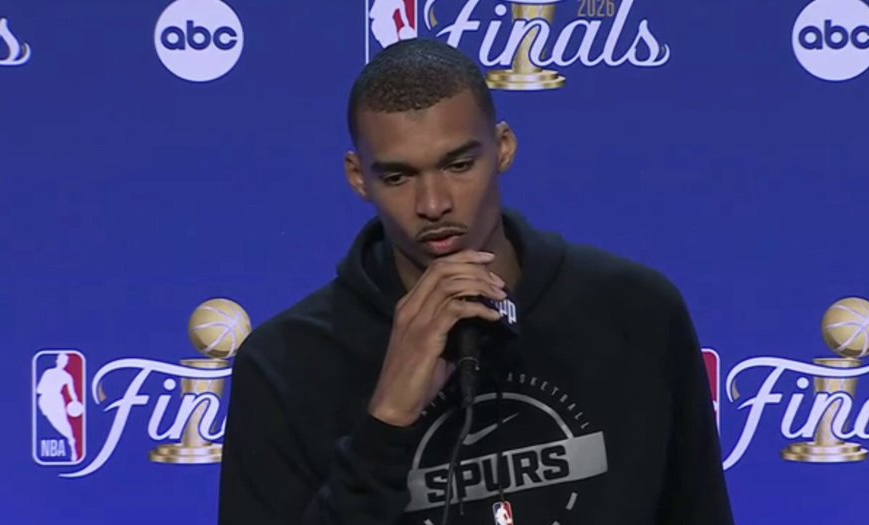
Rich Paul has seen this movie before. He saw it with LeBron James, long before the rings, the records and the billionaire status. He saw it when LeBron was still young, still trying to carry impossible expectations, still being sold as the future of basketball before he was old enough to fully control the story around him.
And according to Paul, Allen Iverson saw it coming, too.
Paul says Iverson used to warn a young LeBron that the love would not last forever. The media would build him up, celebrate him, turn him into the next chosen one – and then, eventually, they would turn on him. Not necessarily because he had failed, but because that is what happens when a star becomes too big, too visible and too easy to debate.
Paul now sees shades of that same cycle with Victor Wembanyama.
Rich Paul says Allen Iverson used to always warn young LeBron that the media and people would eventually turn on him
Rich compares it to what Wemby is going through now as the narratives around him have shifted after losing the NBA finals
He brings up 2010 when LeBron left… https://t.co/KC1eXwEpq6 pic.twitter.com/ZCKxma4AwH
— NBA Courtside (@NBA__Courtside) June 17, 2026
Wembanyama entered the NBA as one of the most hyped prospects in basketball history, and for a while, the tone around him was almost cartoonishly positive. Every block was historic. Every jumper was from another planet. Every quote sounded like the beginning of a legend. Then the Spurs lost the NBA Finals, and suddenly the conversation shifted. The same player who was treated like basketball’s future started hearing questions about emotion, leadership, frustration and whether the league had crowned him too soon.
That is not new. That is superstardom.
Paul pointed to 2010 as the moment LeBron felt the full turn. When James left Cleveland for Miami, he went from beloved prodigy to national villain almost overnight. The talent had not changed. The expectations had. The relationship between superstar and public had flipped.
That is the lesson Wembanyama is learning now. When you are supposed to be great, people do not only react to what you do. They react to what they think you should already be. Losing becomes a referendum. Body language becomes evidence. Emotions become headlines. Youth stops being an explanation and becomes an accusation.
The funny thing is, this is probably good news for Wembanyama in the long run. The backlash usually means the league has stopped treating you like a fun story and started treating you like a real threat. Nobody nitpicks role players like this. Nobody turns a Finals loss into a personality debate unless the player is big enough to matter.
LeBron survived it. More than survived it, actually. He turned the hate, pressure and overanalysis into fuel and built one of the greatest careers the sport has ever seen.
Now Wembanyama gets his version of the test.
Rich Paul’s point is simple: the love is easy. The turn is inevitable. What matters is what comes after.
