
JR Smith has always been honest in a way that does not come polished, softened or wrapped in PR language.
Speaking about how NBA teams handle players dealing with injuries, mental health and addiction, Smith opened up about his own experience with the New York Knicks and the painkiller dependency he says followed a meniscus injury. His point was not subtle: teams often care about the production, the contract and the trade value before they care about the person.
“That’s why I love K Love because he talk about it all the time,” Smith said, referencing Kevin Love’s public conversations about mental health. “The mental aspect of it. The emotional, the depression, all that.”
Then Smith turned the conversation toward himself. He said that after tearing his meniscus with the Knicks, he was rushed back while still hurting. According to Smith, that pain led to pain pills, and the problem became bigger than basketball.
“I get addicted to pain pills. They know it,” Smith said. “You don’t come to me be like, ‘Yo man, you good? What can we do to help you?’ Nah, he’s terrible. He’s this. He’s that.”
JR Smith on how NBA teams really don’t care about their players:
“That’s why I love K Love because he talk about it all the time like the mental aspect of it. The emotional, the depression all that sh*t bro. Like getting hurt and not being able to play, getting hooked on pills.… pic.twitter.com/14QTzbMDCX
— NBA Courtside (@NBA__Courtside) June 16, 2026
That is the ugly part of the machine. When a player is healthy and useful, he is tough, committed and valuable. When the body breaks down and the mind follows, the language can change quickly. Suddenly he is unreliable. A problem. A contract. A throw-in.
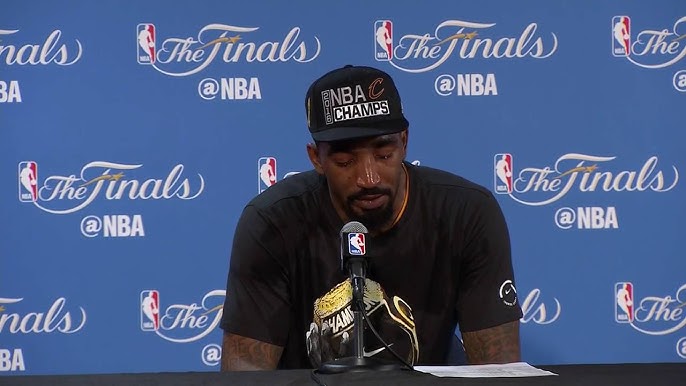
Smith was traded from the Knicks to the Cleveland Cavaliers in January 2015, a move that helped revive his career and eventually led to a championship in 2016. But his comments show how differently that chapter felt from the inside. To fans, it was a transaction. To Smith, it was happening while he says he was dealing with pain, addiction and a lack of support.
Smith is not asking anyone to rewrite every part of his career. He is pointing to something more uncomfortable: the league has gotten better at talking about mental health, but talking is not the same as caring when a player is struggling in real time.
The fun version of JR Smith is easy to remember. The heat-check threes. The tattoos. The champagne. The shirtless parade legend. But this version matters, too.
