
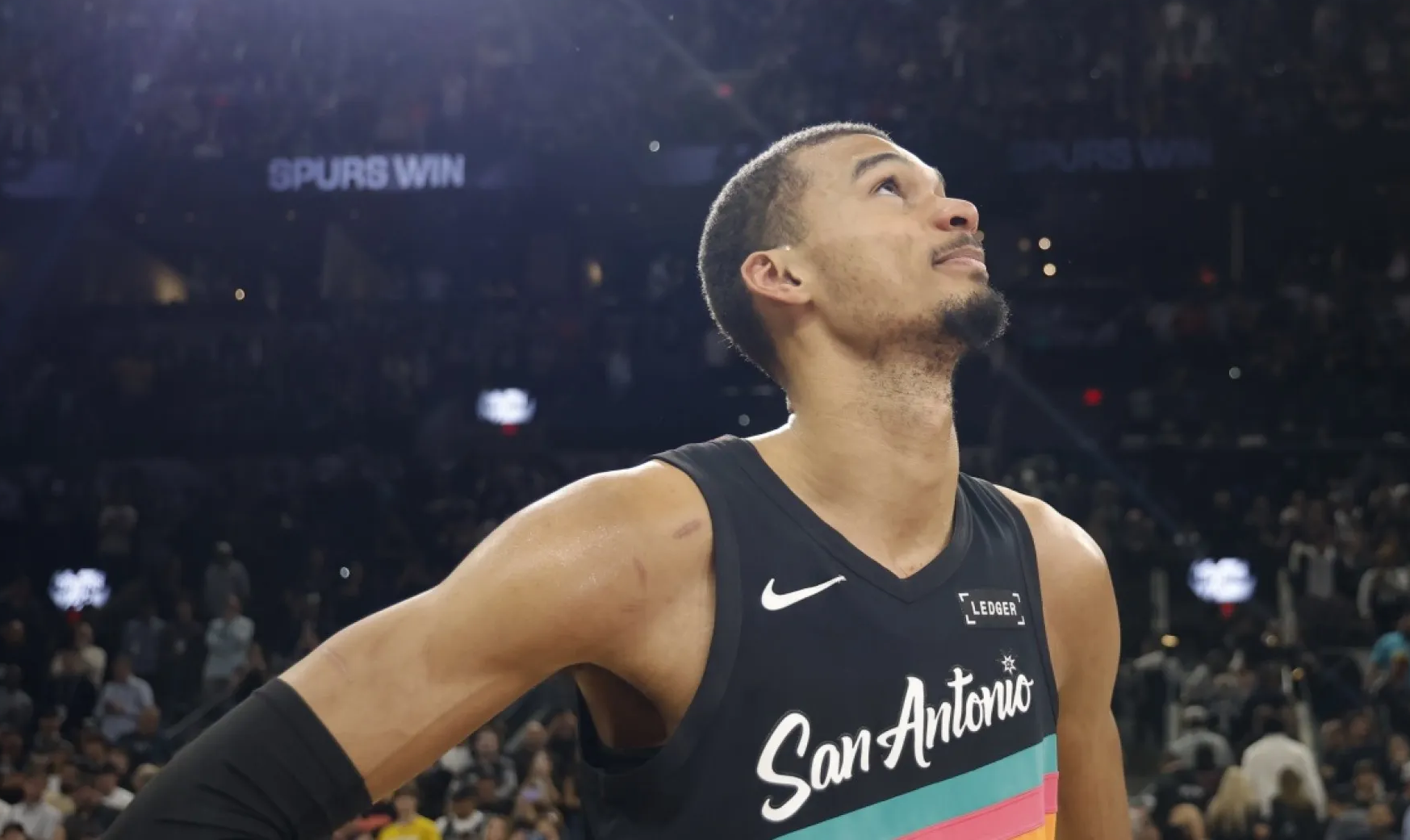
Victor Wembanyama was asked about something larger than basketball, and he answered like someone unwilling to inherit an old lie.
French reporter Maxime Aubin framed the question around the insults and clichés that still trail emotional athletes: “Wemby’s too emotional.” “Wemby should stop crying.” “Wemby’s gay.” Aubin’s point was not to amplify those lines, but to challenge the tired idea beneath them; that emotion is weakness, that tears diminish competitiveness, that masculinity must always arrive dry-eyed and armored.
Wembanyama’s answer was striking because it did not sound rehearsed.
“That’s a tough question. I think it’s first and foremost a fear of judgment. Like this feeling that you have to act a certain way, social codes, I guess. Personally, I refuse to carry the burden of having to hide my emotions.”
“Wemby’s too emotional.” “Wemby should stop crying.” “Wemby’s gay.”
Can we stop with the tired old clichés that treat emotions as a weakness, either in sports or in life in general?
I asked Wemby about why that is. Here’s his response:
“That’s a tough question. I think it’s…
— Maxime Aubin (@MaximeAubin1) April 29, 2026
That last sentence lands hardest. Not because it is defiant in the usual sports way, but because it refuses the performance entirely. Wembanyama is not asking permission to care. He is not apologizing for tears after a meaningful win or pretending emotion slipped out by accident. He is saying plainly that hiding joy, pressure, relief or vulnerability is not strength. It is labor. It is a burden. And he will not carry it.
Basketball has always celebrated emotion selectively. Rage is allowed. Swagger is marketable. Trash talk is culture. A primal scream after a dunk becomes a highlight. But tears still make too many people uncomfortable, especially when they come from a 7-foot-4 franchise player expected to look like the future and behave like steel. Wembanyama breaks that script. He can block shots, dominate space, reshape a franchise and still feel the weight of the moment.
The lazy insults say more about the audience than the athlete. Wembanyama’s response says something more valuable about him. He understands that greatness does not require emotional silence. Sometimes it requires the opposite: enough self-possession to be seen fully and not shrink from it.
For a player already redefining what a big man can be, this may be another kind of evolution. Wembanyama is not just expanding the geometry of the court. He is expanding the emotional vocabulary of stardom.
