
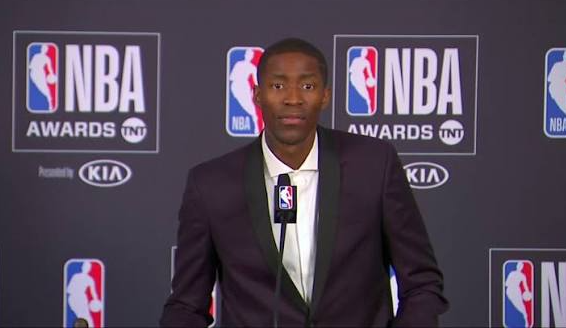
Jeff Teague believes Jamal Crawford’s game required a very specific kind of coaching – and he sees a similar challenge with LaMelo Ball today.
Responding to Crawford’s own comparison between himself and Ball, Teague explained that certain highly creative players cannot simply be dropped into a rigid system and expected to thrive. In Crawford’s case, Teague believes the key was allowing him to improvise rather than trying to control every possession.
“You just got to be like, ‘Hey Jamal, get in and just be Jamal,’” Teague said.
That freedom was a major part of what made Crawford unique. Over a 20-year NBA career, he became one of the league’s most unpredictable scorers, combining elite ball-handling with difficult pull-up jumpers, hesitation moves and unconventional shot creation. He won the Sixth Man of the Year award three times and scored 19,419 career points.
Teague argued that Crawford might not have been an ideal fit for coaches who demand strict structure on every possession. He specifically mentioned Gregg Popovich and former Hawks coach Mike Budenholzer as examples, though that assessment is Teague’s opinion rather than something Crawford’s career ever directly tested.
He also compared Crawford’s creativity to Manu Ginóbili, another player famous for attempting plays that could look chaotic until they worked.
But Teague identified an important difference.
Ginóbili developed within European basketball and still operated with many of its traditional principles – ball movement, quick decisions and the extra pass. Crawford, in Teague’s view, was even more instinctive.
“Jamal is like, wildcard,” Teague said. “If you don’t let him be Jamal Crawford, you not going to get the best of him.”
Jeff Teague on Jamal Crawford saying his player comparison in today’s game is LaMelo Ball:
“You got to coach them a certain way, like Jamal you can’t put him in a certain system. You just got to be like, “Hey Jamal get in and just be Jamal.” Like he couldn’t play for coach Bud.… pic.twitter.com/hyhfISZ6Tg
— NBA Courtside (@NBA__Courtside) August 18, 2026
That is where the LaMelo comparison comes in.
Ball has similarly built his game around imagination. His passing angles, deep pull-up threes and willingness to attempt plays other guards might never consider can make him difficult to scheme for; both for opponents and, at times, for his own coaches.
Teague’s point is not that Crawford and Ball are identical players. Crawford was primarily a scoring guard who became one of the greatest bench weapons in NBA history, while Ball has spent much of his career functioning as a primary playmaker.
The similarity is philosophical. Both are at their best when basketball does not feel overly scripted.
For coaches, that creates a delicate balance. Structure is necessary, particularly when trying to build a winning offense. But with certain players, too much structure can eliminate the very qualities that make them special.
Teague experienced Crawford up close during their years together in Atlanta. And his conclusion is simple: some players need to fit the system. With Jamal Crawford, the system needed to leave enough room for Jamal Crawford to be himself.
