
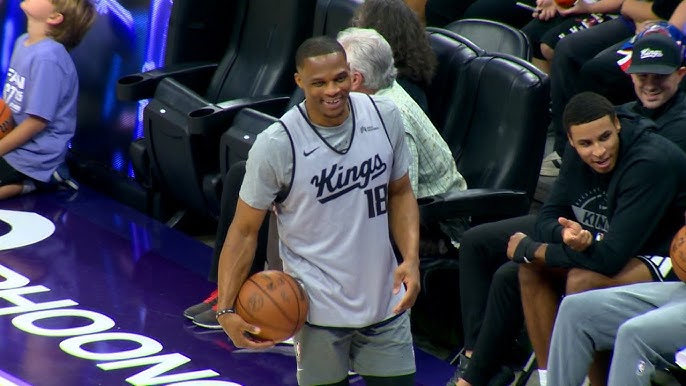
Patrick Beverley believes Russell Westbrook’s final years in the NBA were shaped by something bigger than basketball.
Speaking after Westbrook announced his retirement following 18 seasons, Beverley argued that years of relentless criticism changed the way fans viewed the former MVP; and eventually influenced the way decision-makers around the league evaluated him as well.
“I think the media is so strong that it allowed fans to call him names,” Beverley said. “It allowed fans to have opinions about his game, which also forced team owners, GMs, presidents to look at him a certain way.”
Beverley’s point is ultimately an argument about reputation.
Westbrook remained productive late in his career and most recently averaged 15.2 points per game with Sacramento, yet the conversation surrounding him frequently centered on declining efficiency, shooting limitations and questions about how easily his style could fit into a modern NBA offense. He retired as the league’s all-time leader in triple-doubles with 209, a nine-time All-Star and the 2017 MVP.
Beverley believes those accomplishments should have carried more weight when teams evaluated whether Westbrook still belonged in the league.
To illustrate his point, he brought up Lonnie Walker IV.
“When you see Lonnie Walker, and it’s no disrespect to Lonnie Walker, he’s a good friend of mine, but if he can make an NBA team, Russell Westbrook can make an NBA team without a doubt,” Beverley said.
Patrick Beverley says the media killed Russell Westbrook’s game:
“I think the media is so strong that it allowed fans to call him names. It allowed fans to have opinions about his game, which also forced team owners, GMs, presidents to look at him a certain way. When you talk… pic.twitter.com/AwyOGib0qF
— NBA Courtside (@NBA__Courtside) August 18, 2026
Beverley has been consistent in his defense of his former Lakers teammate.
Earlier this summer, he argued that Westbrook was unfairly blamed for many of the Lakers’ problems and that the fallout from his Los Angeles tenure damaged the way the rest of the league perceived him.
Their relationship makes that support particularly notable.
Westbrook and Beverley were once among the NBA’s most visible rivals, dating back to Beverley’s collision with Westbrook during the 2013 playoffs and years of public shots between the two guards. They eventually became teammates with the Lakers in 2022 and developed a considerably different relationship once they shared a locker room.
Now Beverley is defending the player he once battled against. Westbrook’s career does not require anyone to ignore his weaknesses. His outside shooting declined, his turnovers could be costly and his fit became increasingly complicated as he aged.
Beverley’s argument is simply that those weaknesses became the entire conversation.
By the time Westbrook reached the final stage of his career, he believes the narrative surrounding him had become stronger than the player himself.
