
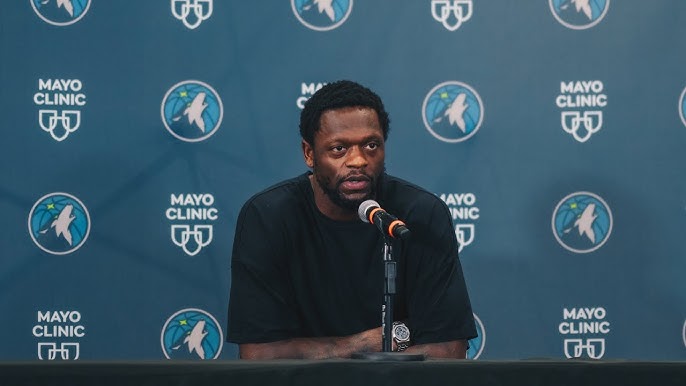
The Timberwolves did not trade Julius Randle because he cannot play. That would be lazy. Randle can still score, still pass, still punish mismatches, and still give a team real offensive firepower.
Minnesota traded him because the next version of the Timberwolves needed something different.
The Timberwolves are sending Randle and the No. 28 pick in the NBA Draft to the Brooklyn Nets as part of a three-team trade that also sends Nic Claxton to the Chicago Bulls. Minnesota receives Brooklyn’s No. 33 pick, moving back only five spots while shedding Randle’s salary and gaining additional roster flexibility.
At first glance, the move can seem underwhelming. Randle is the biggest name in the deal, and Minnesota appears to be taking a step back in talent. But that interpretation misses the larger picture. This trade was never primarily about draft picks. It was about flexibility, roster construction and organizational belief.
The first domino is Ayo Dosunmu. Minnesota reportedly made retaining Dosunmu a major offseason priority after his outstanding postseason performance, and his new five-year, $112 million contract reflects that commitment. The Timberwolves clearly view him as a core piece of their future and wanted the financial room to make that investment without putting themselves in an even tighter cap situation.
But the trade is about more than Dosunmu. For the first time in his NBA career, Naz Reid is expected to enter a season as Minnesota’s full-time starting power forward. Reid has spent years proving he is more than a bench spark plug. He has become one of the league’s most productive reserve big men, capable of stretching the floor, scoring efficiently and creating matchup problems. By moving Randle, the Timberwolves are effectively telling Reid that they believe he is ready for a larger role and greater responsibility.
The same message applies to Jaden McDaniels. Minnesota appears ready to bet on internal growth rather than external accumulation. McDaniels has already established himself as one of basketball’s elite perimeter defenders, but the organization clearly believes there is more offensive upside to unlock. With Randle gone, there are more shots, more possessions and more opportunities available for McDaniels to expand his game.
That is what makes this trade interesting. Minnesota is not simply clearing salary. The Timberwolves are choosing a direction. They are building around Anthony Edwards and creating more space for the players they believe will define the franchise’s future alongside him. Reid, McDaniels and Dosunmu are all younger, more flexible fits around Edwards than a ball-dominant forward like Randle.
Championship teams eventually reach a point where difficult choices have to be made. The Wolves could have continued trying to fit everyone together and dealt with the financial consequences later. Instead, they acted early, gained flexibility and created clearer developmental pathways for players they view as long-term pieces.
Brooklyn gets a proven scorer and a first-round pick. Chicago lands Claxton. Minnesota gets flexibility, retains Dosunmu, opens the door for Naz Reid’s promotion, and doubles down on the continued growth of Jaden McDaniels.
That may not be the move that wins headlines today. But it might be the move that makes more sense a year from now.
