
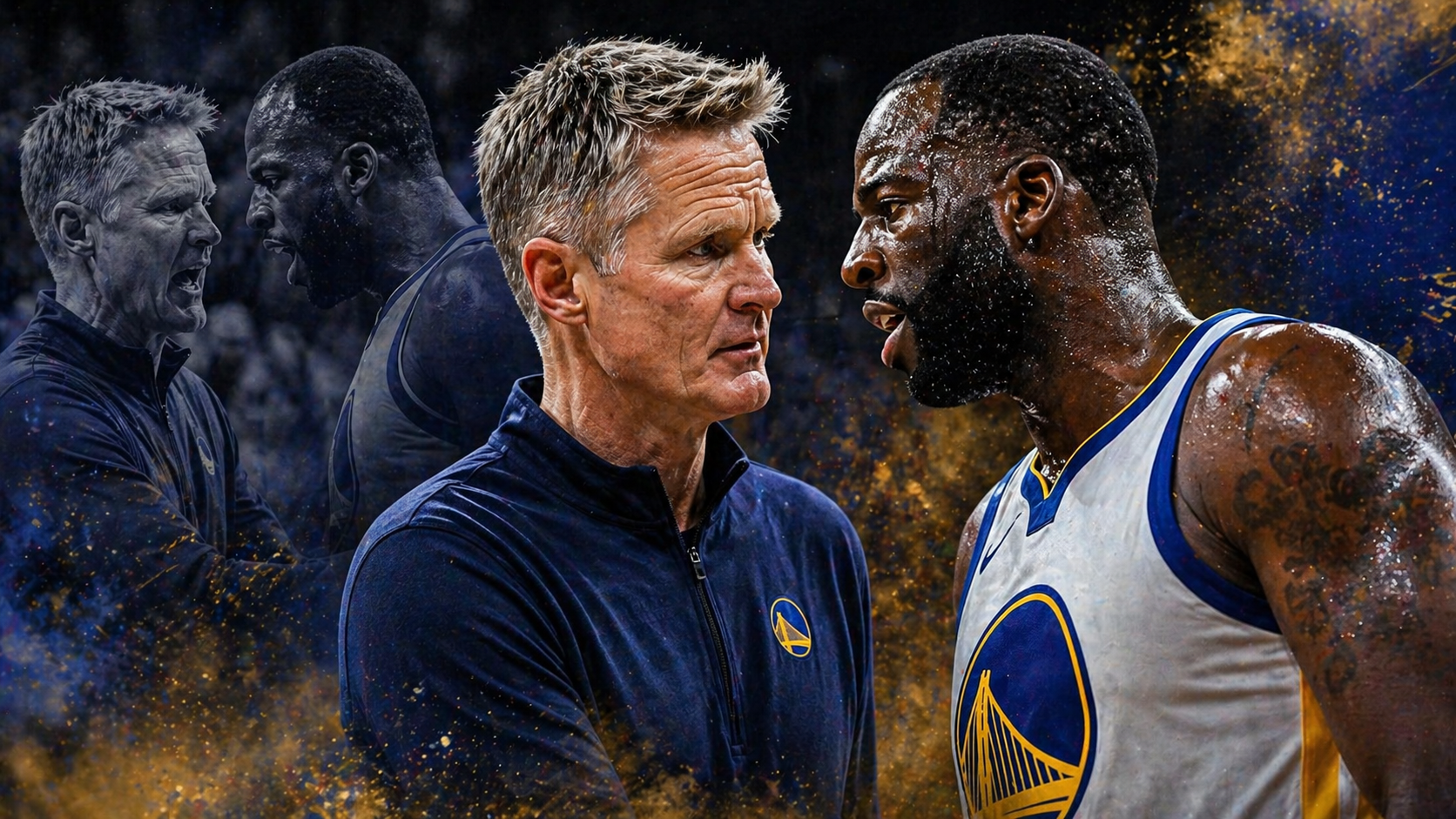
Steve Kerr has described Draymond Green before as the best defender he has ever seen, but his latest comments in The New Yorker went deeper than praise. They sounded like the full emotional ledger of a basketball relationship that has delivered championships, conflict, exhaustion and loyalty in almost equal measure. Kerr said Green is “the best defensive player I’ve ever seen,” an assessment he framed against the fact that he played with Scottie Pippen and Dennis Rodman, two of the defining defenders of the 1990s.
That comparison is not casual. Kerr’s point was that the modern game asks defenders to solve more problems than the game he played in. Green’s greatness, in Kerr’s telling, is not built on traditional size or clean box-score dominance, but on recognition speed, anticipation and the ability to guard “any action, any position, any player.” It is the invisible architecture of Golden State’s dynasty: Green seeing the play before the play, arriving at the rotation before the pass, blowing up an offense before most people watching even understand what is developing.
But Kerr’s interview was not only a tribute. It was also a confession about the cost of coaching Green. He acknowledged that the two have had real confrontations, saying that early in his Warriors tenure they would have “three knockdown, dragouts a year,” with people pulling them apart. Kerr framed those battles as part of establishing standards inside what he called a team “community” – not just a roster, but “a little society with values and standards and expectations.”
That is what makes the relationship so fascinating. Green is both the embodiment of Golden State’s basketball intelligence and the player most capable of testing its emotional limits. Kerr said Green has the brain to coach one day, but questioned whether he has the patience and emotional control required. That is not an insult so much as a precise diagnosis of the Draymond experience: the same fire that makes him singular can also make him combustible.
The most haunting line was Kerr’s admission that there are things Green has done that he can “never forgive,” followed immediately by the promise that he would “do anything for him.” In that contradiction lives the entire Warriors era. Green has been essential and impossible, brilliant and volatile, the player who held the dynasty together and sometimes threatened to pull at its seams.
Kerr did not make Draymond sound simple. He made him sound human. And maybe that is the truest tribute of all. For Golden State, Green has never been just a defender, just a problem, or just a leader. He has been all of it at once; the chaos and the conscience, the argument and the answer.
