
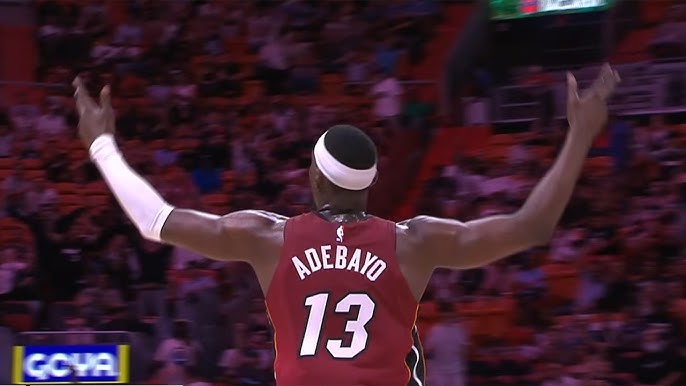
Bam Adebayo scored 83 points Tuesday night, the second-highest total in NBA history. The stat line alone demands attention. Eighty-three points is supposed to feel sacred, a number that instantly carries the gravity of basketball mythology. But if we’re being honest, the reaction across the basketball world felt strangely muted. Not because Adebayo did anything wrong. If anything, he did exactly what any competitor would do if handed the opportunity. The discomfort lies elsewhere; in the circumstances that made an 83-point game feel less like history and more like a symptom.
None of this is meant as a shot at Adebayo. If a team keeps feeding you the ball and the defense keeps fouling you, you take the points. That’s the job. The problem is that the night revealed a lot about the current ecosystem of the NBA, and not all of it flattering.
For starters, the opponent matters. The Washington Wizards are not simply struggling; they are openly in the business of losing. Tanking is not even a whisper anymore. It is structural, visible, almost administrative. When a historic scoring night arrives against a roster designed to lose games, it inevitably changes the texture of the accomplishment. Records are supposed to feel like mountains climbed against resistance. This felt more like a long downhill run.
Then there was the choreography of it all. Miami clearly realized something historic was brewing and leaned into it hard. Possession after possession turned into a delivery system for Adebayo touches. The Heat didn’t hide it, either. They forced the ball to him relentlessly, even as the game’s outcome was already secure. Again, that’s understandable; basketball history has always involved a little theater. But the stagecraft here felt unmistakable. It had the energy of a team deciding mid-game that tonight was going to be about one number and nothing else.
The Wizards, for their part, tried almost everything and nothing at the same time. They double-teamed him. They triple-teamed him. And yet somehow the end result was often the same: a whistle and another trip to the free-throw line. Adebayo finished the night with 43 free-throw attempts, a number that almost reads like satire. Forty-three. Even in an era defined by foul hunting and whistle inflation, that number sits somewhere between absurd and revealing. When a single player attempts more free throws than many entire teams used to shoot in a game, it says something about how the modern NBA is officiated, and about the incentives players are given to live at the line.
The efficiency tells another story. Adebayo’s field-goal percentage sat under 50 percent. That is not meant as criticism of him – 83 points is 83 points – but it does underline how differently scoring works in today’s game. When Kobe Bryant scored 81 in 2006, the performance felt like a flamethrower. Shot after shot after shot. A relentless barrage that forced a stunned Toronto defense to absorb wave after wave of difficult makes. Adebayo’s night, by contrast, often felt like arithmetic: drives, fouls, whistles, free throws, repeat. The box score grows, but the aesthetic is different.
And that brings us to the uncomfortable comparison that will inevitably follow Adebayo’s night forever. Passing Kobe Bryant on the single-game list is historic on paper, but lore isn’t created by spreadsheets. I’m not even a Kobe fan, never was, but his 81 occupies a place in basketball culture that transcends numbers. It lives in the collective memory as something almost mythic. Tuesday night’s 83, impressive as it was, never quite generated that same electricity. It felt closer to Devin Booker’s 70-point game in 2017: another stat line inflated by late-game force-feeding and the quiet understanding that history was being chased whether the game required it or not.
Even Wilt Chamberlain’s famous 100-point night invites comparison, and yes, Wilt almost certainly benefited from stat-padding and cooperative circumstances when that number was reached in 1962. But there’s a difference that matters. Chamberlain already owned the record. He wasn’t chasing someone else’s legend; he was extending his own. That distinction changes the psychology of the moment. Wilt was adding a chapter to a book he had already written. Everyone else is trying to sneak into the margins.
What Tuesday night really reflected, though, might best be described as the spirit of the modern NBA: Adam Silver’s NBA, if you want to give it a name. A league optimized for offense, for whistles, for statistical explosions, for moments that travel well on social media even if they leave traditionalists feeling a little uneasy. Silver’s NBA produces scoring spectacles with remarkable frequency. One night it’s 60 points. Another night it’s 70. Now it’s 83. The numbers keep climbing, and yet somehow the awe doesn’t always climb with them.
That’s the paradox. We are watching some of the most talented players the sport has ever seen. The skill level is breathtaking. But the environment around them increasingly feels engineered for excess. Defenses are constrained. Physicality fluctuates. Tanking distorts competition. Whistles inflate totals. And when a player reaches a number as sacred as 83, the first reaction is not disbelief but analysis: How did we get here?
Again, none of this is Bam Adebayo’s fault. Put any great player in that situation and the same thing probably happens. If anything, his night was the logical outcome of the system surrounding him. But that might be the most telling part of the story. Eighty-three points should feel like a miracle. On Tuesday, it felt like the league’s current logic playing out exactly as designed.
