
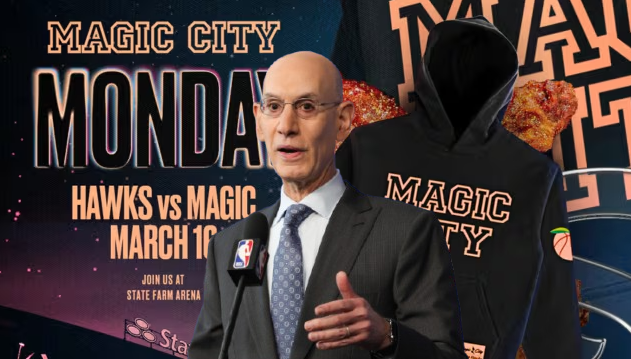
The NBA made the correct call when commissioner Adam Silver canceled the Atlanta Hawks’ planned “Magic City Monday” promotion for the team’s March 16 home game against the Orlando Magic. The event had been designed as a collaboration with Magic City, the well-known Atlanta strip club, before the league stepped in after hearing concerns from fans, business partners and employees. Silver said canceling the promotion was the right move for the “broader NBA community.”
That was not prudishness. It was basic judgment. The NBA is a global league that markets itself to families, children, corporate sponsors and a diverse fan base across multiple countries and cultures. A franchise can celebrate its city’s culture in countless ways, but officially promoting an adult entertainment venue inside an NBA game environment crosses a line the league simply does not need to blur.
What made the promotion even more misguided was the broader reality surrounding the industry itself. This is not just about optics or taste. Across the United States, adult-entertainment venues have repeatedly been linked in documented cases and policy debates to trafficking, assault, exploitation and worker mistreatment. That does not mean every club operates that way, and it would be unfair to suggest that every worker’s experience is the same. But it does mean the NBA had every reason to avoid turning such a setting into a celebratory, league-adjacent theme night. In that context, the idea was not merely tone-deaf. It was reckless, because it risked glamorizing an environment that, for many workers, has also been associated with very real danger and abuse.
Silver’s decision was right because the issue was bigger than one team trying to be clever. The NBA has spent years presenting itself as progressive, inclusive and socially aware. It has publicly embraced women’s empowerment messaging, supported initiatives around workplace respect and inclusion, and worked hard to broaden who feels welcome in its arenas and around its product. Allowing a team to stage a promotion centered on a strip club would have undercut that message in an instant. Even if some fans found the concept funny or culturally authentic to Atlanta, the league had every reason to recognize that the official endorsement of that setting would send a confused and unnecessary message about its values.
It was also the right decision because leagues do not operate only on what is technically possible; they operate on what is institutionally responsible. The Hawks may well have seen the event as a tongue-in-cheek tribute to an infamous piece of Atlanta nightlife and pop culture. But once public backlash started building, the NBA had to think beyond one night’s buzz.
In that sense, Silver’s response was not overreaction. It was clarity. Professional sports leagues often get in trouble when they mistake virality for wisdom and confuse attention with smart branding. This was one of those moments where the obvious joke threatened to become a very real self-inflicted wound. By stepping in, Silver avoided a needless controversy and protected the league from having to explain why one of its franchises thought an adult nightclub tie-in belonged in a product sold to everyone from school-age fans to blue-chip sponsors.
The Hawks can still celebrate Atlanta. They can spotlight the city’s music, food, fashion, neighborhoods and history in ways that are creative and true to place. But the NBA was right to say that this particular idea should go no further. Not every local reference needs to become an official theme night.
