
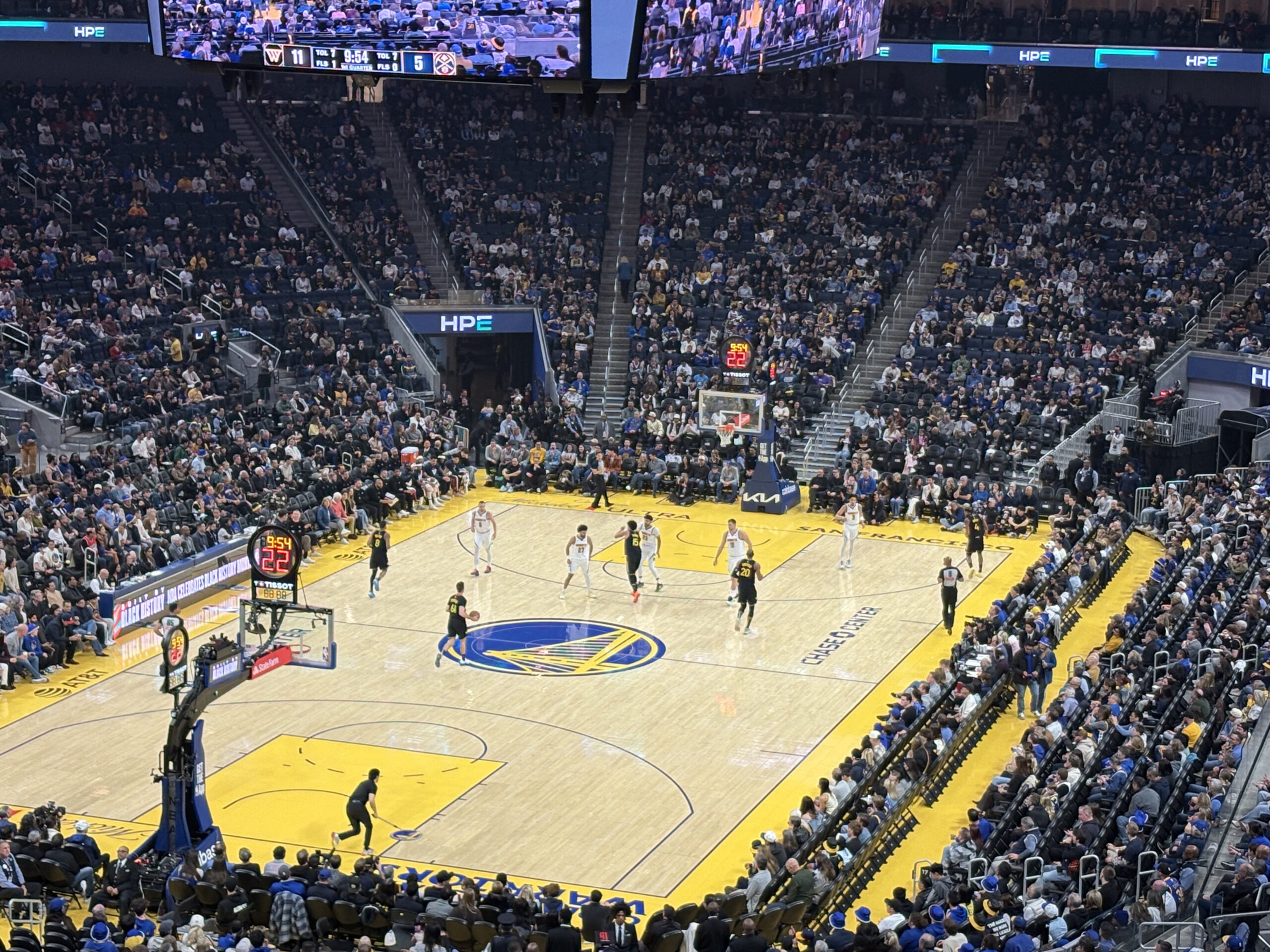
When Golden State Warriors and Denver Nuggets meet on the court, it’s often more than just another Western Conference game, it’s a chapter in a rivalry that’s shifted shapes multiple times over the past decade. As they prepared for their February 22 matchup at Chase Center, the history between these two postseason‑ready teams underscored how competition, star evolution, and strategic identity have defined their clashes this decade.
At the broadest level, Denver has traditionally held the edge in the head‑to‑head series. Through the 2025‑26 season, the Nuggets hold an all‑time regular‑season advantage over the Warriors, with Denver leading 110‑87 in wins. That edge isn’t just historical trivia; it speaks to how the Nuggets, particularly in recent years, have often been the more consistent regular‑season threat when these teams square off.
But raw record only tells part of the story. The relationship between these franchises was shaped in earnest in the late 2010s and early 2020s, as both teams transitioned into title contenders driven by generational talents. For Golden State, the core built around Stephen Curry, Klay Thompson, and Draymond Green powered multiple championships that defined the Warriors’ dynasty. Denver’s rise was centered on the steady brilliance of Nikola Jokić, whose MVP‑level play has made the Nuggets a perennial contender and a central figure in every matchup against elite Western opponents.
In the playoffs, despite the Nuggets’ regular‑season success against the Warriors, Golden State holds a more favorable mark historically: the Warriors lead 8‑3 in postseason games. Most of those playoff games came before this decade, but the trend points to how Golden State’s experience on basketball’s biggest stages has often translated into critical series wins when it mattered most.
Over the past few seasons, the narrative has swung back and forth. The Warriors endured a prolonged regular‑season skid against Denver that stretched over years, until Golden State finally snapped that run in the 2024‑25 season with a meaningful 118‑104 victory at Chase Center. That win served as an exclamation point that the Warriors could still rise to the occasion against a Nuggets team that had dominated them for so long.
Yet, Denver answered in kind. In March 2025, the Nuggets won a critical game in San Francisco despite missing stars, extending a winning streak over the Warriors that dated back to 2022. That consistency, especially in times when Golden State’s roster stability wavered, highlighted Denver’s depth and adaptability.
Within this broader arc, individual battles, especially between Curry and Jokic, have become underlying themes whenever these teams meet. Even when Warriors wins over Denver have been rare in recent years, the matchups often feature standout efforts from one of these stars, underlining the weight each franchise places on their cornerstone players.
However, this time, the signs were different. While the Nuggets are slowly getting back to full strength after facing adversity through injury for most of the season, the Warriors were without Stephen Curry, Jimmy Butler, newly acquired Kristaps Porzingis, who missed the game due to a not closer disclosed illness, and Draymond Green, who was a late scratch due to back problems.
Still, the Golden State Warriors turned Sunday afternoon at Chase Center into a reminder that identity can travel farther than availability. Golden State still overwhelmed the Denver Nuggets 128–117 behind a barrage of three-pointers and a closing stretch that flipped the game in a matter of minutes.
It was one of Golden State’s most stylistically “Warriors” wins of the season: pace, spacing, quick decisions,and a volume of makes from deep that Denver simply couldn’t match.
Denver had the best player on the floor and he played like it. Nikola Jokić authored a monster triple-double – 35 points, 20 rebounds and 12 assists – controlling tempo with his usual calm and punishing mismatches whenever Golden State’s defense blinked. For long stretches, it looked like that might be enough, especially when the Nuggets erased a comfortable first-half deficit and pushed ahead in the third quarter.
Then the game turned into a track meet of threes and momentum. Golden State, after a cold spell from outside, reignited its long-range engine late and closed the final 13 minutes with a decisive 35–16 advantage. The Warriors finished with 21 made three-pointers and won the math battle in a landslide, outscoring Denver 63–24 from beyond the arc, a gap so extreme it effectively wiped out Denver’s advantage at the free-throw line.
At the center of the finishing kick was Brandin Podziemski, who saved his loudest work for the fourth. He scored 15 of his 18 points in the final period, pairing shot-making with hustle plays and playmaking (15 rebounds, nine assists) that kept Denver from ever fully stabilizing. Moses Moody led Golden State in scoring with 23, while Al Horford, thrust into a bigger role, delivered a season-high 22 points and drilled six threes, functioning as both release valve and organizer when possessions got tight. De’Anthony Melton added 20, and the Warriors had scoring support up and down the rotation as the game opened into the kind of spacing contest Golden State prefers.
Denver got secondary scoring, Jamal Murray had 21 and Christian Braun 18, but the Nuggets never found a clean answer for the Warriors’ shot volume from deep once the fourth-quarter run arrived. In the end, the result read like a blueprint: even without star power, Golden State can still win on nights when the three-point line becomes a lever, one they know how to pull harder than almost anyone.
