
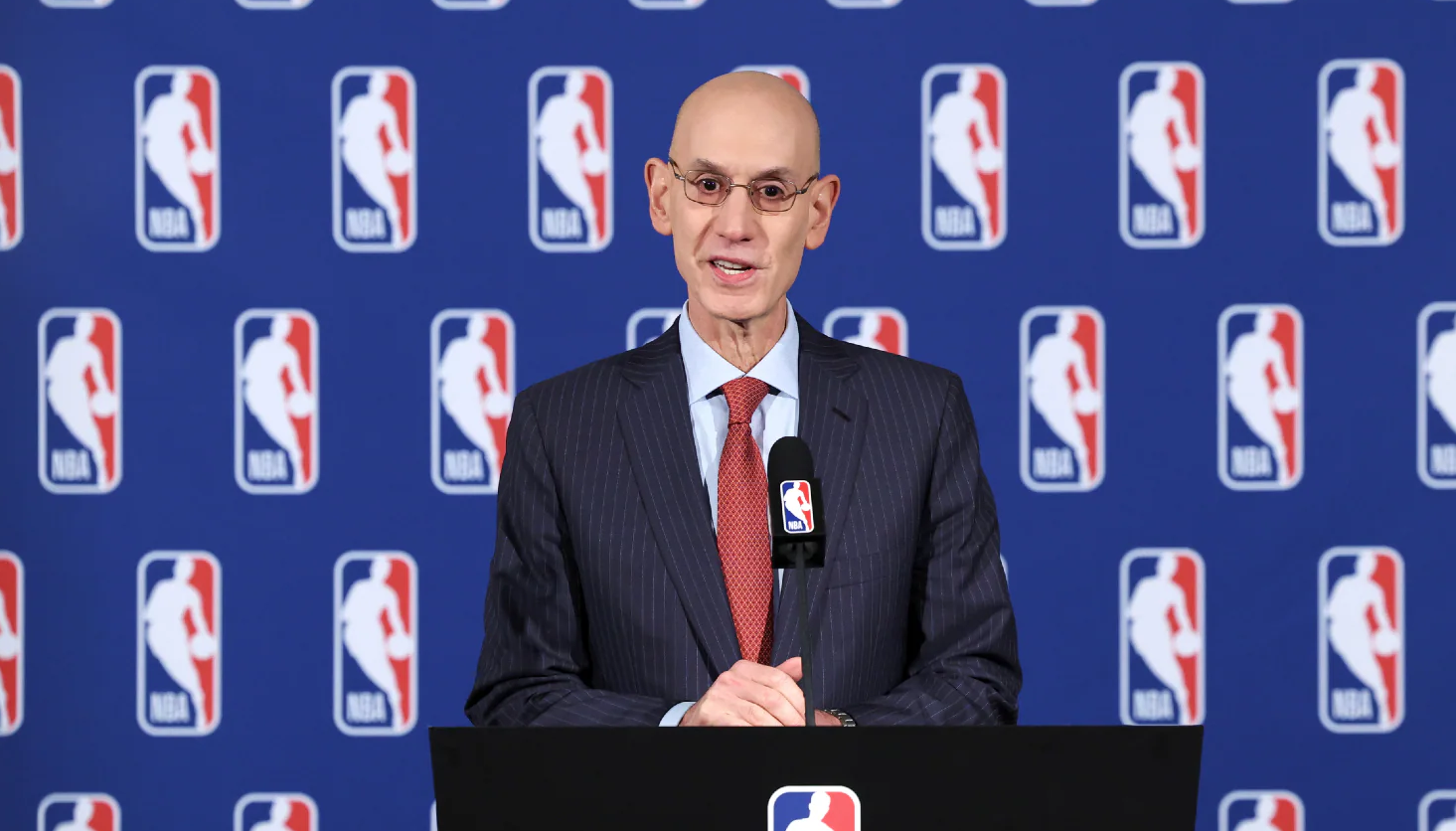
Adam Silver faced a pointed question about one of the NBA’s most sensitive business issues: whether the league’s approval can effectively help wealthy individuals and companies buy legitimacy in the eyes of fans.
During his media availability following the NBA Board of Governors meetings, Pablo Torre asked Silver whether he was concerned that ownership of an NBA team – or association with the league – could function as a form of credibility laundering, and whether recent controversies had convinced him that the NBA needed to strengthen its due-diligence process.
Silver pushed back on the idea that this represents a widespread trend among NBA ownership groups.
“I don’t see a trend or some widespread issue, certainly among our principal owners, that gives me cause for concern,” Silver said.
The commissioner acknowledged that the NBA conducts substantial background work when evaluating prospective owners and investors, but also suggested there are practical limits to what a private sports league can uncover. The NBA does not have the investigative powers of a federal agency, and its process depends in part on access to information and cooperation from the people involved.
Silver also emphasized that owning an NBA franchise comes with obligations extending beyond financial qualification. Teams are civic institutions as well as businesses, and the league expects owners to understand their responsibilities to employees, fans and local communities.
Torre’s question arrives at a particularly relevant moment for the league. NBA franchise values have exploded, bringing increasingly sophisticated investors, private-capital firms and enormously wealthy ownership groups into the sport. The league has also opened the door to minority investments from private-equity funds and other institutional capital, while potential expansion franchises in Seattle and Las Vegas could command unprecedented prices. The NBA has hired PJT Partners to evaluate prospective markets, ownership groups, arena infrastructure and financial considerations as part of that expansion process.
At the same time, recent events have intensified scrutiny of the league’s ability to properly evaluate the people and businesses entering its ecosystem.
The Clippers controversy involving Steve Ballmer, Kawhi Leonard and Aspiration has become the most prominent example. The NBA ultimately determined that Los Angeles violated salary-cap circumvention rules through off-court income arrangements involving Leonard, leading to severe penalties against the franchise and Ballmer.
That episode illustrates why Torre’s question went beyond traditional ownership approval. An NBA relationship itself carries enormous reputational value. Becoming an owner, investor, sponsor or major business partner places an individual or company alongside one of the world’s most recognizable sports brands; and, in the eyes of some consumers, that association can implicitly signal legitimacy.
Silver, however, stopped short of suggesting that the league plans an overhaul of its current approval process. His position was essentially that the NBA already conducts significant vetting and that he does not currently see evidence of a systemic ownership problem serious enough to demand a fundamental change.
Adam Silver answers Pablo Torre’s question regarding the growing concern that wealthy individuals and entities are using the approval of the NBA to purchase credibility in the eyes of the public (meaning, fans), and whether he plans on changing anything about the due diligence… pic.twitter.com/0vsItO2r6J
— MrBuckBuck (@MrBuckBuckNBA) September 15, 2026
The exchange nevertheless exposed a growing challenge for the league.
As NBA franchises become multibillion-dollar global assets, determining whether someone can afford to buy into the league is only one part of the equation. The more difficult question is whether the NBA can adequately understand the businesses, relationships and reputational risks surrounding the people writing those checks.
Torre’s question put that issue directly in front of Silver.
For now, the commissioner’s answer is that the league remains comfortable with its process. But as NBA ownership becomes more expensive, more institutional and more interconnected with global finance, the scrutiny surrounding who receives the league’s stamp of approval is unlikely to disappear.
