
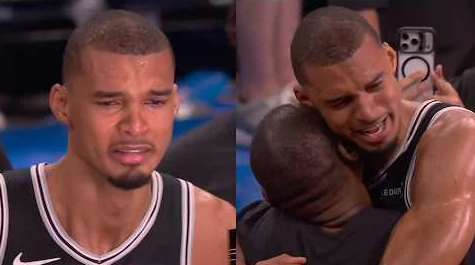
Victor Wembanyama is going to be one of the greatest basketball players of all time. That part no longer feels like a prediction as much as a scheduled event.
He is too skilled, too smart, too competitive and too physically impossible not to get there. Every game seems to include at least one possession that makes the rest of the NBA look like it was designed for a different species. A blocked shot that should not be reachable. A jumper released from a cloud. A defensive rotation that turns a layup into a business decision. Wembanyama is special, and anyone pretending otherwise is just trying to sound difficult.
But greatness also comes with a responsibility that has nothing to do with wingspan.
Wembanyama has to learn to control the emotional storms. Not erase them. Not become boring. Not turn into a robot. The fire is part of what makes him great. But there is a difference between intensity and losing the room for a moment. There is a difference between passion and letting frustration spill into gestures, complaints, reactions or outbursts that give opponents energy and officials a reason to look twice.
That is the next step.
The NBA is not kind to young superstars who show every emotion on their face. Veterans notice it. Coaches notice it. Defenders notice it. Crowds notice it. The playoffs notice everything. Once teams understand what gets under a player’s skin, they keep pressing that button until it breaks or stops working.
For Wembanyama, this is not about personality. It is about control. Tim Duncan built a dynasty in San Antonio by making panic look illegal. Dirk Nowitzki learned how to turn frustration into patience. Nikola Jokic can look annoyed at the entire concept of basketball and still make the right pass three seconds later. The greats feel everything. They just do not let everyone else drive the car.
Wembanyama is still young, and that is important here. He is carrying a franchise, facing impossible expectations and playing under a microscope that most players will never understand. Emotional reactions are human. But when you are the future face of the league, human is not always enough. The standard becomes unfair. Then it becomes normal.
The scary part for the NBA is that this is fixable. Wembanyama does not need a new jump shot, a new body or a new ceiling. He just needs more polish in the moments when games get loud and unfair. He needs to let bad calls, missed shots and physical play pass through him without changing his next possession.
Because the talent is already historic. The body is already unreal. The future is already waiting. Now comes the part that separates a spectacular player from a championship anchor: staying calm while the entire basketball world tries to shake him.
