
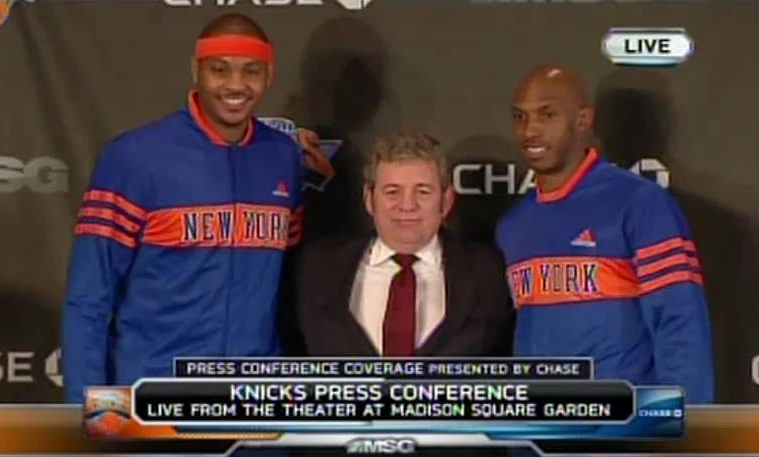
On February 22, 2011, the New York Knicks pulled off one of the most highly anticipated trades in franchise history, acquiring All-Star forward Carmelo Anthony from the Denver Nuggets in a blockbuster deal that reshaped both organizations and sent shockwaves through the NBA.
The trade came after months of speculation and intense negotiations. In the final version of the deal, the Knicks received Anthony along with Chauncey Billups, Anthony Carter, Renaldo Balkman, and Shelden Williams. In return, the Nuggets acquired a significant package: Raymond Felton, Danilo Gallinari, Wilson Chandler, Timofey Mozgov, $3 million in cash, and a 2014 first-round draft pick.
The magnitude of the trade reflected Anthony’s star power. A Brooklyn native, he had made it clear he wanted to play in New York, and the Knicks made their move before risking a summer bidding war in free agency. For New York, the deal was a defining moment in the franchise’s long attempt to return to relevance, pairing Anthony with Amar’e Stoudemire in what was hoped to be a foundation for title contention.
The trade didn’t stop there. That same night, the Knicks finalized a second deal with the Minnesota Timberwolves, acquiring Corey Brewer in exchange for Eddy Curry, Anthony Randolph, and another $3 million in cash.
In the immediate aftermath, reactions were mixed. Some hailed the boldness of bringing in a proven scorer like Anthony. Others questioned the depth sacrificed to make it happen. The Knicks made the playoffs in 2011, but the core never reached its full potential amid injuries, coaching changes, and cap constraints.
For Denver, the deal ushered in a more balanced, team-oriented era. Gallinari and Chandler became key contributors, and Felton’s brief stint helped steady the backcourt. Though the Nuggets didn’t find long-term playoff success right away, the assets they received helped build a more sustainable roster.
Fifteen years later, the “Melo trade” remains one of the most discussed deals in modern NBA history, a franchise-altering move that reflected the era’s growing player empowerment and set the tone for the superstar trade dynamics that would follow.
