
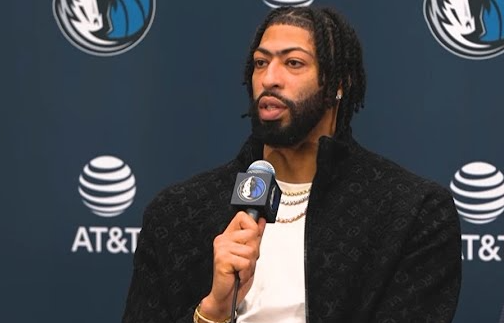
The Dallas Mavericks are reportedly facing a difficult calculus on whether to trade star big man Anthony Davis, with league chatter suggesting his market may be far cooler than his résumé would imply.
On Monday’s episode of ESPN’s The Hoop Collective, Tim Bontemps said that, contrary to the typical assumption of “three firsts, two swaps” and young players for a player of Davis’ caliber, executives around the league aren’t lining up to take on a 35‑year‑old Davis at roughly $63 million, especially with the expectation he would opt in to his deal.
Bontemps’ comments crystallize the tension between Davis’ elite two‑way impact when healthy and the pragmatic barriers of age, contract size, and team-building constraints in a cap‑managed environment. As he framed it, the package commonly associated with trading a top‑tier star may be unrealistic in this case, given what front offices project for Davis’ age curve and his financial commitments over the next seasons.
The financial dimension has been a recurring theme in coverage of Dallas’ situation, with multiple outlets highlighting that the Mavericks’ challenge is as much contractual as it is basketball. Reporting has pointed to Davis’ $62.8–$63 million figure, which complicates matching salary and narrows the pool of realistic bidders to teams that can absorb or construct the requisite outgoing money without gutting their rotation or future assets.
Despite the rising external speculation, some reporting has suggested the Mavericks would at minimum survey the market rather than rush into a move, and that expectations inside the league remain measured regarding the return Dallas could command if they did engage.
For now, the Mavericks’ conundrum is straightforward in its complexity: Davis remains a star whose presence can swing games and series, but the combination of age, salary, and option dynamics is muting the kind of bidding war typically associated with players of his stature. If Dallas explores scenarios, the outcome is likely to hinge less on reputation and more on fit, finances, and a partner’s tolerance for long-term risk
