
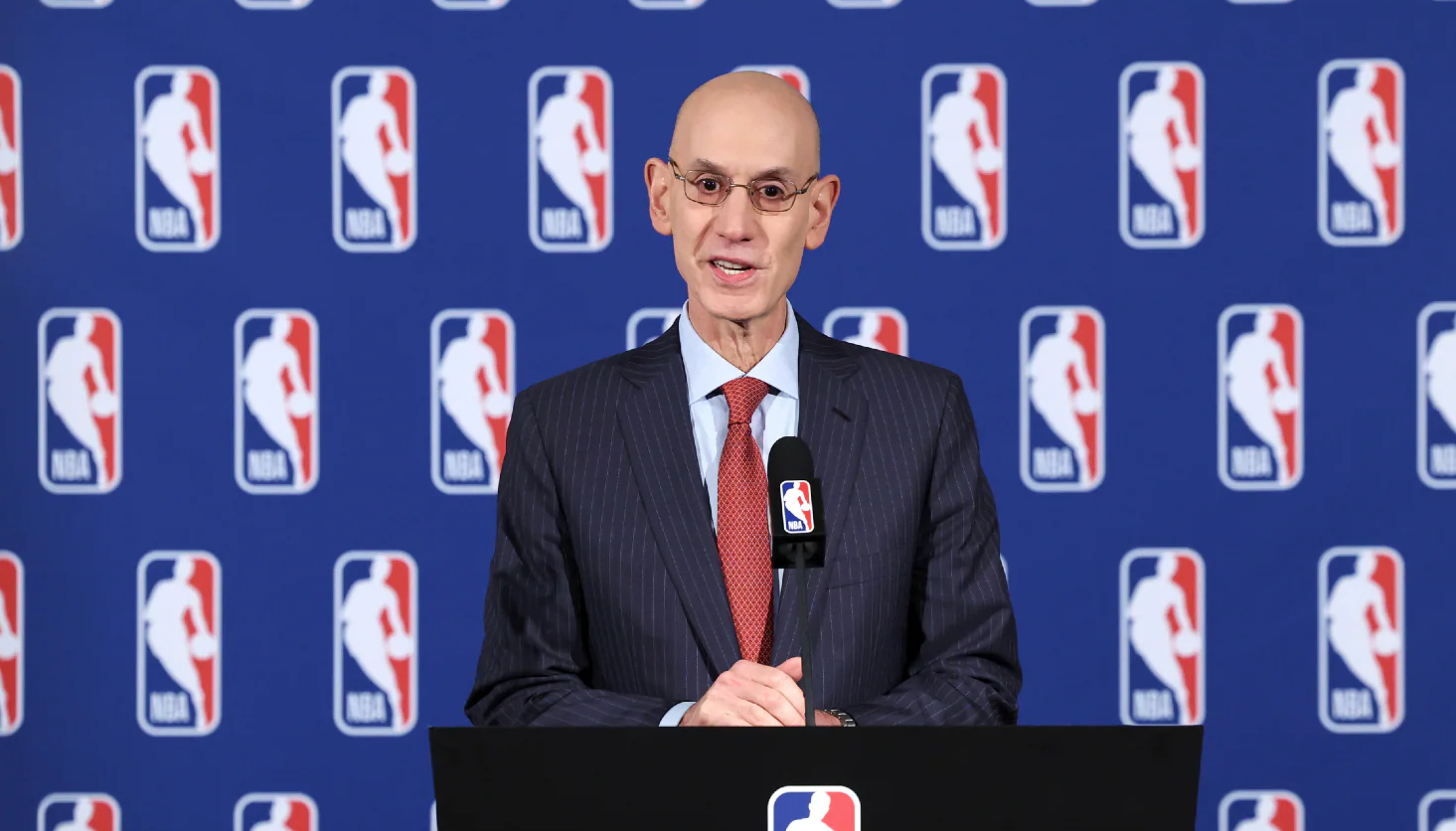
The NBA could eventually undergo one of the most significant changes in its history, with commissioner Adam Silver reportedly interested in reducing games from 48 to 40 minutes.
According to Sports Illustrated’s Chris Mannix, Silver remains receptive to introducing four 10-minute quarters, bringing the NBA in line with the format already used in international basketball, the Olympics and the EuroLeague.
Speaking alongside Rachel Nichols during a Sports Illustrated discussion about the growing number of injuries across the league, Mannix revealed that the commissioner has privately expressed interest in the idea.
“I actually think Adam Silver, from what I’ve heard, like he likes the idea of 40-minute games,” Mannix said, describing Silver’s international outlook on basketball.
The suggestion is not entirely new. In January 2025, Silver publicly acknowledged his interest in shortening NBA games during an appearance on The Dan Patrick Show.
“I am a fan of four 10-minute quarters,” Silver said at the time.
The commissioner argued that a shorter format could better accommodate modern television audiences while creating greater consistency between the NBA and international basketball. However, the idea has gained renewed attention amid a troubling wave of injuries early in the 2026-27 season.
Stars including Anthony Edwards and Jalen Williams have already suffered significant setbacks, reigniting discussions about player workloads, the demanding 82-game schedule and whether the NBA should consider structural changes to protect its athletes.
Reducing games by eight minutes would eliminate approximately 17 percent of the available playing time, potentially reducing the physical demands of the regular season.
But Mannix isn’t convinced that the solution would actually benefit the players who need it most.
After speaking with NBA coaches, he suggested that shorter games might simply encourage teams to play their superstars for a greater percentage of each contest. Rather than meaningfully reducing the minutes of players like Luka Dončić or Shai Gilgeous-Alexander, the change could primarily come at the expense of reserves and players further down the rotation.
Mannix also questioned whether the proposal would make financial sense. Fewer minutes could mean fewer commercial opportunities, potentially creating concerns for television partners and the league’s business operations.
There would also be enormous historical implications. Changing the length of NBA games would significantly affect individual scoring totals, statistical records and comparisons between generations.
A 40-minute NBA game would fundamentally change the statistical landscape of a league that has played 48-minute games for decades. For now, there is no indication that the NBA has actually thought about a change. Nevertheless, Silver’s willingness to consider such a dramatic adjustment highlights the difficult questions facing the league.
How can the NBA protect its biggest stars without compromising its competitive structure, financial interests and historical identity?
And perhaps more importantly, would shorter games actually prevent injuries, or simply change how coaches distribute playing time?
The answer remains uncertain.
But with injuries continuing to dominate headlines and player availability becoming an increasingly important concern, the conversation about fundamentally changing the NBA is unlikely to disappear.
