
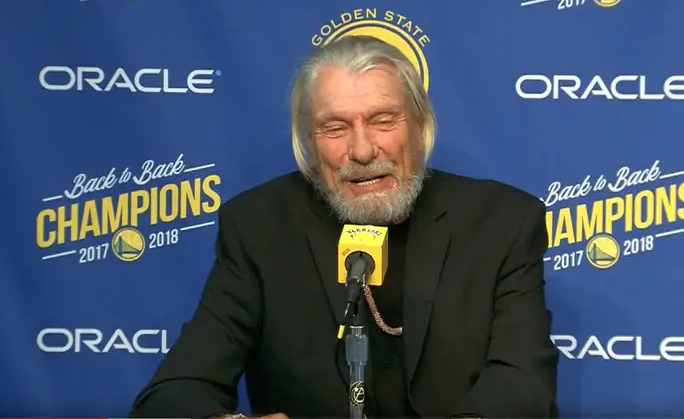
Bob Ryan’s memories of Don Nelson capture a version of the Hall of Famer that went far beyond his later reputation as an innovative coach.
To Ryan, Nelson was first and foremost a deeply competitive Celtic. A player whose standing inside the organization could spark arguments intense enough to become physical. Ryan recalled one bar-room debate with then-Celtics executive Wayne Embry over whether Nelson or Paul Silas was the better player. The discussion escalated to the point where both men reportedly threw their drinking glasses against a wall.
That story fits the larger picture Ryan paints of Nelson: opinionated, emotional, loyal and completely invested in basketball.
His place in Celtics history was also recognized by some of the franchise’s greatest figures. Bill Russell once referred to Nelson as “the ultimate Celtic,” a description that spoke to the qualities Boston valued during that era; toughness, intelligence, sacrifice and an ability to contribute without needing to dominate the spotlight.
Nelson’s influence also extended beyond his own role on the floor. Ryan recalled how he essentially took a young Dave Cowens under his wing when Cowens arrived in Boston as a rookie. Cowens would go on to become one of the defining players of the Celtics’ next championship generation, but early in his career Nelson helped him adjust to both the NBA and the culture of the organization.
That mentorship is an important part of Nelson’s legacy because it reveals a different side of a player often remembered mainly for his unorthodox jumper, timely scoring and championship pedigree. He was also someone capable of helping younger teammates understand what Boston basketball demanded from them.
Years later, when Nelson had moved into coaching and found himself on the opposite sideline from the Celtics, his appreciation for elite basketball remained just as strong.
Ryan recalled one particular Larry Bird sequence that left Nelson stunned. Even as an opposing coach, Nelson could not help but marvel at what Bird had just done. That reaction says something about both men. Bird possessed the kind of creativity that could momentarily erase competitive allegiance, while Nelson understood the game well enough to recognize brilliance immediately when he saw it.
The stories together form a more complete picture of Don Nelson than his career résumé alone.
He was a five-time champion as a player, later became one of the winningest coaches in NBA history and helped reshape offensive basketball with ideas that were often ahead of their time.
But Bob Ryan’s version of Nelson is more personal.
He was the teammate people argued passionately about, the veteran who helped raise a rookie, the player Bill Russell believed represented everything a Celtic should be and eventually the opposing coach who could still be stopped in his tracks by a piece of basketball genius.
