
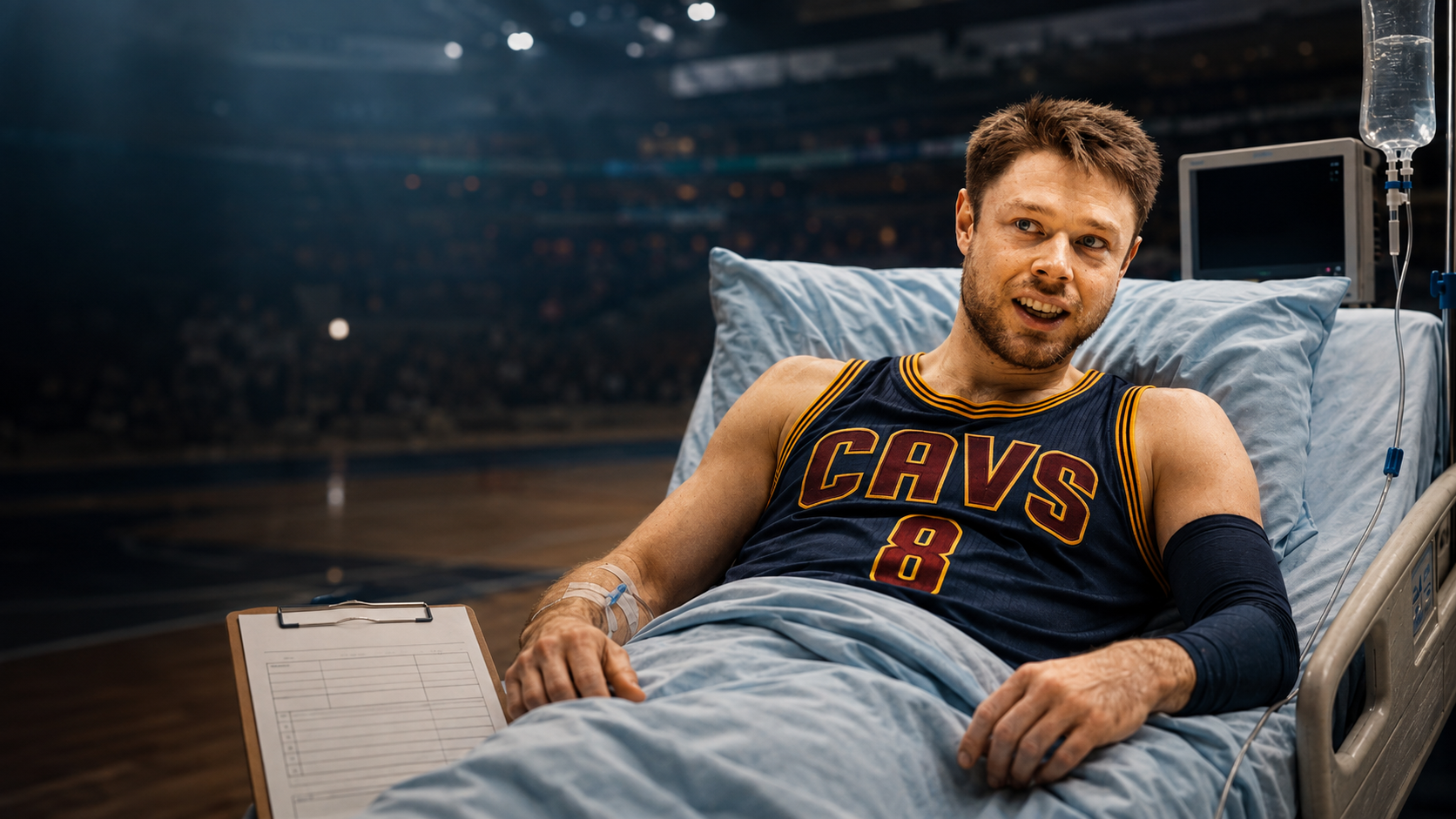
Matthew Dellavedova’s relentless defense on Stephen Curry during the 2015 NBA Finals became one of the defining images of Cleveland’s Finals run. More than a decade later, Dellavedova has revealed just how severe the physical toll became after Game 3.
Cleveland defeated Golden State 96-91 on June 9, 2015, taking a 2-1 series lead behind LeBron James’ 40-point performance and a career-defining night from Dellavedova, who contributed 20 points while again accepting the exhausting assignment of chasing Curry through the Warriors’ constant movement and screening action.
Dellavedova recently recalled that defending Curry felt almost impossible because the Warriors superstar seemingly never stopped moving. Making matters worse were the screens being set by Golden State’s big men, including Andrew Bogut, Draymond Green and David Lee. Dellavedova said Cleveland veterans Mike Miller and James Jones continued urging him during timeouts to throw himself after every loose ball even as the fatigue became overwhelming.
By the time Dellavedova reached the locker room following the victory, his body had effectively reached its limit.
He remembered severe cramping developing in both his quadriceps and hamstrings, creating a particularly painful situation because stretching one muscle group only aggravated the other. Cleveland’s medical staff cut away his compression tights, attempted to treat the cramping and eventually placed him into an ice bath as they tried to bring the symptoms under control.
The problem was not simply getting Dellavedova through that night. Game 4 was scheduled only two days later, leaving Cleveland with little recovery time. With his body badly depleted, Dellavedova said the medical staff determined that his best chance of recovering sufficiently was to spend the night in the hospital receiving intravenous fluids.
“I mean, obviously it’s like an impossible task chasing Steph around. He never gets tired. Bogut and Draymond and David Lee are trying to kill me on screens. Bogut is my assistant coach now on Sydney. I just remember coming to timeouts and Mike Miller, James Jones are just like grabbing me by the shoulder saying, “You got to get every loose ball.” And I’m head’s like wobbling around…. So I get in the locker room, they do the talk, but I start cramping. Steve and UK take me back there. They like cut my tights. They’re trying to rub ice. My quads are cramping. My hamstrings are cramping. So you can’t stretch one or the other. I’m just in a world of hurt. Then they like carry me and put me in the ice bath up to like here and I’m just sitting there and slowly the cramps kind of go away. And then we only had 1 day between the games. And so I think Steve and the doctor were like, “Yeah, your best shot at getting ready for the next game is going to the hospital and just getting an IV overnight.”
Matthew Dellavedova tells a story about having to go to the hospital after guarding Steph Curry in game 3 of the 2015 finals:
“I mean, obviously it’s like an impossible task chasing Steph around. He never gets tired. Bogut and Draymond and David Lee are trying to kill me on… https://t.co/k1ObN18Oqw pic.twitter.com/n4HgrNza6h
— NBA Courtside (@NBA__Courtside) August 18, 2026
The episode added another layer to Dellavedova’s unlikely prominence during those Finals. An undrafted guard who had entered the series primarily as a role player, he suddenly became one of Cleveland’s most important pieces after Kyrie Irving suffered a season-ending knee injury in Game 1. His willingness to pressure Curry, fight through screens and repeatedly sacrifice his body became central to the Cavaliers’ defensive approach.
Curry had already endured an exceptionally difficult Game 2, including an 0-for-8 shooting mark on possessions in which Dellavedova was his primary defender. In Game 3, Curry eventually found his rhythm late and scored 27 points, but Cleveland survived Golden State’s fourth-quarter comeback to move ahead in the series.
The Cavaliers ultimately could not sustain their advantage. Golden State won the next three games to capture the championship in six, its first NBA title since 1975. But Dellavedova’s hospital trip provides a striking reminder of what Cleveland demanded from its depleted rotation during those Finals.
