
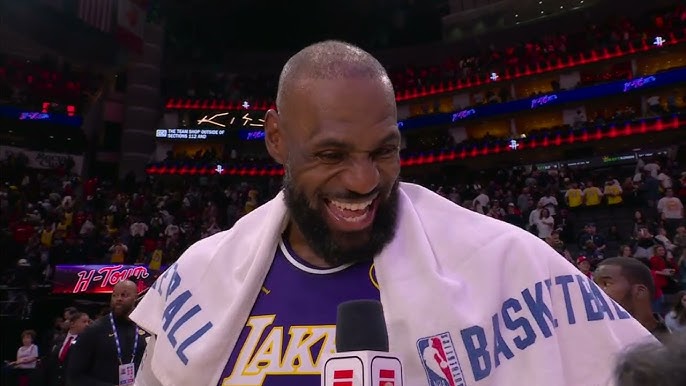
The Los Angeles Lakers won Game 1 of their first-round series against Houston, but Shannon Sharpe’s takeaway was less about the scoreboard than about the warning signs buried underneath it.
Sharpe argued that getting outrebounded and losing the turnover battle is “a recipe to get your a** beat” if the Lakers are not more careful in Game 2, especially if Kevin Durant returns for the Rockets. His concern tracks with the numbers: Los Angeles beat Houston 107-98 despite being out-rebounded 44-35 and committing 20 turnovers to Houston’s 13.
That is what makes the game more complicated than the final margin suggests. The Lakers were brilliant in the areas that usually rescue a team from sloppiness, shooting 60.6% from the field and 52.6% from three while getting 27 points from Luke Kennard, 19 points and 13 assists from LeBron James, and a double-double from Deandre Ayton. But Sharpe’s point is that this kind of imbalance rarely stays survivable for long in a playoff series, especially against a team that was already missing its leading scorer.
His larger argument centered on Durant’s absence and what his return could do to the shape of the matchup. As Sharpe put it,
“Now, it all depends on what KD does. You’re not winning. If KD plays, I don’t see them winning this game, but then maybe LeBron is a little bit more aggressive because he know they have the capabilities with KD in the lineup to beat them. Early on, I thought the Lakers played well. They moved the ball. They was doing everything they needed to do. I thought the defense was suffocating and then it seems like they get laxed.”
Shannon Sharpe says the Lakers getting out rebounded and plus five in turnovers, is a recipe to get your a** beat if they are not careful especially next game:
“Now, it all depends on what KD does. You’re not winning. If KD plays, I don’t see them winning this game, but then… pic.twitter.com/nmrQhcG6te
— NBA Courtside (@NBA__Courtside) April 19, 2026
Houston played Game 1 without Durant because of a knee injury, a fact that clearly matters to any reading of what the opener did or did not prove.
There is real logic in that criticism. The Lakers did look connected early, and they did defend with force for stretches. But the Rockets still collected 21 offensive rebounds, stayed physically present in the game longer than they should have, and created the kind of extra-possession pressure that can become fatal once a star like Durant is back on the floor. In other words, Sharpe is not dismissing the win. He is arguing that Los Angeles may have already spent some of the margin it cannot count on having again.
