
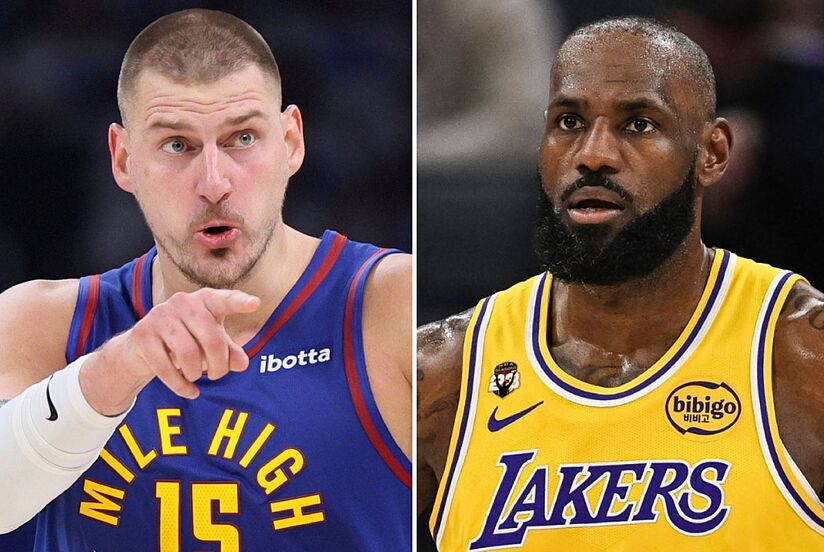
A TikTok creator named quemiga recently floated a deliberately provocative idea: that one reason the NBA “struggles” is because it is no longer able to cash in on America’s racial polarization the way some fans and media narratives have historically framed football, and that the league’s changing player archetypes (including the rise of international stars) makes it harder for certain U.S. audiences to “see themselves” in the product.
It’s a thesis designed to make you flinch, then think. And to be clear up front: there’s a moral and a factual gap between observing that sports media has long trafficked in racial stereotypes and arguing that a league should “lean into” that dynamic to grow business. The first is a documented reality; the second is a prescription that would be ethically corrosive and, in practical terms, wildly risky for any modern sports property.
Still, as a piece of media criticism, quemiga’s argument touches a real nerve: American sports have always sold more than scores. They sell identity, belonging, and sometimes conflict, including conflict that audiences interpret through race, class, and culture.
Where quemiga’s framing is strongest is in the history he’s implicitly pointing to: the United States has a long record of describing athletes in racialized ways, especially when it comes to “brains vs. brawn” stereotypes. Academic work on football has documented “racial stacking” patterns by position and the long-running framing of quarterback as a “leadership/cognition” role. That’s not conspiracy, it’s a recognized topic in sports sociology.
But the NFL example in the TikTok is also easier to overstate in 2026 than it would have been decades ago. Quarterback remains a position where whiteness historically dominated, but modern NFL starting-QB demographics are far more mixed than “overwhelmingly white,” and the direction of change has been one of the major stories of the last 20 years. So if the claim is that the NFL reliably manufactures a weekly racial morality play through a starkly segregated lineup, the evidence is more nuanced than the rhetoric.
On the NBA side, the argument that America’s “relatable white shooter” archetype has faded is also complicated. There have always been white American NBA players, and there are still high-profile examples. What has undeniably changed is that international players, many of them European, have become central to the league’s MVP and title conversations, which shifts cultural familiarity for some viewers without necessarily shifting race in the way the TikTok implies.
And that gets to the biggest factual problem in the thesis: race is being used as a catch-all explanation for a set of trends that are likely more directly explained by distribution and consumption habits.
The NBA has been moving into an era where fans don’t always know where to find games, especially as rights fragment across traditional TV and multiple streaming platforms, a concern even prominent voices around the league have raised in recent months while discussing how difficult the product can be to access. Cord-cutting, regional sports network instability, blackout rules, and platform hopping don’t need a racial explanation to drive real audience friction. They’re structural issues.
Where quemiga’s thesis does connect to something measurable is his point about how conflict narratives can spike attention, not because audiences are inherently racist, but because polarization drives engagement online, and online engagement can translate into viewership. The Clark–Reese discourse became a flashpoint in women’s basketball and regularly pulled in massive audiences, including a Fever–Sky game that averaged 2.7 million viewers and peaked above 3 million. Media coverage has also explicitly noted that the rivalry’s public discourse has had racial undertones, and that the attention surge coincided with record-setting viewership for women’s hoops.
@queminga Is the NBA suffering from not being racist enough? What do yall think #nba #nfl #fyp ♬ Chopin Nocturne No. 2 Piano Mono – moshimo sound design
But even there, it’s too simple to credit “race war sells” as the primary mechanism. Star power, novelty, stakes, accessible broadcasts, highlight-friendly play, and the social-media flywheel all mattered. One can acknowledge that racialized discourse existed and boosted attention without concluding that the solution is to intensify it.
But, if the NBA really has a business problem, the cleanest fixes are also the cleanest ethically: make games easier to find, reduce friction, tell better stories, and market rivalries without turning players into proxies for stereotypes. The league doesn’t need more racism to sell basketball. It needs less noise between the fan and the game.
