
In an NBA that already runs on tracking data, video rooms, and proprietary models, the newest frontier is no longer whether teams use analytics, it’s how far they’re willing to let machine learning shape the most human decision a front office makes: picking a player.
That’s why a recent claim tied to the Charlotte Hornets has traveled fast across the basketball world. Patrick Harrel, the Hornets’ Vice President of Basketball Insights & Analysis, is quoted in materials from AI company Invisible Technologies as saying that,
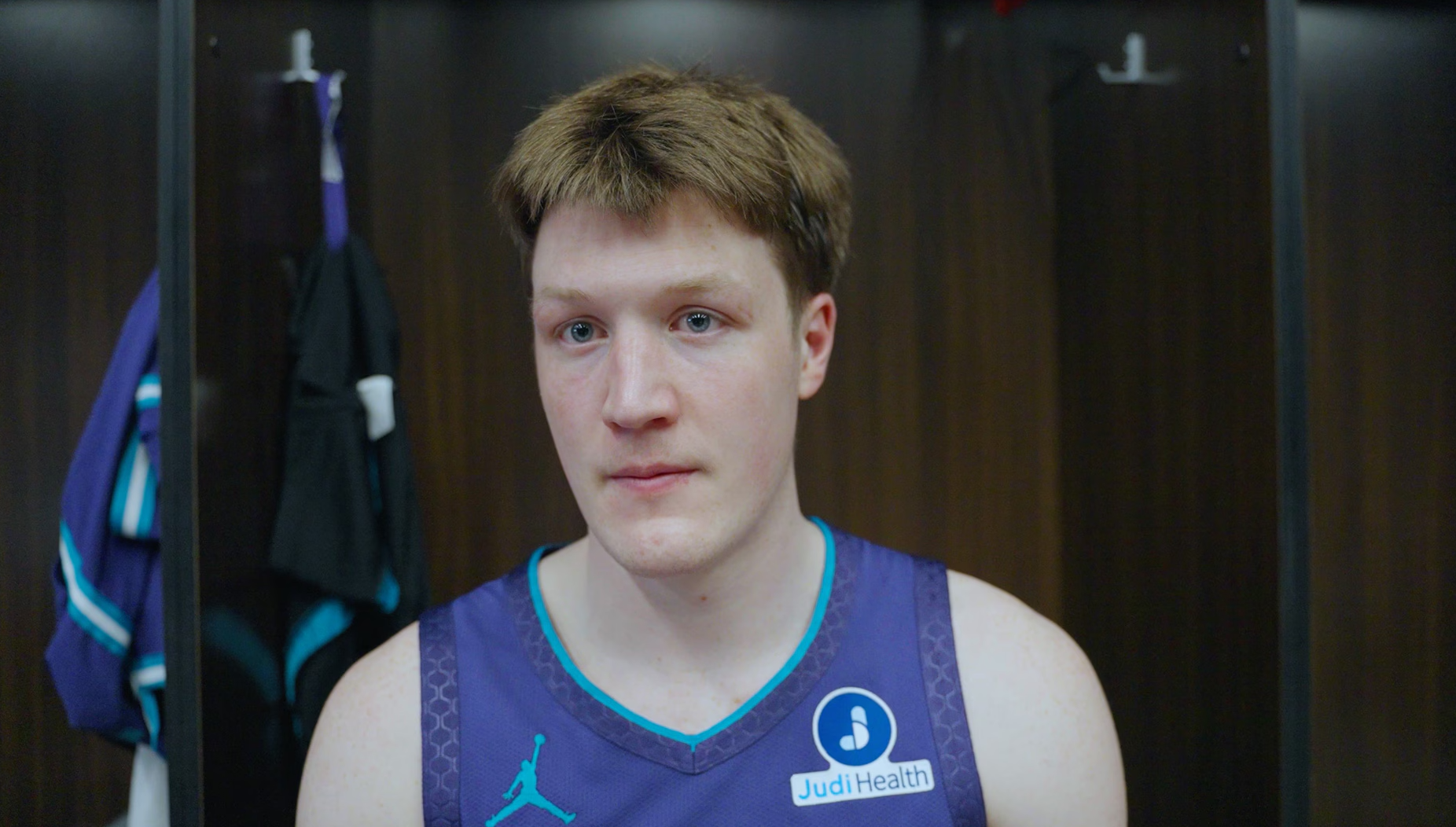
“Within weeks, Invisible provided us with an AI draft strategy that gifted us Kon Knueppel, the #4 overall pick by the Charlotte Hornets in the 2025 NBA draft.”
It’s a striking line, part testimonial, part headline bait, and it has sparked equal parts fascination and skepticism for the same reason: “AI draft strategy” sounds like science fiction, but the infrastructure behind it is increasingly real.
What’s actually being claimed
Invisible Technologies describes its work as a computer-vision driven approach that can ingest game film and extract detailed movement data, essentially trying to approximate what multi-camera tracking systems do, but from more readily available video. In the same Invisible materials, a company executive describes replicating a high-fidelity tracking setup using “single-point” cameras and AI analysis, and frames the project as a fast deployment that delivered meaningful value quickly.
Invisible has also publicly quoted Harrel elsewhere saying the firm’s computer vision models provided “high-quality data” that helped validate Charlotte’s 2025 draft analysis, and that the insights were valuable to the team’s decision-making.
It’s important to be precise about what can and can’t be proven from what’s currently public. The “gifted us Kon Knueppel” phrasing appears in Invisible-authored or Invisible-hosted marketing-style content, and the viral spread of the quote has largely been driven by social amplification rather than an official Hornets press release. What we can say with confidence is that Invisible has published the quote and attributes it to Harrel, and the quote is being circulated by multiple accounts referencing that document.
Charlotte employing a “VP of Basketball Insights & Analysis” is not unusual in 2026, every organization has an internal analytics group, but Harrel’s title puts him right at the intersection of data and decision-making, which makes any quote attributed to him feel consequential. Harrel joined the Hornets after working in the NBA league office in basketball strategy and analytics, according to prior reporting.
The other reason the story pops is the implied timeline: “within weeks.” Draft models traditionally take months, especially when they’re combining scouting, medicals, interviews, background intel, and film work across an entire class. If a vendor is claiming it can spin up meaningful, novel draft-facing analysis in a matter of weeks, that’s either a genuine competitive advantage…or marketing that deserves a hard, skeptical read.
Even taken at face value, the most realistic interpretation is not “the Hornets let a robot make the pick.” It’s closer to this: a specialized system created additional lenses on players, movement patterns, speed changes, defensive stance indicators, separation creation, off-ball activity, derived from video at a scale humans can’t match quickly. Then that output is blended into the existing ecosystem of scouting reports and internal models.
Invisible’s own language leans that way: “validate” draft analysis, “high-quality data,” “advanced performance metrics,” and “value to decision-making.” Validation is an important word there. In front-office terms, it often means the model didn’t create the board, it helped confirm (or challenge) what the board already suggested.
That’s also why the most responsible way to view this story is as a window into process, not a definitive explanation of why Charlotte drafted Knueppel. Draft picks are multi-input decisions; AI can influence the conversation without being the final voice in the room.
If teams can reliably extract tracking-like movement data from widely available film, that’s disruptive. True player-tracking data has historically been controlled, expensive, or limited in scope outside the NBA ecosystem. A computer-vision layer that narrows the gap would change the competitive landscape, especially for evaluating college prospects where tracking coverage can be uneven.
It also raises the obvious tension: transparency. If a team is leaning on vendor-driven, black-box outputs, rival teams can’t audit it, fans can’t evaluate it, and even internal staff may only understand it at a “dashboard” level. That doesn’t mean it’s bad – front offices already live on proprietary models – but it does sharpen the stakes when decisions become narratively tied to “AI.”
For now, the Kon Knueppel angle is the hook, but the real story is what it signals: the league’s evaluation arms race is moving from spreadsheets to vision models, from box scores to biomechanics, from “what happened” to “how it happened.”
And if Charlotte really is comfortable letting that much of the process go on record, it might be a preview of the next NBA norm: not whether teams use AI, but which teams can deploy it faster, validate it better, and still keep the human parts of scouting from getting lost in the code.
