
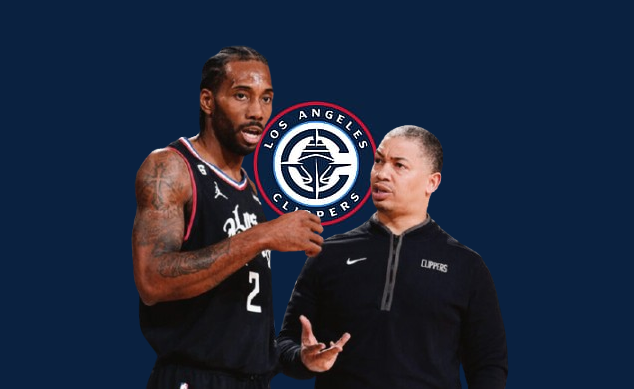
Sometime in December, with the Clippers stuck in a rut, Kawhi Leonard walked up to Tyronn Lue with a promise that sounded more like a dare than a plan.
Leonard told his coach he was going to start shooting 12 threes a game. Lue’s response, as Leonard recounts it now, was simple:
“How?”
Kawhi’s answer was even simpler:
“You gon’ see.”
Ty Lue didn’t believe Kawhi Leonard could put up 12 three-point attempts per game:
“When I told T-Lue that I’m gonna shoot 12 threes, he said ‘How?’ It was probably about December, I was like ‘You gon see.’” 😂
via @joeylinn_ pic.twitter.com/NQgMXNscCO
— NBA Retweet (@RTNBA) January 23, 2026
The quote is funny because it’s Kawhi; dry, blunt, allergic to theatrics. But it’s also revealing, because it points to a real tactical pivot. Leonard said he felt the Clippers needed him to get more threes up and, just as importantly, to give teammates permission to keep firing even through misses.
He hasn’t hit the literal “12 attempts every night” target. But since that December vow, Leonard has very clearly reshaped his shot diet. Since Dec. 17, 2025, Leonard has attempted 8.5 three-pointers per game across 15 games, hitting 42.2% from deep in that span. That is not a minor tweak; it’s a structural change in how one of the league’s most methodical midrange scorers is choosing to hunt efficiency.
Zooming out, the season-long numbers show the same trendline. Leonard is at 7.3 three-point attempts per game for the season, converting about 40%, a meaningful volume bump relative to the recent version of himself. For context, his three-point attempt rate in recent years lived closer to the five-to-six range; at 5.7 attempts per game over the last two years combined.
What changes when Kawhi shoots like this isn’t just his box score. It changes the geometry of the Clippers’ offense.
More threes from Leonard means more possessions where defenses can’t sit on his comfort zones, those elbows and short corners where he’s spent a decade turning footwork into points. When he’s willing to launch early-clock pull-ups or take the first clean catch-and-shoot look instead of probing for a “perfect” midrange, it forces defenders to chase higher, switch earlier, and send help from riskier angles. That creates cleaner driving lanes for the rest of the lineup and makes the James Harden-Kawhi pairing harder to guard possession-to-possession, because the same action can end in a rim attempt, a kickout, or a star-level three before the defense ever gets to its second rotation.
The most interesting part is that this wasn’t presented as a coaching directive. It was presented as a superstar taking ownership of what the team needed, then telling his coach the results would speak for themselves. It’s the inverse of how these stories usually go. Most players “add threes” in the offseason, announce it in October, and hope the numbers cooperate. Leonard did it midstream, during a slump, as a response to urgency, and the data since mid-December shows it wasn’t talk.
