
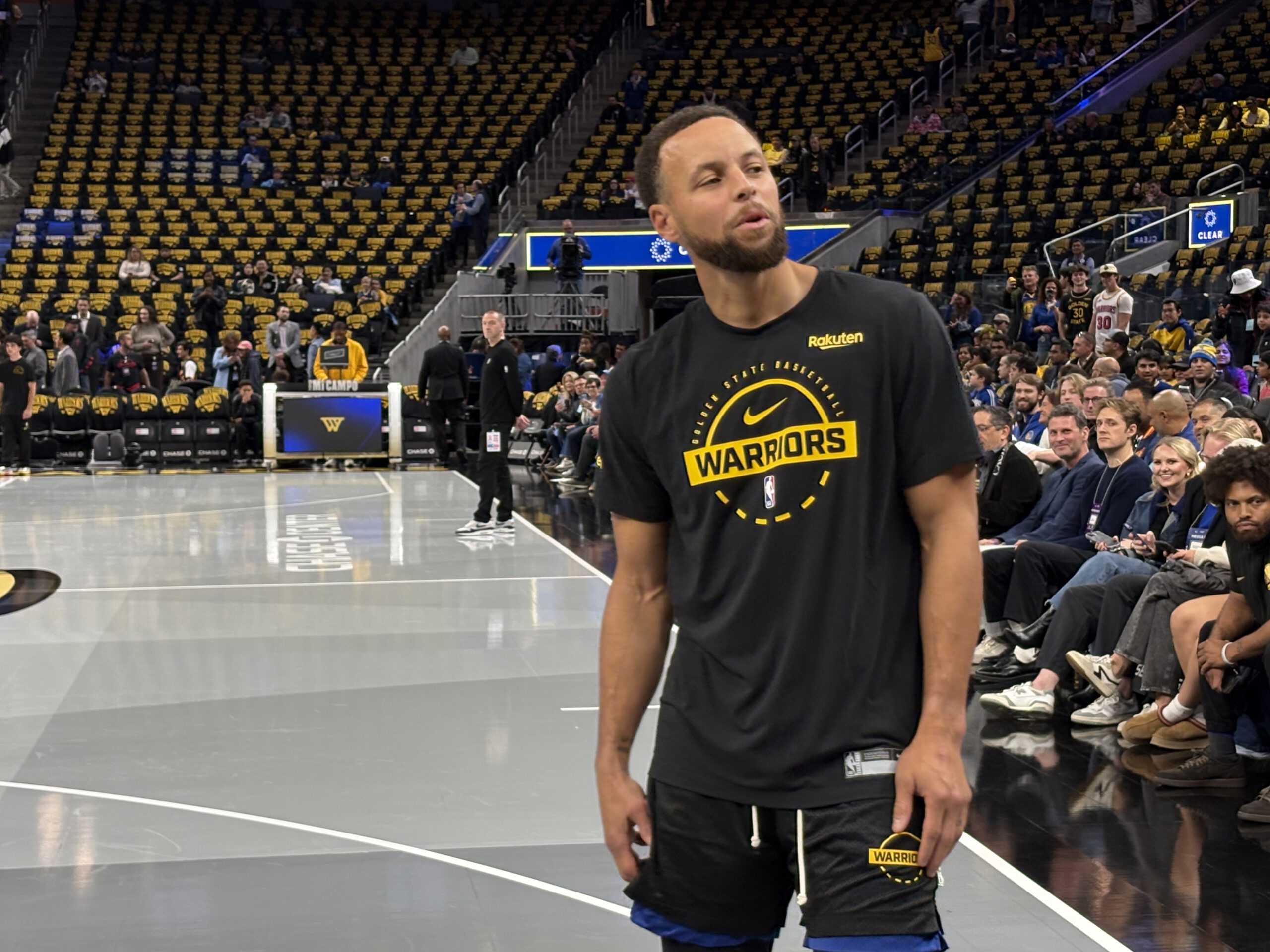
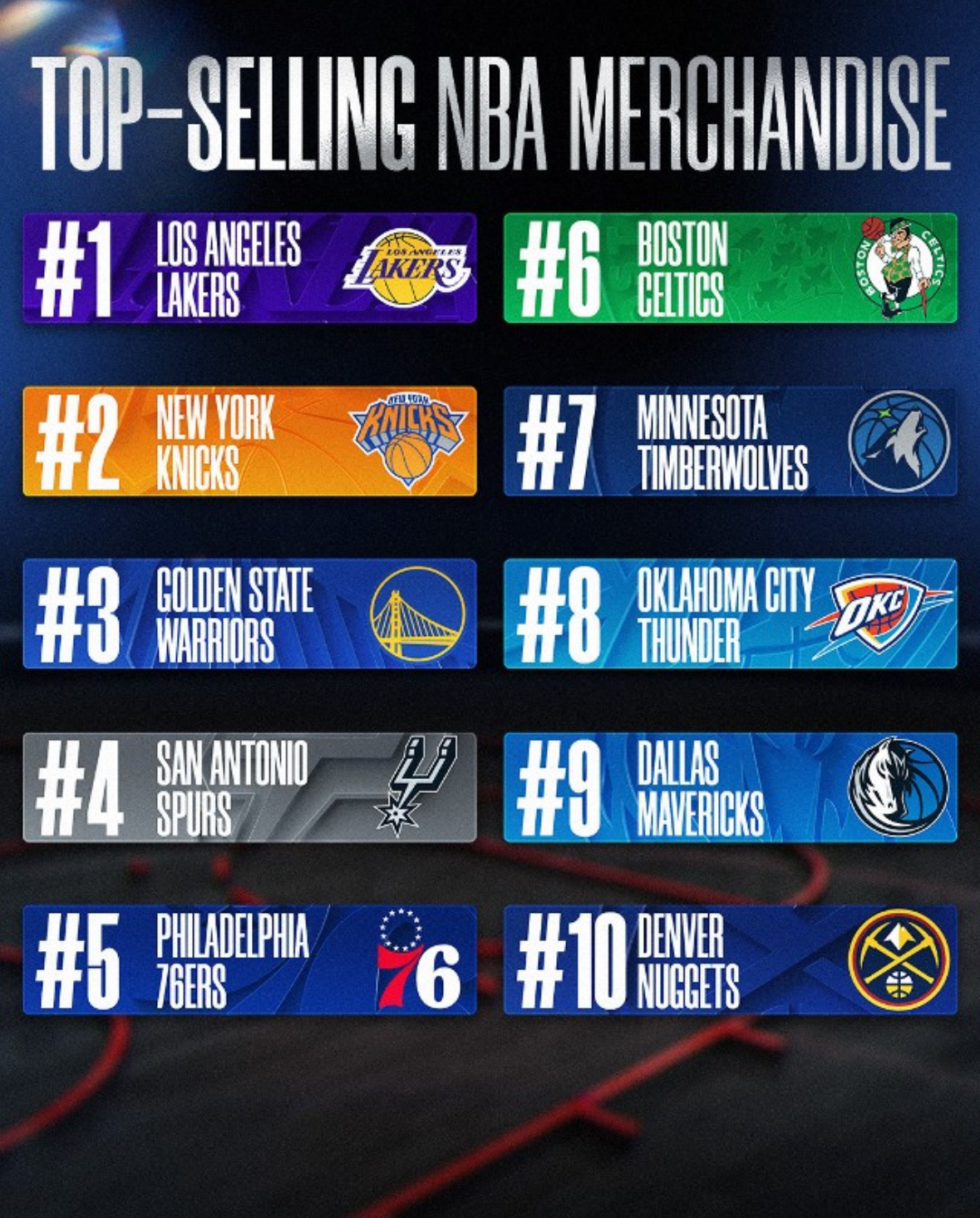
The NBA and NBPA’s midseason retail report is a reminder that the league’s economy is powered as much by storylines as standings. Based on sales from NBAStore.com and Fanatics’ network of sites from the first half of the 2025-26 season, Stephen Curry owns the No. 1 spot on the league’s top-selling jersey list, while the Los Angeles Lakers pace the NBA in overall team merchandise.
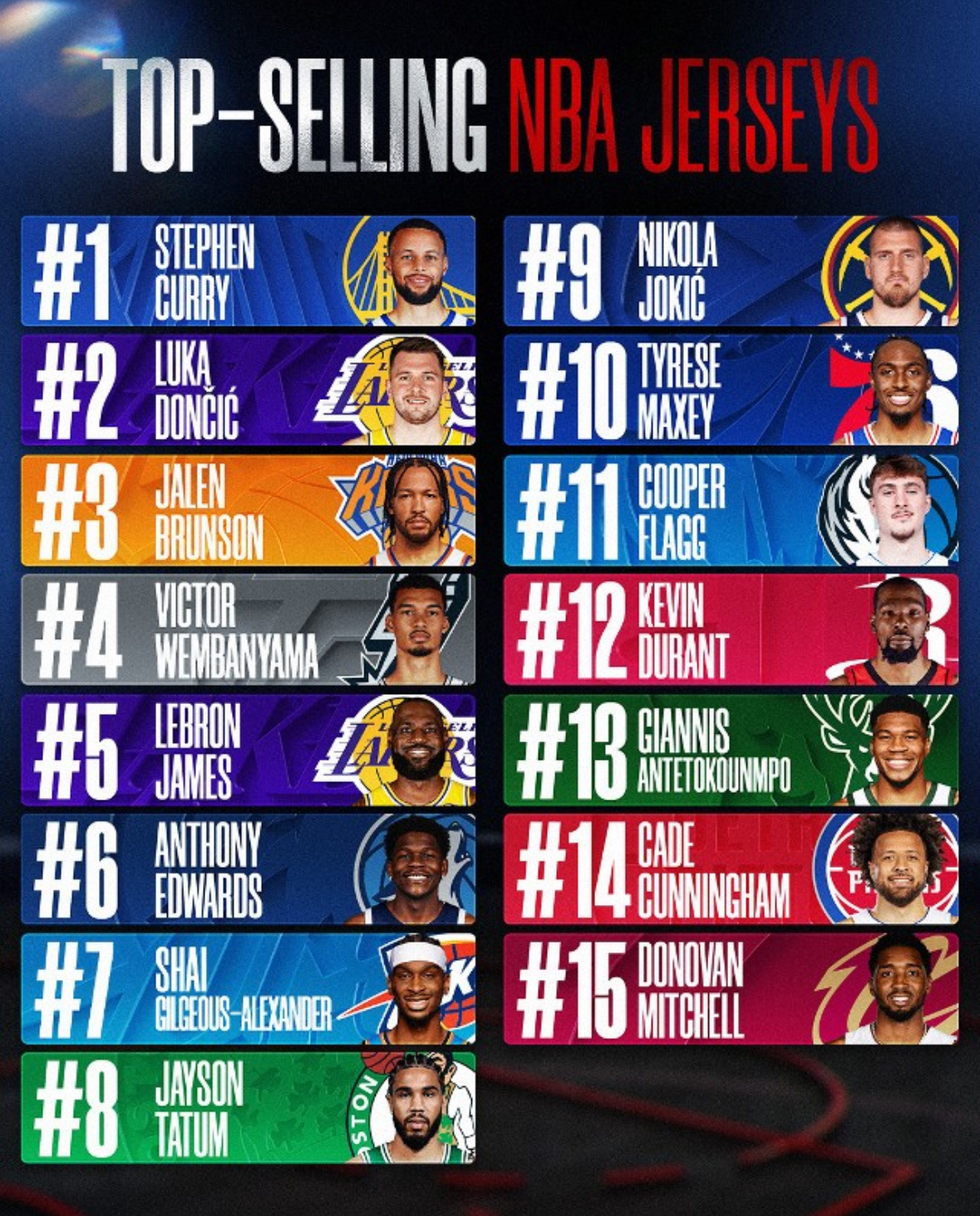
Curry’s grip on jersey sales at this stage of the season says something specific about modern NBA stardom: longevity now competes with novelty, and the rare icons who bridge eras can still win the crowd even as the league’s center of gravity shifts younger. The rest of the list underlines that shift anyway. Luka Dončić sits at No. 2, Jalen Brunson is No. 3, and Victor Wembanyama is No. 4, four different kinds of fan bases, four different kinds of basketball identities, all moving product at the highest tier.
The team-merchandise rankings tell a parallel story: the Lakers at No. 1 and Knicks at No. 2 reflect two massive markets with global reach, while franchises like Golden State, San Antonio, and Oklahoma City continue to prove that star power can scale a brand far beyond local geography.
What makes this particular midseason list feel like more than a shopping recap is how tightly it overlaps with the league’s current headline class. The NBA release noted that nine players on the top-selling jersey list were also named 2026 All-Star starters, and it highlighted the international shape of the sport: Dončić (Slovenia), Wembanyama (France), Shai Gilgeous-Alexander (Canada), Nikola Jokić (Serbia), and Giannis Antetokounmpo (Greece) all appear among the top sellers.
And then there are the tells about what’s coming next. Dallas rookie Cooper Flagg making the list is the kind of early-market signal teams dream about, proof that a new name can become a commercial engine immediately, while Cade Cunningham’s debut on the rankings is another sign that emerging lead guards are starting to carry not just offenses, but entire fan economies.
