
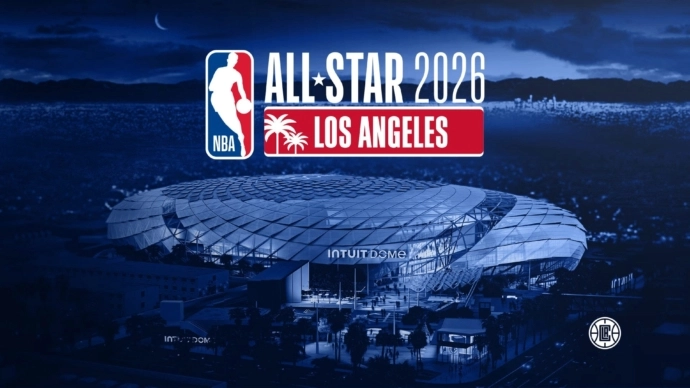
The NBA revealed the starters for the 2026 All-Star Game on Monday night, and the list reads like a snapshot of where the league is headed: the familiar superpowers are still here, but the center of gravity keeps drifting younger, more international, and more guard-driven. The 10 starters, five from each conference, were announced on NBC, with the weekend set for Los Angeles and the game slated for Feb. 15.
On paper, the headline is simple: Luka Dončić and Giannis Antetokounmpo remain the two loudest megaphones in the sport, leading their conferences in the fan-driven spotlight. But the deeper story is that “starter” is a looser word than it used to be. This year’s showcase is built around a new structure, two teams of U.S. players and one World team, competing in a round-robin tournament of four 12-minute games, a format designed to manufacture urgency without asking stars to fake it for 48 minutes.
The Eastern Conference starters are Giannis Antetokounmpo (Bucks), Jaylen Brown (Celtics), Jalen Brunson (Knicks), Cade Cunningham (Pistons), and Tyrese Maxey (76ers). The West’s group is Stephen Curry (Warriors), Luka Dončić (Lakers), Shai Gilgeous-Alexander (Thunder), Nikola Jokić (Nuggets), and Victor Wembanyama (Spurs).
The selection method stays familiar even as the event itself changes shape: fan voting accounts for 50% of the starter formula, with current players and a media panel contributing 25% each. In an age where All-Star discourse is basically a year-round content vertical, that split matters, fans get the loudest voice, but the player and media blocs still act as ballast against pure popularity contests.
Still, the East list is where the league’s current churn feels most real. Cunningham’s presence is the loudest signal. Detroit hasn’t just put an All-Star starter back on the map; it has done it with a guard whose profile is built around the modern idea of offense: big initiator, rim pressure, and playmaking volume. In the same starting five, Maxey and Brunson represent two different versions of the new lead guard archetype, Maxey as the straight-line burner who can score in bunches, Brunson as the footwork-and-angles technician who turns half-court possessions into personal property.
Brown’s inclusion is the reminder that the Celtics’ ecosystem still produces star power even when the spotlight shifts around the league. And Giannis, now essentially a yearly fixture in this conversation, remains the league’s most unstoppable math problem: a transition engine, a rim attacker, and a defensive gravity well all in one.
The West starters are a different kind of statement, less “new faces,” more “new order.” Curry making it again says something about longevity and brand power, sure, but it also says the Warriors still have a central sun. Dončić, now a Laker, is the kind of All-Star presence that bends the entire weekend’s marketing around him. Gilgeous-Alexander’s spot is the clearest reflection of the Thunder’s status as a top-line force in the season’s first half, and Jokić remains the sport’s most reliable cheat code for making five guys play like one mind.
Then there’s Wembanyama, the hinge point between “future of the league” cliché and present-tense reality. The NBA noted he won a tiebreaker over Anthony Edwards for that starting slot, which is both a trivia nugget and a clue: even in a format that’s trying to get away from rigid positional definitions, the West’s star economy is so dense that a generational big still has to squeeze through the margins.
And in Los Angeles, there’s an unavoidable subtext: the changing of the guard is no longer theoretical. LeBron James was not voted in as a starter, ending a record 21-year run of All-Star starting selections, an outcome that would have been unthinkable for most of the last two decades, and one that turns the weekend’s host-city storyline into something sharper than nostalgia.
The league is also clearly leaning into its global identity with the new U.S. vs. World concept, and this starters list practically builds the marketing deck by itself. Giannis, Dončić, Jokić, Gilgeous-Alexander, and Wembanyama aren’t just All-Stars, they’re pillars of the NBA’s international era, now presented in a format that makes nationality a feature rather than a footnote.
What comes next is the part that always changes the temperature: the reserves. The NBA says they’ll be revealed Feb. 1 on NBC/Peacock, with seven players from each conference selected by coaches, without regard to position. That’s when the arguments get louder, the “snubs” become content, and the All-Star game becomes what it really is in 2026: a midseason referendum on whose production counts, whose team context boosts them, and whose reputation still carries weight when the votes hit the spreadsheet.
But the starters alone already tell a clean story. The league’s old gods are still here. The new powers are no longer knocking. And the All-Star Game, in yet another reinvention, is trying to match the sport’s biggest truth: the NBA doesn’t just belong to one coast, one style, or one country anymore, it belongs to whoever can bend a season to their will.
