
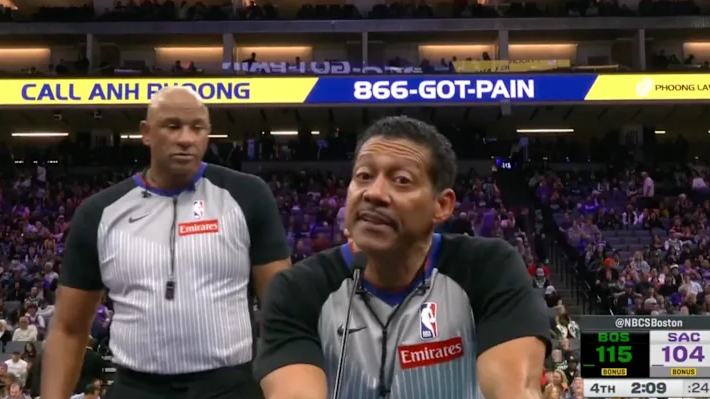
There are few figures in the NBA who can draw near-universal affection while also carrying the authority to end an argument with a whistle. Bill Kennedy is one of them, which is why the building felt different the moment he went down Friday night in Orlando.
Kennedy, a veteran NBA referee and crew chief, suffered an apparent non-contact leg injury during the first quarter of the Philadelphia 76ers’ 103–91 road win over the Orlando Magic. As Kennedy was running the floor during a Sixers fast break when he suddenly began limping near the baseline, unable to keep pace.
Here is the play where Bill Kennedy appeared to hurt his leg —
Prayers up. 🙏
(h/t @BrickCenter_)
pic.twitter.com/xCEJ10xZiX https://t.co/INNLL6gi8j
— Hoop Central (@TheHoopCentral) January 10, 2026
Within moments, the seriousness was clear. After the Magic called a timeout, medical staff evaluated Kennedy on the court for several minutes. When he attempted to stand, he could not put weight on the injured leg. He was then taken off the floor in a wheelchair and brought to the officials’ locker room, ending his night. With Kennedy out, the game continued with a two-official crew, James Williams and Michael Smith, for the remainder.
In a league where referees are often discussed only when fans are angry, Kennedy is a different kind of presence. He’s widely respected around the sport, and he has become especially recognizable in recent years for the calm, camera-ready explanations he provides during coach’s challenge reviews, one of the few moments where officiating is asked to be both accurate and legible to a national audience.
The game itself carried on. Philadelphia’s defense squeezed the life out of Orlando late, holding the Magic to 12 fourth-quarter points, with Tyrese Maxey leading the Sixers with 29. But even as the scoreboard moved, the night’s emotional center had already shifted. Players and fans understand injuries as part of the sport; what they’re less used to is seeing the people tasked with managing the game’s order suddenly become vulnerable inside it.
For now, the important details are the simplest ones: it was non-contact, it looked significant enough to require assistance, and one of the NBA’s most recognizable referees left under his own power only with help.
