
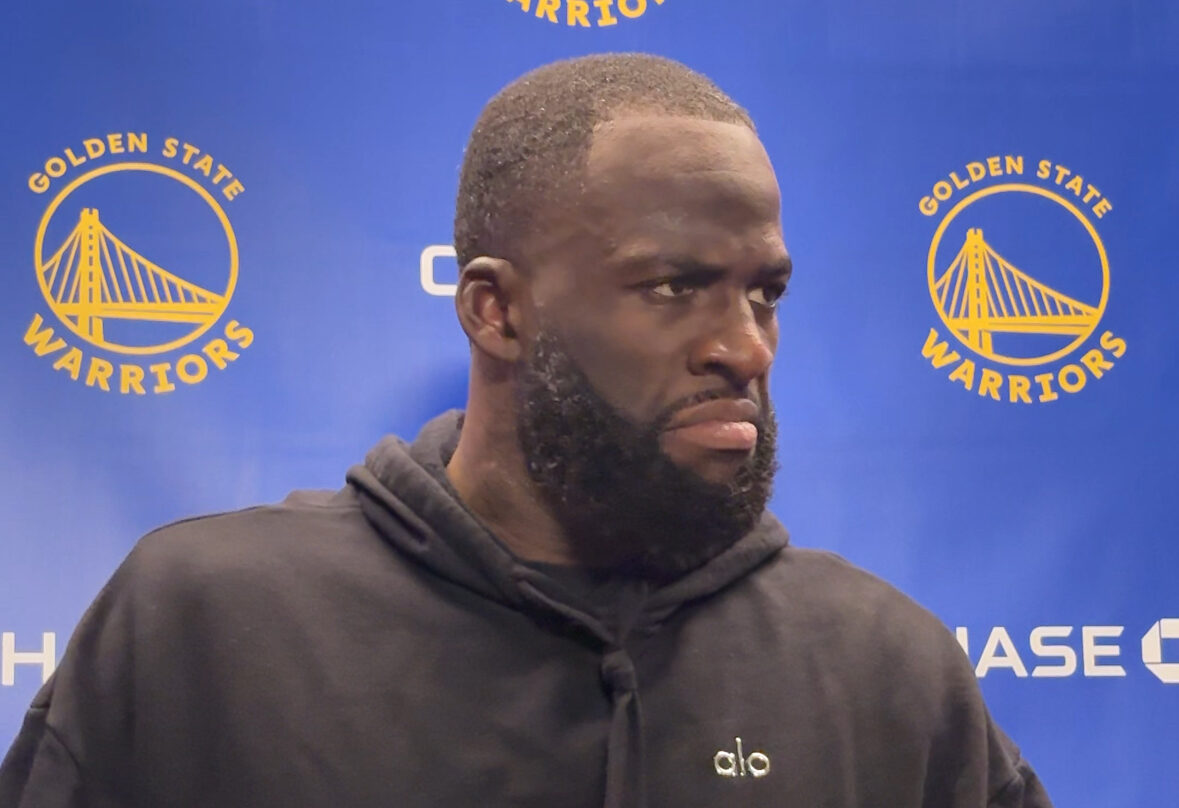
In a stark, unfiltered postgame session following last night’s loss to the Houston Rockets, Draymond Green delivered a sweeping critique of the Warriors’ current state, zeroing in on turnovers, offensive rebounds, point-of-attack defense, and what he described as a fundamental absence of “force.”
The conversation offered a rare window into both the team’s on-court issues and Green’s leadership style, which he openly framed as confrontational rather than consoling.
Green did not hedge when asked how things change if Stephen Curry misses time. “Everything,” he said, repeating the word to emphasize the magnitude. He outlined immediate priorities in Curry’s potential absence: eliminate turnovers, deny offensive rebounds, and start with controllable details to “give yourself some way to make up all of those points.” The message was practical and urgent; tighten the basics, then solve the rest.
Pressed on the defense, Green pushed past “solid” metrics to describe how it feels on the floor. “Our defense is shit,” he said. In his view, the problem is bigger than numbers; he cited “letdown after letdown” that erodes demeanor and bravado, leaving a “soft team.” The crux, he argued, is what opposing offenses feel: “Right now they don’t feel no force.” Schematics and coaching, he noted, exist, but without that force the stops are hollow.
Green’s solution began at the individual level. “It requires individuals, all of us as individuals, to take on your challenge,” he said. Only then, he argued, can the “team thing” work. He anticipated critics would twist his words, but repeated them anyway: “We are individually f—ing awful.” The point was accountability, each player must win his own assignment before the collective defense can cohere.
Asked about his health after coming in with a foot sprain, Green was brief: “I’m all right. I feel like I’m 25.”
Draymond Green on how he feels after his comeback from injury:
“I feel like I’m 25…”
— Len Werle (@RealLennyCarlos) November 27, 2025
When the conversation turned to maintaining spirits if Curry is out, he was unequivocal about his role: “I’m not a big keeper spirit up guy. That ain’t really the department I sell. I motherf— you.” He said others could handle morale; he motivates through blunt challenge.
Green rejected the idea that defensive commitment should hinge on offensive success. “Defense has to lead the offense,” he said, calling the phases “hand-in-hand.” Without defensive force, he explained, opponents keep their legs and confidence, and the domino effect makes everything tougher. He agreed it starts with point-of-attack defense, but stressed it’s never about just one player. “We’re getting f—ing boned,” he said of blow-bys, then added that poor rotations compound the damage. He included himself: “I’m not helping great.” If the first line breaks, the second must respond; right now, he said, “we kind of suck at it.”
On identity and results, Green echoed Curry’s synthesis: you are what your record says. At 10–10, he labeled the team “very average,” describing 50-50 outcomes as the natural product of losing games they “should have won.” “Guess what you are? F—ing 500 team,” he said. The closing thought was a single word: “Fight.” In his framing, the urgency is not philosophical, it is practical, immediate, and measured possession by possession.
Green’s remarks distilled the Warriors’ central tension. Scheme and experience remain, but without individual edge, point of attack, physicality on the glass, and protection of the ball, structure cannot overcome slippage. His leadership, unapologetically abrasive, is calibrated to shock the system, a demand for force and focus as the calendar tightens and every margin matters.
