
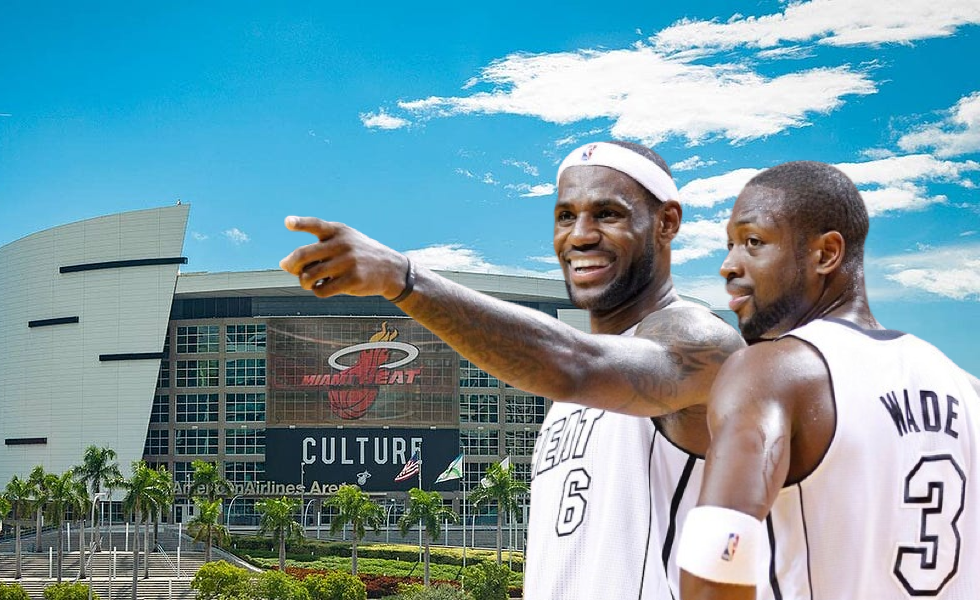
Former All-Star Michael Redd has stirred debate by labeling the formation of super teams, specifically LeBron James’ move to the Miami Heat, as a sign of “cowardness” in the eyes of many players from his era.
LeBron James’ 2010 decision to leave the Cleveland Cavaliers and join forces with Dwyane Wade and Chris Bosh in Miami marked a seismic shift in NBA dynamics. The trio formed what became known as the “Big Three,” leading the Heat to four straight Finals appearances and two championships.
Michael Redd, who spent the bulk of his career with the Milwaukee Bucks, recently launched a podcast where he revisited the cultural mindset of the league during the late 2000s.
“At that time, the climate in the league was… we all took pride in our own individual teams,” Redd said. “We didn’t want to team up because it was a sign of cowardness. There’s pride in having your own squad”.
Redd pointed to the 2008 U.S. Olympic “Redeem Team” as a pivotal moment. The extended training camp allowed NBA stars to bond off the court, sparking conversations about teaming up professionally.
“Some of the conversations circled around, ‘Maybe we team up? What if we play together?’” Redd recalled.
This camaraderie laid the groundwork for future alliances, including LeBron’s move to Miami. Redd emphasized that before this shift, players were more inclined to carry their franchises solo, embracing the challenge of building a contender from within.
While Redd’s comments reflect a traditionalist view, the NBA has since embraced player empowerment and mobility. Super teams have become a norm. Yet Redd’s critique offers a nostalgic lens into a time when loyalty to one’s team was a badge of honor.
LeBron’s legacy is undeniable, but Redd’s remarks reignite a long-standing debate: Should greatness be measured by rings alone, or by the journey taken to earn them? For players like Redd, the answer leans toward the latter.
