
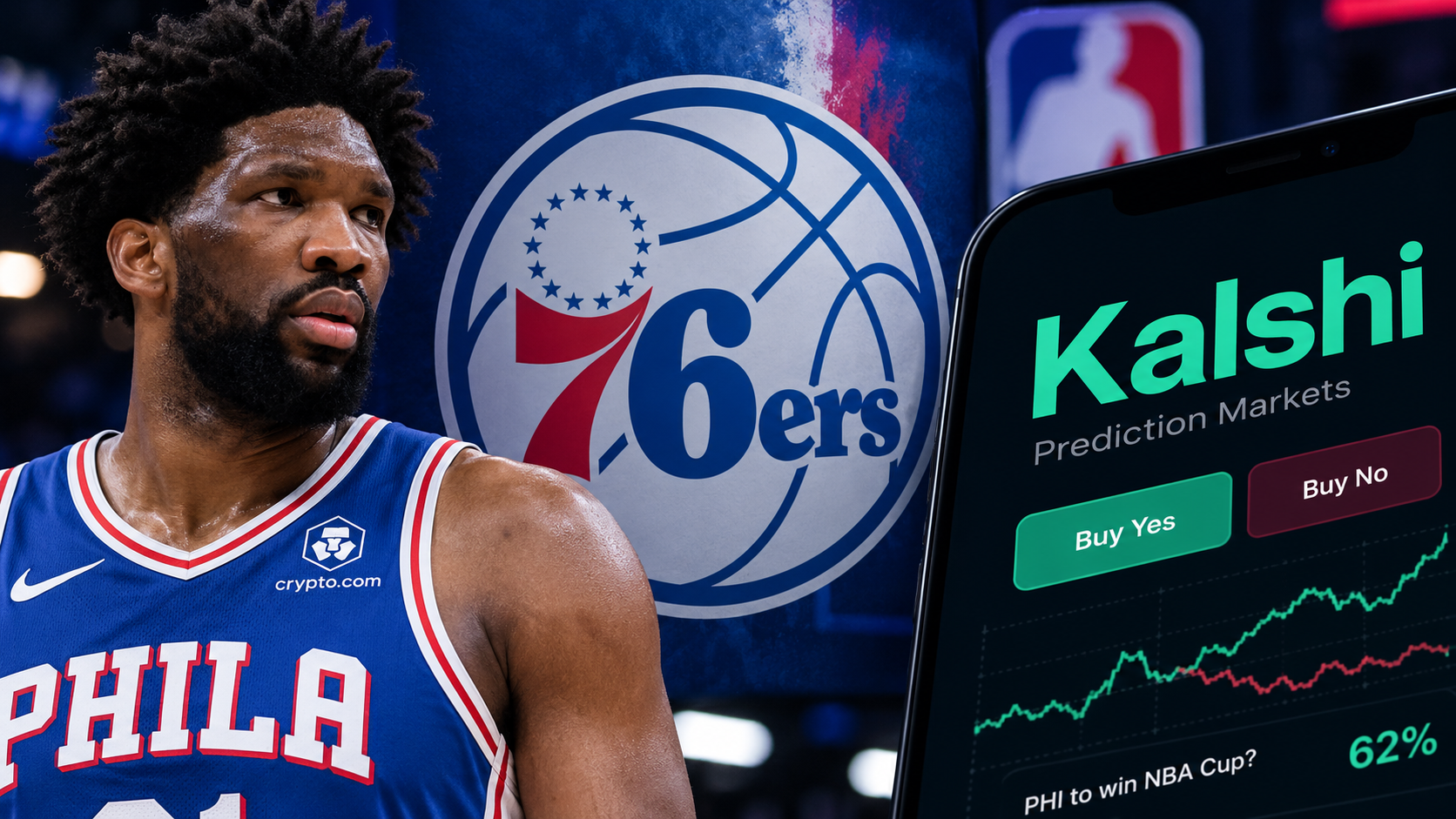
The NBA’s increasingly uncomfortable relationship with gambling has reached another troubling milestone. Just days after the league announced partnerships with prediction market giants Kalshi and Polymarket, the Philadelphia 76ers have become the first NBA franchise to sign an official agreement with a prediction market operator.
And rather than celebrating the announcement as another innovative business venture, basketball fans should be asking whether the sport is losing sight of what matters most.
On Friday, the Sixers announced a multiyear partnership naming Kalshi their Official Prediction Market Partner. The agreement follows the NBA’s decision to designate Kalshi and Polymarket as its preferred prediction market exchanges, granting both companies access to official league data, intellectual property and promotional opportunities.
Philadelphia’s deal includes promotional campaigns, collaborations with local artists, merchandise giveaways and interactive fan experiences. Kalshi was also covering postgame SEPTA transportation for fans attending Friday’s NBA Cup matchup against the New York Knicks.
Another promotion, called “Beat the Pro,” will culminate in an opportunity for fans to compete for a $76,000 prize.
On the surface, it sounds like an exciting collection of fan-friendly initiatives.
But beneath the giveaways and marketing campaigns lies a deeply concerning development: Professional basketball is becoming increasingly comfortable presenting financially risky prediction markets as a natural extension of being a fan.
Kalshi operates differently from a traditional sportsbook. Customers buy and sell contracts tied to real-world outcomes, trading against other users rather than a bookmaker. The platform is regulated federally by the Commodity Futures Trading Commission, although several states are challenging whether its sports contracts should instead be regulated under gambling laws.
Yet the fundamental reality remains unchanged. People can lose real money predicting the outcomes of basketball games.
And now, one of the NBA’s most recognizable franchises is officially promoting the company that facilitates those transactions.
The timing is disturbing. The NBA is still dealing with the consequences of gambling-related scandals, most notably the lifetime ban handed to Jontay Porter in 2024 after the league determined he had shared confidential information with bettors and manipulated his participation for betting purposes. Malik Beasley also has agreed to plead guilty to federal charges stemming from a Department of Justice investigation into illegal sports gambling.
These scandals should have been a warning about how financial incentives can threaten the integrity of professional basketball. Instead, the league and its franchises are opening the door to even more commercial relationships with gambling-adjacent businesses.
The NBA argues that working directly with prediction markets creates stronger safeguards. Its agreements include restrictions on permissible markets, information sharing about suspicious trading and prohibitions on league and team personnel trading NBA event contracts.
Those protections are important, and there is a reasonable argument that cooperation with regulated platforms can improve the detection of suspicious activity.
But preventing manipulation and actively promoting these platforms to millions of fans are two very different things. Perhaps the most troubling aspect concerns younger audiences.
Kalshi allows users to open trading accounts at 18, while traditional sportsbooks in many states require customers to be at least 21. Earlier this year, the NBA itself urged federal regulators to consider raising the minimum age for prediction market participation to 21.
Yet here we are, watching one of its franchises celebrate a commercial partnership with a platform that still accepts 18-year-olds. The contradiction is impossible to ignore. Basketball already occupies an enormous place in youth culture. Young fans follow their favorite players, purchase their sneakers, wear their jerseys and increasingly interact with the sport through digital platforms. Do they really need their favorite NBA teams encouraging yet another financially risky form of engagement?
When prediction market promotions become intertwined with team merchandise, arena experiences and official applications, the distinction between supporting a franchise and participating in speculative trading becomes increasingly blurred. And that is a dangerous direction for professional sports.
There was a time when the most important question surrounding an NBA game was simply who would win.
Today, the league appears increasingly determined to make sure someone can make a financial transaction out of the answer.
The Sixers may be the first NBA team to officially embrace a prediction market partner. Hopefully, they won’t become the model everyone else follows. Because basketball’s integrity, and the responsibility professional teams have toward their youngest fans, should be worth considerably more than another sponsorship agreement.
