
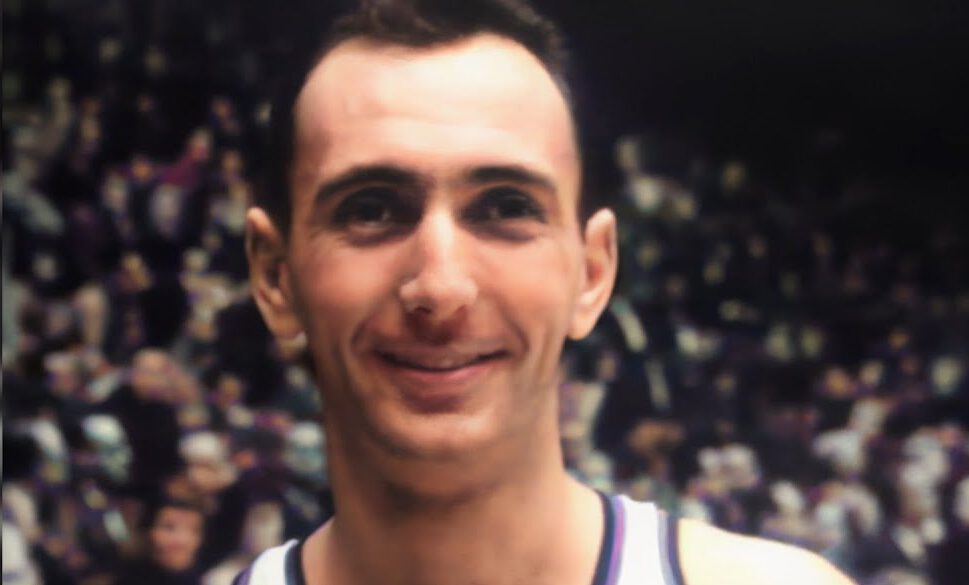
On October 5, 1950, the Boston Celtics acquired a player they did not particularly want. It turned out to be one of the luckiest breaks in franchise history.
After the Chicago Stags folded before the 1950-51 season, several of their players were placed into a dispersal process. Three guards, Max Zaslofsky, Andy Phillip and Bob Cousy, remained available to Boston, New York and Philadelphia. With no agreement on who should go where, commissioner Maurice Podoloff settled the matter in wonderfully old-school fashion: the names went into a hat.
The Knicks drew Zaslofsky. Philadelphia got Phillip. Boston was left with Cousy. That was hardly the outcome Celtics owner Walter Brown and coach Red Auerbach had been hoping for. Brown later recalled his disappointment, while Auerbach had already passed on Cousy in the 1950 NBA Draft, selecting big man Chuck Share instead. Cousy had originally gone to the Tri-Cities Blackhawks before being moved to Chicago, only for the Stags to fold before he ever played for them
Whatever doubts Boston had disappeared quickly. Cousy immediately became one of the league’s most distinctive players, bringing creativity, flair and advanced playmaking to a game that had rarely seen a guard operate quite like him. As a rookie, he averaged 15.6 points and 4.9 assists while helping Boston post its first winning NBA season.
His impact only grew from there. Cousy became a 13-time All-Star with the Celtics and eventually won six NBA championships, serving as a central figure in the dynasty Boston built alongside Bill Russell and the rest of its legendary core.
In hindsight, the irony is almost perfect. Boston once viewed Cousy as the consolation prize of a drawing from a hat. He became one of the foundational players in Celtics history.
