
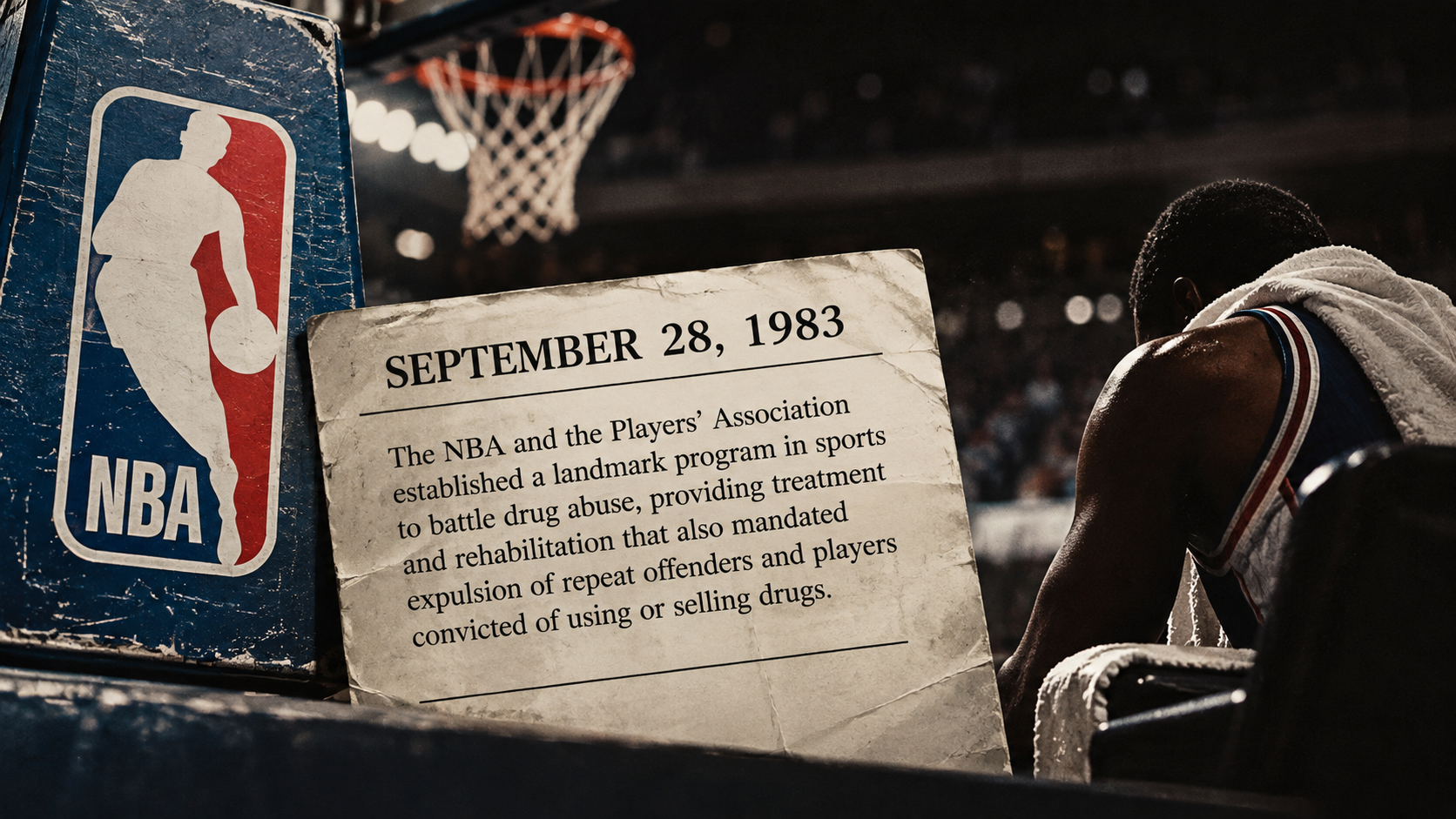
43 years ago today, on September 28, 1983, the NBA and the National Basketball Players Association agreed to a groundbreaking drug policy that became one of the most significant league-wide responses to substance abuse in professional sports.
The agreement tried to balance two very different goals: helping players who needed treatment while also establishing severe consequences for repeated violations and drug-related misconduct.
Under the program, players dealing with substance abuse could receive treatment and rehabilitation rather than simply being punished immediately. At the same time, the policy created a much harder line for repeat offenders and for players convicted of using or selling prohibited drugs, with expulsion from the league among the possible consequences.
During the late 1970s and early 1980s, drug use had become a serious concern around professional basketball. Cocaine in particular had become part of the public conversation surrounding the NBA, damaging the league’s image and raising questions about player health, workplace standards and long-term accountability.
The 1983 agreement represented a major shift in how the NBA approached the issue.
Rather than treating every case solely as a disciplinary matter, the league and union formally recognized that addiction and substance abuse could require medical treatment and structured rehabilitation. That was a forward-looking element for the era and helped distinguish the NBA’s program from a purely punitive system.
At the same time, the policy made clear that there were limits.
Players who repeatedly violated the rules or became involved in the use or distribution of prohibited drugs faced the possibility of permanent removal from the league. The combination of treatment for those seeking help and severe penalties for continued violations became a defining feature of the program.
The policy would later evolve as the NBA and Players’ Association updated testing procedures, banned-substance lists and rehabilitation protocols, but the 1983 agreement established the framework.
