
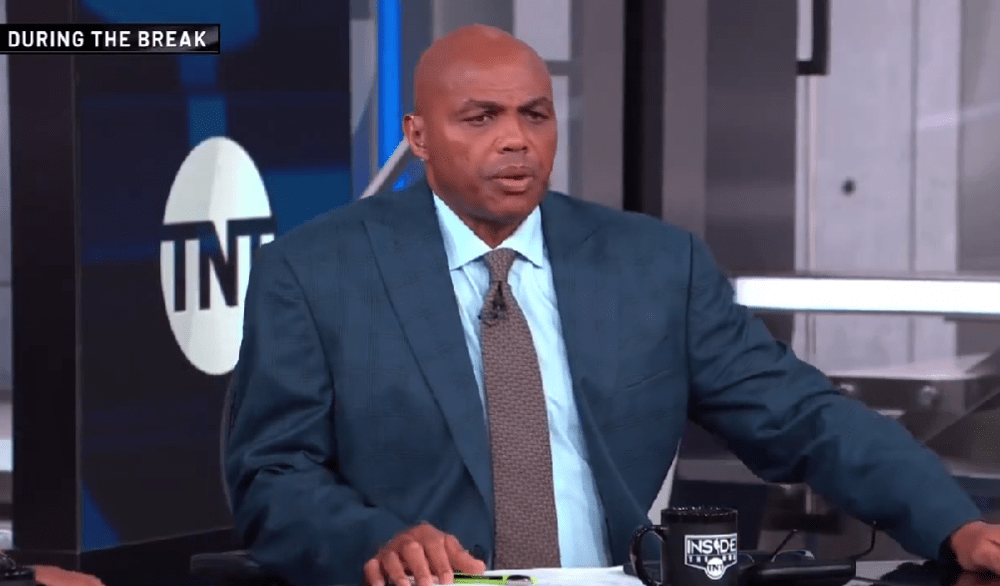
Charles Barkley has entered the growing debate surrounding transgender participation in the WNBA, criticizing NBA commissioner Adam Silver and WNBA commissioner Cathy Engelbert for what he believes has been an insufficiently direct response.
Barkley made clear that he supports gay and transgender people generally, while drawing a firm distinction when it comes to eligibility in women’s professional basketball.
“I always support the gay community. I always support the transgender community. But, under no circumstances do I think men should play against women. Zero! I’m disappointed in Adam Silver and Cathy [Engelbert]… first of all, you can’t let stupid stuff go out on the internet which is one of the worst things to ever happen to the world. They should’ve come out two weeks ago, before all this, because there’s people looking for attention now. But he (Kanter) has a point tho, because Cathy and Adam haven’t said, ‘Hey, it’s in the title “WNBA,” we’re not going to have transgender people in the WNBA, and we’re not going to discuss it. That’s what Adam and Cathy should have done two or three weeks ago.”
💥NEW: Charles Barkley *UNLOADS* on commissioners for not opposing trans athletes in WNBA💥
“Under NO circumstances do I think men should play against women. ZERO! I’m DISAPPOINTED!”
“Adam [Silver] should come out — and Cathy [Engelbert] … ‘There’s no transgender people going… pic.twitter.com/ev3DXhiUWq
— Jason Cohen 🇺🇸 (@JasonJournoDC) August 25, 2026
Barkley’s comments came amid a highly public debate that intensified after former NBA players Enes Kanter Freedom and Royce White publicly claimed eligibility for a future WNBA Draft as transgender women. League sources subsequently told Reuters that neither former NBA player is eligible for the draft.
The controversy has also involved Chicago Sky guard Natasha Cloud, who has publicly defended transgender people, and Kanter Freedom, who was ejected from a recent Sky game following an altercation involving Cloud. The Sky later banned Kanter Freedom from Wintrust Arena, saying his conduct had been deliberately provocative and raised concerns about player safety.
Barkley’s criticism, however, was directed primarily at league leadership. He argued that Silver and Engelbert should have established a definitive public position before the subject became a larger online and political controversy.
The WNBA’s current collective bargaining agreement states that only women are eligible to play in the league, but it does not provide more specific public language addressing gender identity or sex assigned at birth. Engelbert has said the league is discussing the issue with relevant stakeholders and has criticized efforts by outside figures to use the WNBA to create political division.
That distinction is important because Barkley’s preferred policy should not be confused with an already-established league rule specifically excluding transgender women. As of now, the WNBA has not publicly announced such a categorical policy, and no transgender athlete has played in the league.
Barkley nevertheless believes the ambiguity has allowed the subject to become a distraction from basketball and has encouraged people seeking attention to insert themselves into the conversation.
His position is therefore about more than eligibility itself. Barkley believes the NBA and WNBA allowed a potentially sensitive issue to develop into a public spectacle by failing to address it decisively enough at the outset.
