
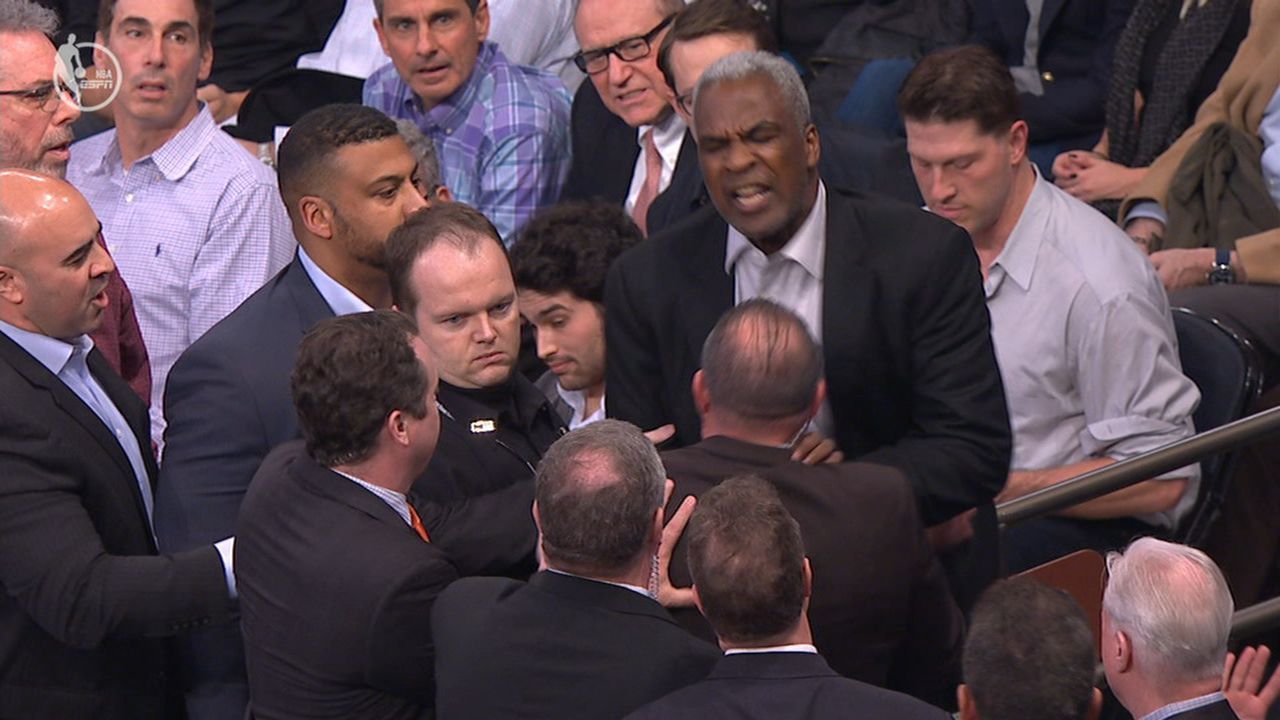
Charles Oakley’s nearly decade-long legal battle with Madison Square Garden has suffered another major setback.
A federal judge on Friday granted summary judgment in favor of Madison Square Garden, dismissing the remaining assault and battery claims stemming from Oakley’s highly publicized removal from a New York Knicks game in February 2017. The ruling marks the third time Oakley’s case has been dismissed at the district-court level, although previous dismissals were later revived on appeal.
The dispute began on February 8, 2017, when Oakley was removed from his seat during a Knicks game against the Los Angeles Clippers following an confrontation with MSG security personnel. Oakley has maintained that security guards used unnecessary force against him, while Madison Square Garden has consistently denied wrongdoing and argued that he resisted efforts to remove him from the arena.
Over the years, most of Oakley’s original claims, including defamation and false-imprisonment allegations, were dismissed. His assault and battery claims survived after the U.S. Court of Appeals for the Second Circuit twice reversed or vacated earlier rulings and sent the case back for further proceedings.
The latest decision came from U.S. Circuit Judge Richard J. Sullivan, sitting by designation in the Southern District of New York. Sullivan concluded that the evidence developed through years of litigation did not provide a sufficient basis for Oakley’s remaining claims to proceed to trial. According to reporting on the ruling, the judge found that Oakley had failed to produce evidence that could establish that MSG security personnel unlawfully assaulted him.
For Madison Square Garden, the decision represents a significant legal victory in a case that has lasted since 2017.
MSG responded aggressively, saying Oakley’s claims had now been dismissed “in their entirety” and announcing that it intends to pursue legal action against Oakley attorney Douglas Wigdor and his firm over what the company characterized as years of improper litigation. Those accusations are MSG’s position and have not been established as separate legal findings against Wigdor or his firm.
Oakley’s legal team, however, is not treating the ruling as the end of the case.
Wigdor said the attorneys were disappointed with Sullivan’s decision and argued that conflicting accounts surrounding the 2017 confrontation should ultimately be evaluated by a jury.
“We are hopeful that the Second Circuit will agree for a third time and remand the case for an immediate jury trial,” Wigdor said.
That means Oakley’s next step is expected to be another appeal to the Second Circuit rather than an immediate trial. Unless the appellate court overturns the latest ruling, there will be no jury proceeding.
The litigation has already taken several unusual turns. In 2025, Oakley was sanctioned over the loss of years of text messages that should have been preserved during the lawsuit and was later ordered to pay more than $642,000 in MSG’s legal fees connected to that dispute. Oakley’s attorneys challenged that sanction as well.
For now, Madison Square Garden has won another round. Oakley’s remaining claims have been dismissed before reaching a jury. But after nine years, multiple appeals and multiple reversals, his attorneys are preparing to ask the appellate court once again to give him the trial he has been seeking since 2017.
