
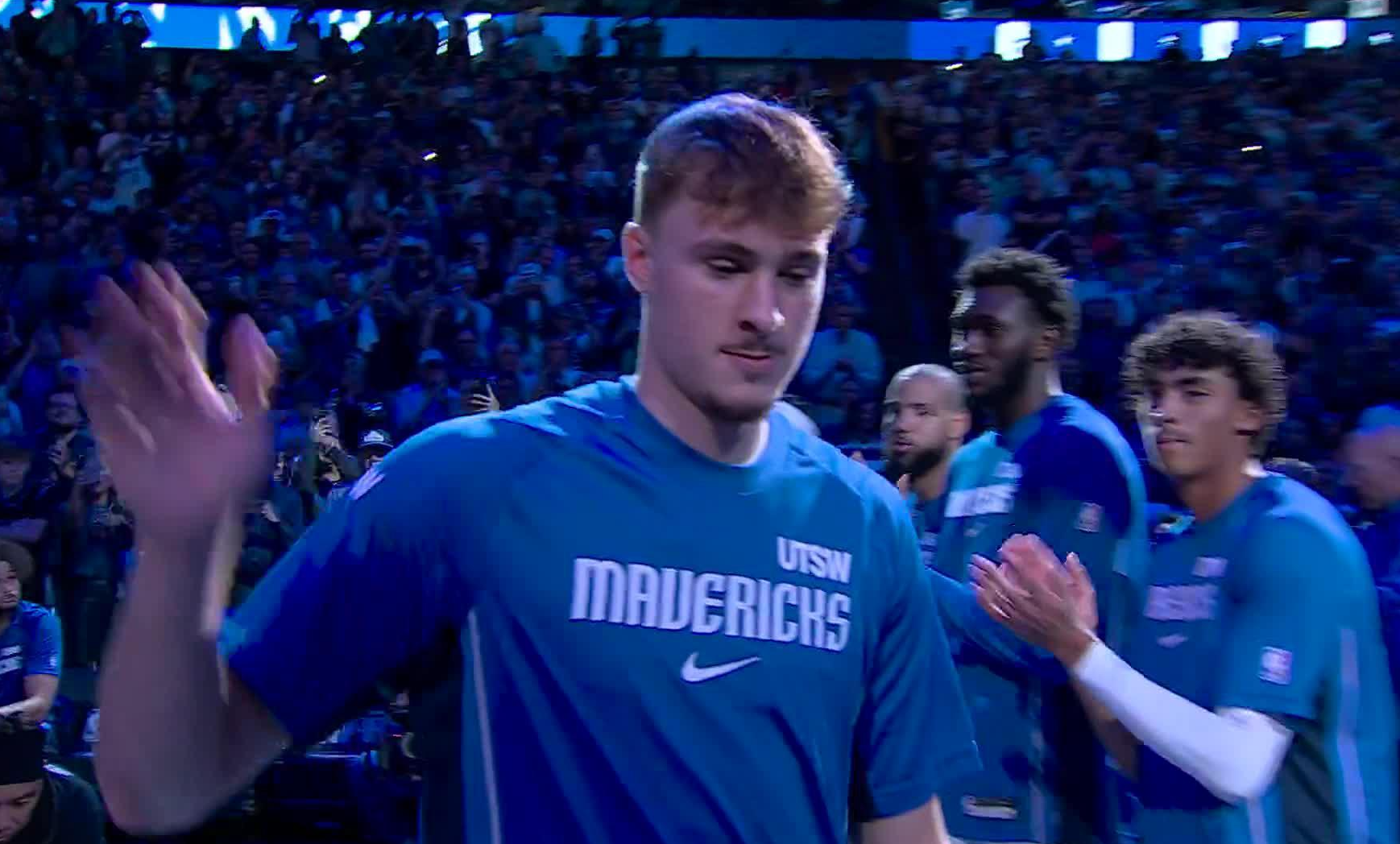
LeBron James offered a thoughtful defense of Jason Kidd’s decision to put Cooper Flagg on the ball early in his rookie season, arguing that the discomfort was part of the development.
James backed Kidd for trusting the 19-year-old with point guard responsibilities even as the experiment drew criticism.
“Kidd early on got a little scrutinized because they started him at point guard, and I thought that was unfair,” LeBron said. “I think it’s great to put the ball in somebody’s hands, so they can just go through the rough patches. And when you go through the rough patches, it allows you to grow at a rate faster than other players.”
Kidd’s handling of Flagg had already become a talking point earlier in the season, especially when Dallas asked the rookie forward to function as a lead initiator. Kidd defended that approach in February with an expletive-laced response to reporters, making clear that he viewed the role change as intentional player development rather than misuse.
And now, the results give James’ argument more weight. Flagg has turned his rookie season into one of the league’s major stories, including a 51-point outburst against Orlando on April 3 that made him the youngest player in NBA history to score 50 in a game, followed by a 45-point game against LeBron’s Lakers. Flagg has spent much of the year adapting to a full-time point guard burden while leading rookies in both scoring and assists.
That is why LeBron’s defense of Kidd lands as more than a casual compliment. It is an endorsement of a development philosophy. The easiest way to protect a gifted teenager is to simplify his job. The harder way is to hand him responsibility, let him struggle in public, and trust that the strain will accelerate growth. Kidd chose the harder path with Flagg, and James clearly believes that choice helped shape the player Dallas is seeing now.
For Flagg, the lesson is obvious. Talent may get a young player on the floor, but the ball in his hands forces him to think, read, fail, adjust, and command the game faster than he otherwise would. That does not make the process smooth. It does make it valuable. And in James’ view, that is exactly why Kidd deserved less criticism and more credit.
