
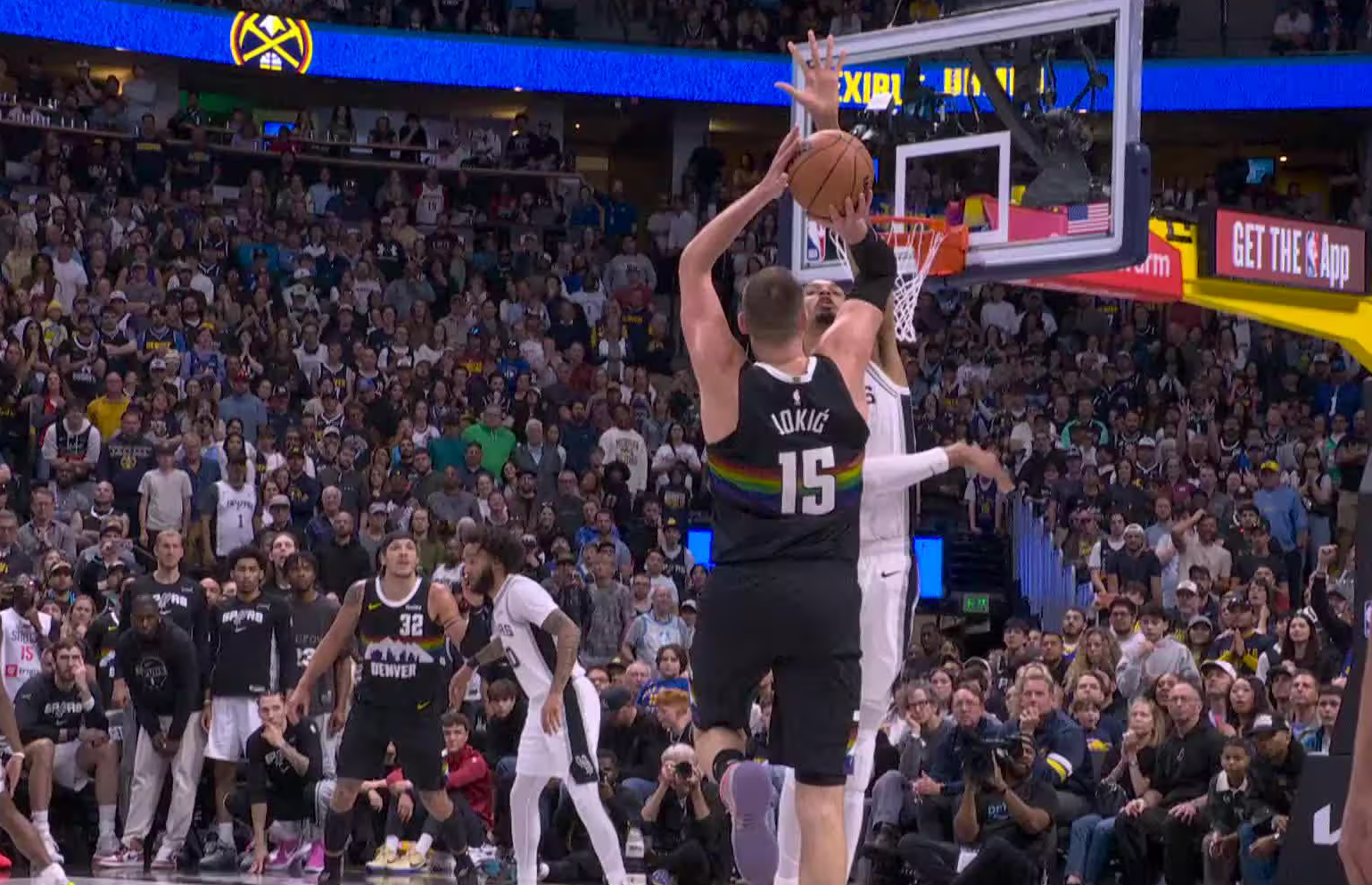
The San Antonio Spurs lost a thriller in Denver on Saturday, falling 136-134 in overtime to the Nuggets in a game that felt less like a late regular-season contest and more like an early playoff preview. San Antonio led 43-36 after one quarter and still had a 113-106 edge in the fourth, but Denver closed harder, executed better in the biggest possessions, and escaped behind another masterclass from Nikola Jokic.
It was, in many ways, an impressive Spurs performance. Victor Wembanyama was superb, finishing with 34 points, 18 rebounds, seven assists and five blocks. Stephon Castle added 20 points and nine assists, Devin Vassell scored 18, Julian Champagnie had 18, and San Antonio shot 47 percent from the field while putting up 134 points against one of the West’s best teams. On most nights, that kind of offensive output is enough. Against Denver, it was not.
The reason starts with Jokic. Denver’s center finished with 40 points and 13 assists, Christian Braun scored 21, and Jamal Murray added 15 points with 10 assists. The Nuggets shot 49 percent overall, hit 19 threes, and produced 34 assists against only six turnovers. That last number may be the most revealing of all. In a game with this much pressure, Denver was the cleaner team. The Spurs were good. The Nuggets were sharper.
That is the first playoff lesson for San Antonio: good offense is not the same thing as reliable late-game offense. The Spurs can score with contenders, and Saturday proved that again. But postseason basketball is about surviving the handful of possessions that carry outsized weight. Denver erased a late six-point deficit in regulation and then won the overtime margin, 12-10. Against elite opponents, one missed rotation, one hurried shot, one empty trip, or one failure to finish a defensive possession can undo 45 minutes of excellent work.
The second lesson is about handling stars under stress. Wembanyama was outstanding, but Jokic still bent the game to his will. That is not an embarrassment; it is a reminder of the level San Antonio must reach. In the playoffs, there is no scheme that fully erases a player like Jokic. The task is to make his decisions slower, his touches tougher, and the damage around him smaller. Denver still got efficient support scoring from Braun, Cameron Johnson, Aaron Gordon and Murray, which means the Spurs were not disruptive enough around Jokic’s brilliance.
The third lesson is composure. San Antonio did many things well enough to win, including matching Denver physically on the glass and generating quality offense for long stretches. But the Nuggets looked more comfortable once the game tightened. That is the advantage of a seasoned contender: no panic, no wasted movement, no emotional drift. The Spurs, by contrast, got a clear reminder that playoff maturity is not only about talent. It is about recognizing that the hardest part of beating a great team is not building the lead. It is closing the door before that team turns the game into a test of nerve.
Still, there was more encouragement than alarm in this defeat. San Antonio went into Denver, pushed a 50-win team to overtime, and got a massive two-way performance from the player who will define its future. The Spurs did not look overwhelmed by the moment. They looked like a team that is close enough to matter, but still young enough to learn from the details that contenders punish.
That is why this loss may end up being useful. It showed San Antonio that its ceiling is real, but also that playoff basketball is merciless about execution. The Spurs do not need a reinvention after this game. They need refinement. They need cleaner endings, tougher possession-by-possession defense against elite creators, and the kind of late-game calm that only becomes permanent once a team has been burned by not having it.
Denver won the game. San Antonio may still gain something from it. In April, that can be almost as important.
