
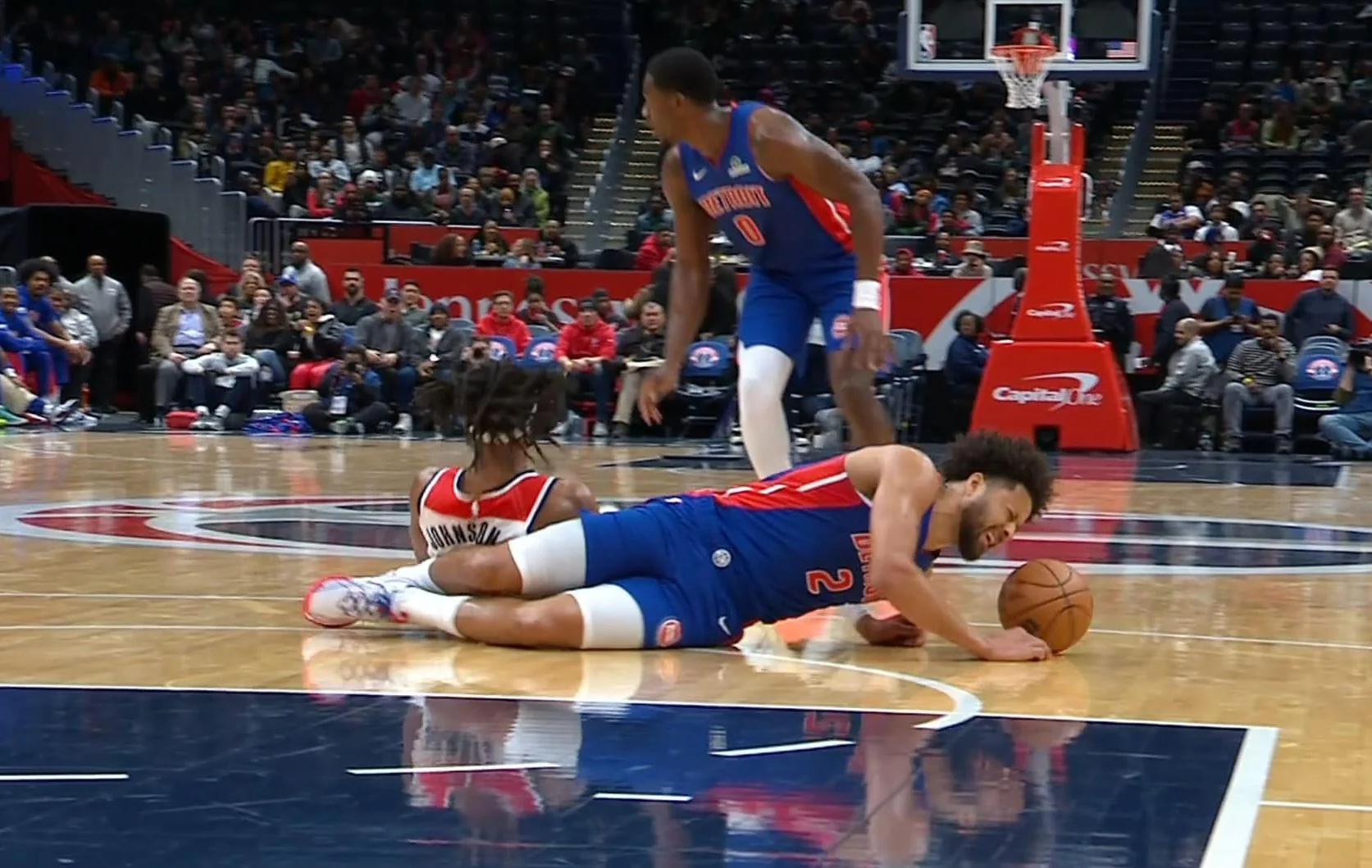
The debate over the NBA’s 65-game rule has now moved from quiet frustration to an open challenge from the players’ union. On Tuesday, the National Basketball Players Association publicly called for the rule to be eliminated or at least revised, using Cade Cunningham’s case as its clearest example of how a rigid threshold can undercut a deserving season.
In a pointed statement, obtained by the AP’s Tim Reynolds,the NBPA said:
“Cade Cunningham’s potential ineligibility for postseason awards after a career-defining season is a clear indictment of the 65-game rule and yet another example of why it must be abolished or reformed to create an exception for significant injuries. Since its implementation, far too many deserving players have been unfairly disqualified from end-of-season honors by this arbitrary and overly rigid quota.”
The timing matters. Cunningham has played 61 games this season and is recovering from a collapsed lung, which has put his eligibility for major postseason honors in doubt because the current rule requires players to appear in at least 65 games to qualify for awards such as MVP and All-NBA.
What makes the union’s criticism resonate is that it goes beyond one player. The 65-game rule was introduced to address load management and increase regular-season participation, but the Cunningham situation has sharpened the counterargument: a policy designed to discourage voluntary absences can also punish players dealing with legitimate injuries. That is the heart of the NBPA’s complaint, and it is why the rule is again under serious scrutiny.
For the league, the rule was meant to protect the value of the regular season. For the union, this moment is evidence that the line has become too inflexible. And for Cunningham, whose season has been widely viewed as the strongest of his career, the possibility of missing out on recognition has turned an abstract policy debate into a far more personal one.
