
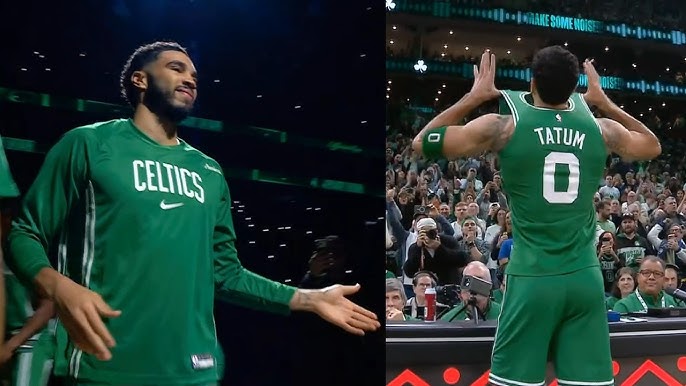
For most NBA stars, an Achilles tear changes the clock. For Jayson Tatum, it seems to have accelerated it.
On Friday night, Tatum returned to the floor for the Boston Celtics in a 120–100 win over the Dallas Mavericks, making his season debut less than 10 months after rupturing his right Achilles tendon during the 2025 playoffs. He finished with 15 points, 12 rebounds, seven assists and a steal, a stat line that suggested understandable rust in spots but also immediate all-around impact.
That timeline is what makes the comeback so striking. Tatum suffered the injury in May 2025 in the Eastern Conference semifinals against the New York Knicks, then underwent surgery and began a rehab process that, for most players, is measured as much in caution as in months. By early February 2026, had been cleared to participate in practice work, a key step that signaled his recovery was moving faster than many around the league expected.
Even then, Tatum did not sprint blindly back into the lineup; he described the recovery as both physically and emotionally difficult, saying he had been medically cleared in February but waited until he also felt mentally ready to return. That detail matters. Achilles rehab is not just about healing the tendon; it is about trusting it again in a league built on reaction, force and repetition.
The Celtics, meanwhile, had stayed afloat without him. Boston entered this stretch with a strong record despite his absence, which added another layer to Tatum’s return: this was not a desperate comeback for a collapsing team, but the reinsertion of a franchise star into a group that had already found ways to win.
That is why this comeback stands out. It is not being framed as a miracle cure or a final destination. It is impressive because of the speed, the discipline and the level of play required to get back at all. Less than 10 months after one of basketball’s most feared injuries, Tatum was back in uniform, back in the starting lineup and back influencing a winning game in multiple ways. The long-term test will come in rhythm, consistency and how his body responds over time. But the first chapter of the return already says plenty: Jayson Tatum made it back far sooner than most would have expected, and that alone is a serious achievement.
