
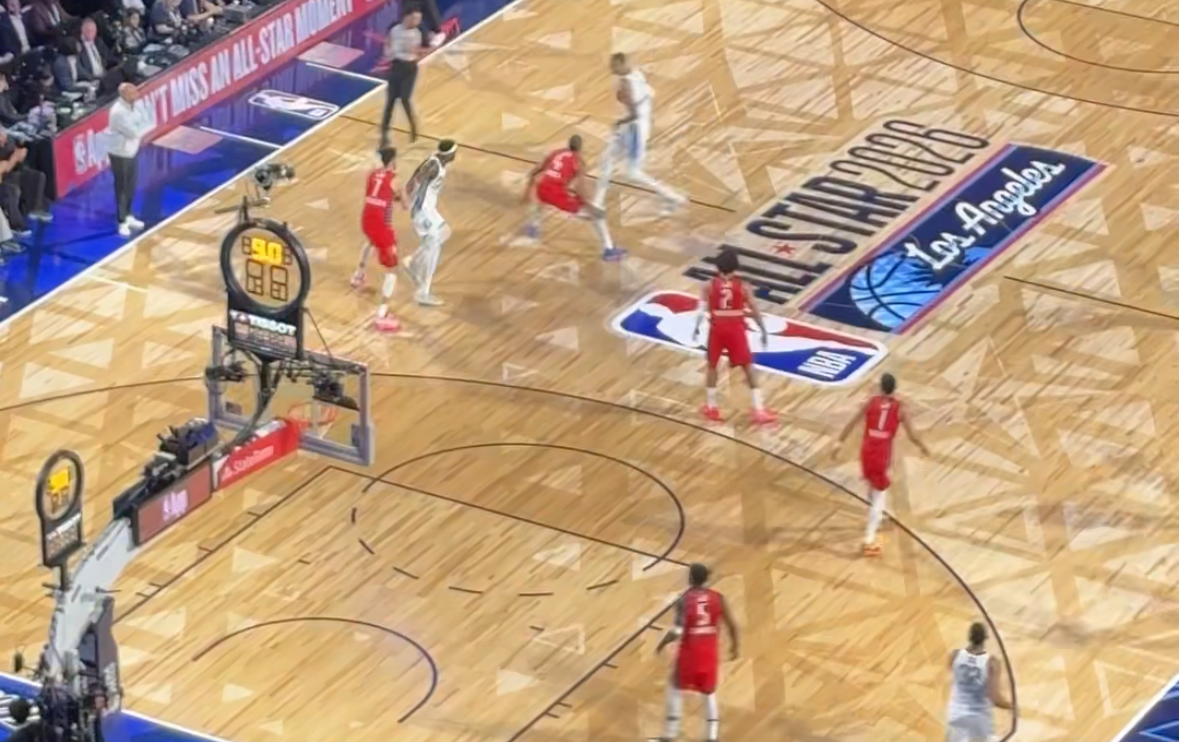
The NBA has spent years searching for an All-Star Game structure that can coax real competition out of an exhibition built on highlights, handshakes and brand management. On Sunday, at Intuit Dome in Inglewood, the league may have found its best answer yet. The 75th All-Star Game debuted a new U.S. vs. World concept built as a round-robin mini-tournament, and for most of the night, the product looked like something players actually wanted to win.
The format was clean and easy to follow: two U.S. teams (USA Stars and USA Stripes) and one international group (Team World) played four 12-minute games, with round-robin results determining the two finalists and point differential serving as the first tiebreaker if teams finished 1–1. The structure mattered because it created natural urgency; short games, immediate consequences, and no time to “coast into it.”
It showed up right away in the basketball. Game 1 went to overtime, with USA Stars edging Team World 37–35. The overtime wrinkle wasn’t just novelty; it was proof that teams cared enough to play a possession-to-possession finish. In that opener, Anthony Edwards hit a late three to force the extra session, and Scottie Barnes knocked down the game-winning triple.
Game 2 delivered the kind of ending the league wants on this stage: USA Stripes beat USA Stars 42–40, with De’Aaron Fox hitting a buzzer-beating three to win it. A single make deciding a game is not new, but the stakes felt new, because every point and every result fed directly into whether a team would even reach the championship.
Game 3 might have been the clearest illustration of how the format reintroduced intensity without forcing it. With Team World facing elimination, USA Stripes won 48–45 behind a dominant performance from Kawhi Leonard, who scored 31 points in the game and hit a go-ahead three with 3.5 seconds left. That win knocked Team World out and sent USA Stripes into the final.
Only the championship was lopsided. USA Stars beat USA Stripes 47–21 to take the title. The blowout is the lone stain on an otherwise tight night, but it also underlined something important: the earlier games had been compelling enough that the final didn’t define the format. Every game except the championship was decided by one possession, which is exactly the kind of competitive texture the NBA has been chasing.
Edwards, fittingly, became the face of the new look. He won the Kobe Bryant All-Star MVP award after scoring 32 points across three games as USA Stars captured the championship. The league’s own recap framed it simply: Edwards’ production, spread over multiple short games with real scoreboard pressure, helped swing the night, and that’s precisely what this format is designed to reward.
So why did this work when so many tweaks have struggled? First, the games were short enough to feel urgent but long enough to produce rhythm. Second, the round-robin created a clear incentive to defend and close possessions, not because anyone needed a lecture about “competing,” but because it was the most direct way to advance. And third, the USA vs. World framing gave the night a built-in edge: it wasn’t just “your team vs. my team,” it was identity, pride, and a simple storyline viewers could track immediately.
The early reaction reflected that. Players gave noticeably more effort at both ends than fans have come to expect from modern All-Star games, calling the new format an upgrade because it produced multiple stretches of real basketball rather than a single long runway to a fourth-quarter cameo of defense.
The NBA will keep tinkering, it always does, but the 2026 All-Star Game offered something the event has been missing: stakes that didn’t feel artificial. For one night, the league didn’t have to beg for competitiveness. It built a structure where competitiveness made sense.
