
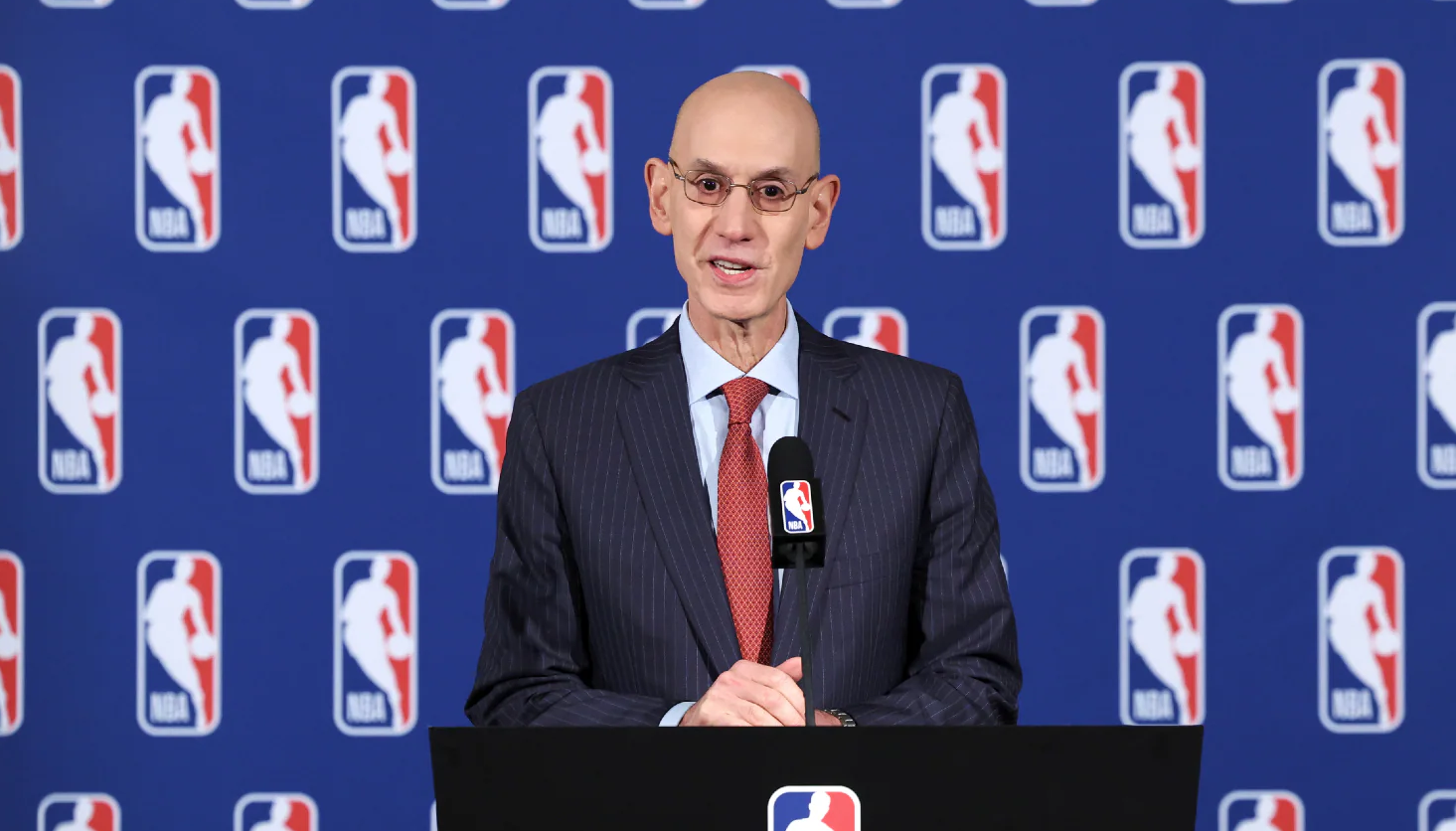
For years, NBA expansion lived in the safe zone of commissioner-speak: a concept the league “should explore,” a topic owners would “study,” a future decision that always seemed one season away from being one season away. Now, the conversation is moving into a more concrete place. Multiple reports on Monday indicate the NBA’s Board of Governors is expected to vote this summer on adding two expansion franchises, with Las Vegas and Seattle viewed as the leading candidates, a development that, if it holds, would represent the clearest timetable the league has had in decades.
Think it’s going to be an extra-great year for Seattle. I’m hearing NBA Board of Governors likely to vote on expanding by two teams this summer and Las Vegas and Seattle are favored.
— Brad Townsend (@townbrad) February 9, 2026
It’s important to state what’s known and what’s not. The “vote this summer” framing is being reported, but the NBA itself has not formally announced a date, a ballot, or a finished plan. What the league has said publicly is that expansion is on the 2026 runway, with Commissioner Adam Silver describing a decision as due sometime in 2026 and naming Seattle and Las Vegas as leading candidates while emphasizing due diligence.
That due diligence has already been institutionalized. In July 2025, Silver said the Board of Governors approved an “in-depth analysis” of expansion, with key owner committees tasked with examining the economics and broader league impact. That matters because it signals the NBA has moved beyond casual interest into formal process – the stage where the league begins doing the unglamorous work: valuations, market readiness, arena pathways, media implications, and the delicate question of whether adding teams meaningfully dilutes talent or simply redistributes it.
If Seattle and Las Vegas feel inevitable as front-runners, it’s because their cases are built on two different kinds of gravity.
Seattle is the emotional one. The league left in 2008, when the SuperSonics relocated to Oklahoma City, and the wound never fully closed. The market has proven it can support major sports with the Seahawks, Mariners, Sounders, Kraken, and a modern arena footprint that is already NBA-ready on the surface. A return would be framed less as a new expansion and more as a restoration, not just of a franchise, but of an identity the NBA has never truly replaced.
Las Vegas is the pragmatic one. It has become the United States’ fastest-moving major-league sports city, and the NBA is already embedded there through Summer League and major events. Silver has openly pointed to Las Vegas’ growing connection to the league while continuing to place it near the top of the candidate list. The NBA doesn’t need to imagine whether Las Vegas can stage NBA nights; it has watched the city stage NBA weeks for years.
What changes the urgency now is money, not in the crude sense, but in the structural sense. The league has entered an era of record franchise valuations and a new long-term national media-rights deal (signed in 2024) that resets the NBA’s economic baseline. The league’s expansion study is happening in that context, with owners weighing how new teams affect everything from franchise values to the league’s national footprint. Industry reporting has consistently floated multibillion-dollar expansion fee expectations, with the idea that expansion could deliver a massive one-time payout to existing owners, a fact that makes expansion attractive even to executives who worry about competitive dilution.
But expansion isn’t just an invoice and a press conference. If the NBA adds two teams, moving from 30 to 32, the league has to solve the basketball mechanics that follow: how to structure an expansion draft, how to support new rosters that aren’t doomed to immediate irrelevance, and how to realign conferences to keep scheduling fair. There’s a reason 32 is a sweet spot in modern North American leagues; it offers symmetry. Yet even symmetry creates winners and losers, especially if a current Western Conference franchise is asked to move East to balance the map.
And then there’s the larger product question, the one fans feel more than owners: what does the NBA want its regular season to be? Expansion promises fresh markets, new rivalries, and a broader national canvas. It also raises the stakes on league governance, because adding teams doesn’t automatically fix the tensions that already exist, from the wear-and-tear of an 82-game calendar to the late-season incentives that can make competitive integrity feel negotiable. Expansion can be growth, but it also magnifies whatever problems the league carries into that growth.
Still, if a Board of Governors vote truly is on the horizon this summer, it would mark a turning point: the NBA moving from “exploring” to “deciding,” from “someday” to “here’s the plan.” And if the favorites hold, it would be the rare kind of sports story that satisfies both logic and lore: the league planting a flag in a city it already uses as a showcase, and reopening the door for a fan base that never stopped acting like it belonged.
