
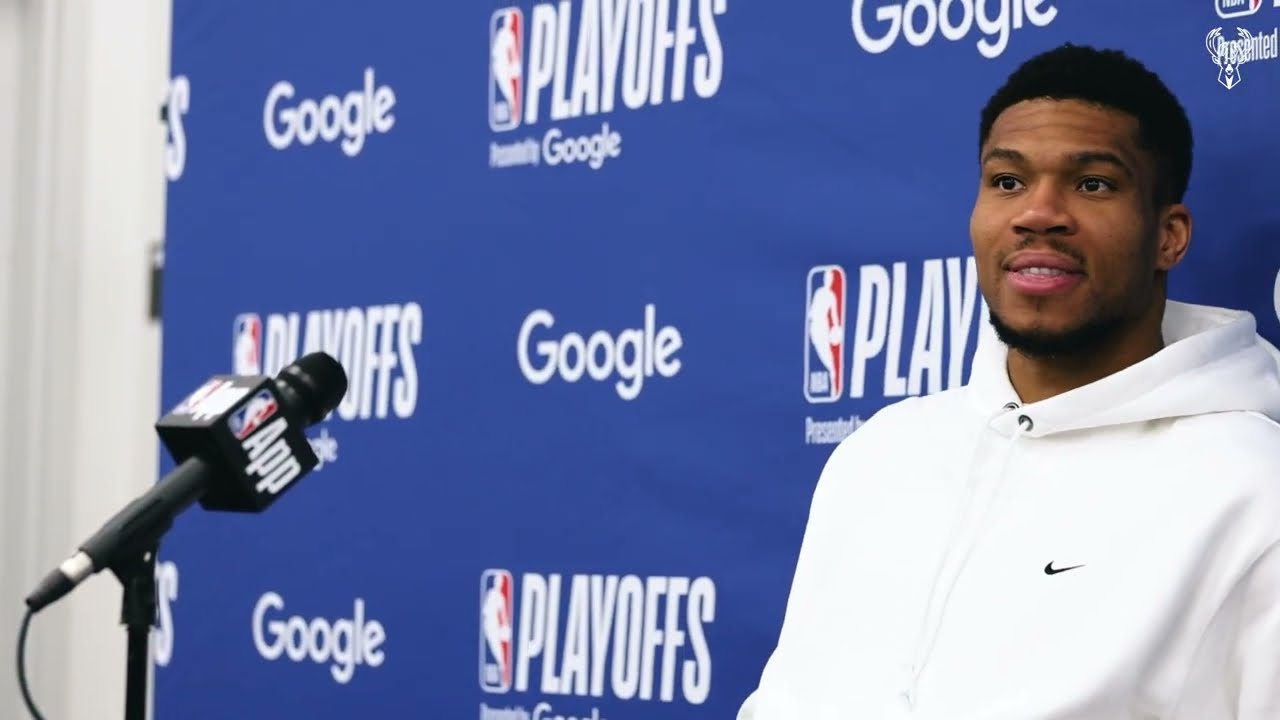
For one loud week of trade-deadline season, Giannis Antetokounmpo’s name didn’t just live on rumor boards and talk shows, it also lived inside a live, tradable market.
Kalshi, a prediction-market platform where users buy and sell contracts tied to real-world outcomes, offered a market on Antetokounmpo’s “next team,” and reports circulating Friday said more than $23 million in contracts had been traded on that specific question. Then, one day after the deadline passed with Giannis still in Milwaukee, Antetokounmpo announced he had joined Kalshi as a shareholder, a move the company also publicized.
We all on @Kalshi now pic.twitter.com/cCNGxfLWO8
— Giannis Antetokounmpo (@Giannis_An34) February 6, 2026
That sequence: heavy trading volume on “Giannis’ next team,” followed by Giannis revealing an equity stake, is why the internet immediately went from “lol, prediction markets” to “wait… is this a problem?”
Giannis made up a rumor that he would leave the Bucks, causing people to bet a total of $23M as to whether/where he would go on Kalshi, an unregulated gambling/insider trading platform.
He stays in Milwaukee, and comes out today as a Kalshi stakeholder. https://t.co/rA4QSNzdIh pic.twitter.com/utLgv6ncPk
— RedditCFB (@RedditCFB) February 6, 2026
Let’s separate what’s known from what’s being alleged.
What we can say with confidence is this: Antetokounmpo is now a Kalshi shareholder, and Kalshia say he’ll be involved in marketing/live events and is prohibited from trading NBA-related markets under Kalshi’s conflict rules. It’s also true that trade rumors around Giannis were real and widespread heading into the deadline, and that he remained with the Bucks through it.
What we cannot responsibly state as fact is the most explosive part of the viral alleged framing: that Giannis “made up a rumor” in order to drive betting action. The rumor ecosystem around superstar movement has plenty of fuel sources – league insiders, team leverage, agent posturing, fan amplification – but “Giannis fabricated it to juice a market” is, right now, an accusation without public evidence.
Kalshi describes itself as a federally regulated prediction market overseen by the U.S. Commodity Futures Trading Commission. That doesn’t end the ethics debate, but it changes what we’re debating.
So what’s the real issue?
It’s the uncomfortable overlap between a superstar’s public messaging in a rumor window and a marketplace where that same rumor window is literally monetized, contract by contract, tick by tick. Even if Giannis never traded a single contract, and even if his Kalshi stake is passive and small, the optics are gasoline. Prediction markets live on attention, and attention lives on stars. A “Giannis next team” market is catnip, and the reported $23 million in volume shows exactly why.
The harder question is whether the NBA’s rules were actually violated.
Under the NBA’s most recent labor framework, active players have been permitted to endorse and invest in sports betting and fantasy companies, subject to restrictions. And in this specific case, Kalshi emphasized a guardrail: Antetokounmpo is not allowed to trade NBA-related markets on the platform.
But that doesn’t mean Giannis should not face scrutiny.
The NBA has spent the last few years trying to manage the integrity and player-safety consequences of the sports-betting boom. Even mainstream sportsbooks are tightening policies amid harassment and integrity concerns, and the league itself has been under pressure to revisit betting-related governance. In that environment, a star taking an ownership stake in a platform that hosted a high-volume market about his own employment status the week of the deadline is the kind of headline that invites questions from regulators, the league office, and the union – even if the answers ultimately amount to “permitted, disclosed, restricted, move along.”
Because the fear isn’t only corruption. The fear is precedent.
If the league shrugs at this, you can already see the next dozen riffs: more athlete-stakeholder deals, more “will he/won’t he” markets, more creators and aggregators using stars as liquidity events, and more fans treating roster speculation like a tradable asset class. That’s not necessarily illegal. It’s just a different sport-adjacent universe than the NBA used to inhabit, one where the rumor mill isn’t just noise, it’s a financial instrument.
The smoke hasn’t cleared yet. But the outline is visible: Giannis is still a Buck, the market did monster volume, and the day after the deadline he became a shareholder in the platform that hosted the market. If the NBA wants to protect the line between “entertainment,” “business,” and “integrity,” this is exactly the type of situation it should be ready to explain; plainly, publicly, and with specifics… before the next deadline turns the rumor economy into a trading floor again.
